Biggest Cities in Morocco
The Biggest Cities in Morocco include Casablanca, Tangier, Fes, Marrakech, Salé, Meknes, and Rabat. Each city has a different role in Morocco, from Casablanca economic importance and Rabat position as the capital to the historic character of Fes and Meknes and the tourism appeal of Marrakech.
Morocco has about 37.3 million people, according to the latest population projection from Morocco High Commission for Planning (HCP). The country’s urban population is concentrated in several large cities, while many smaller cities and towns remain important for regional culture, tourism, trade, and transportation.
Biggest Cities in Morocco by Population
Morocco 2024 General Population and Housing Census identifies seven cities with populations of more than 500,000. Casablanca is by far the largest, followed by Tangier, Fes, Marrakech, Salé, Meknes, and Rabat.
| Rank | City | Population |
|---|---|---|
| 1 | Casablanca | 3.236 million |
| 2 | Tangier | 1.275 million |
| 3 | Fes | 1.183 million |
| 4 | Marrakech | 1.015 million |
| 5 | Salé | 945,000 |
| 6 | Meknes | 562,000 |
| 7 | Rabat | 516,000 |
These figures refer to the population of each city in the 2024 census. They are useful for understanding the largest cities in Morocco by population, although population size does not indicate how popular a city is with international travelers.
1 – Casablanca
Casablanca is the largest city in Morocco, with a population of more than 3.2 million according to the 2024 census. Located on the Atlantic coast, it is the country’s main economic and commercial center and one of its most important transportation hubs.
The city has a modern character that differs from Morocco historic imperial cities. At the same time, visitors can explore the Hassan II Mosque, the Old Medina, Mohammed V Square, the Corniche, and neighborhoods known for their Art Deco architecture.
Casablanca is also a practical starting point for a Morocco itinerary. Travelers can continue from the city to Rabat, Chefchaouen, Fes, Marrakech, or the Sahara Desert, depending on the length and direction of their trip.
2 – Tangier
Tangier is the second-largest city in Morocco and an important gateway between Morocco, Europe, the Mediterranean, and the Atlantic. Its location at the northern tip of the country has shaped the city’s history and its role as a major port and international transportation center.
The historic Medina and Kasbah are among the main places to explore, while Grand Socco, Cap Spartel, and the Hercules Caves offer additional experiences around the city. Tangier also provides a convenient starting point for exploring northern Morocco.
For travelers arriving by ferry from Spain or flying into northern Morocco, Tangier can be combined with Chefchaouen, Tetouan, Fes, Rabat, and other destinations.
3 – Fes
Fes is the third-largest city in Morocco and one of the country’s most important historic and cultural centers. The city is best known for Fes el-Bali, its historic Medina, where narrow streets lead through traditional markets, workshops, religious buildings, and historic neighborhoods.
Fes offers one of the strongest introductions to Morocco traditional urban culture. A licensed local guide can be particularly useful in the Medina, where many important sites are located within a complex network of narrow streets.
The city’s location also makes it an important stop between northern Morocco and the Sahara. Travelers can continue from Fes through Ifrane and the Middle Atlas Mountains toward Midelt and Merzouga, or travel in the opposite direction toward Marrakech.
4 – Marrakech
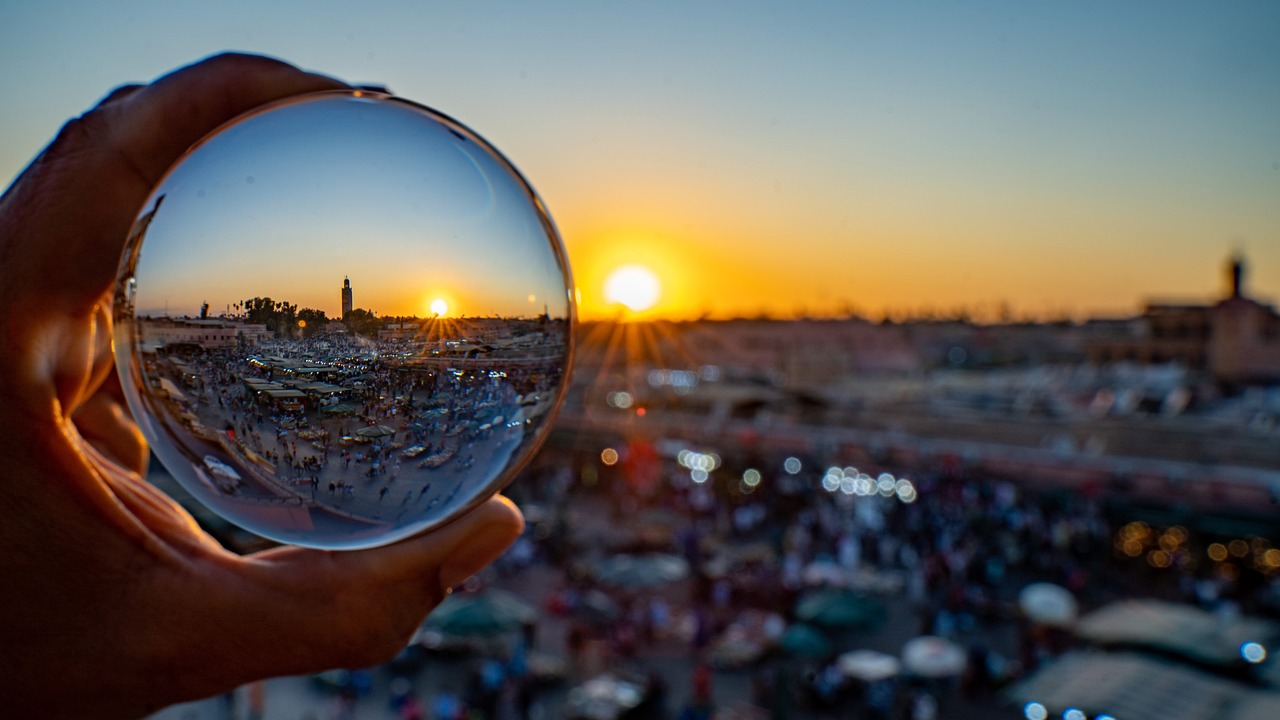
Marrakech is the fourth-largest city in Morocco and one of the country’s most important tourism centers. Known for its historic Medina, traditional souks, palaces, gardens, and Jemaa el-Fnaa, the city attracts travelers throughout the year.
Major places to visit include the Koutoubia Mosque, Bahia Palace, the Saadian Tombs, the souks, and the historic riads of the Medina. Marrakech is also an important base for exploring southern Morocco and the High Atlas Mountains.
Longer itineraries can connect Marrakech with Ait Ben Haddou, Ouarzazate, the Dades Valley, Todra Gorge, and the Sahara Desert. Travelers planning a private route can explore our tours from Marrakech for different itinerary options.
5 – Salé
Salé is the fifth-largest city in Morocco and is located directly across the Bou Regreg River from Rabat. Together, the two cities form one of Morocco’s most important urban areas.
Although Salé receives fewer international visitors than Marrakech, Fes, or Casablanca, it has a long history and its own Medina, historic walls, traditional streets, and coastal character.
Its location beside Rabat also makes it easy to visit both cities during the same stay. Exploring Salé can provide a different perspective on urban Morocco beyond the country’s main tourist centers.
6 – Meknes
Meknes is the sixth-largest city in Morocco and one of the country’s four historic imperial cities. Its historic center contains monumental gates, traditional streets, former royal areas, and buildings connected with the city’s period as an imperial capital.
Meknes is especially convenient for travelers interested in Morocco history because it can be combined with nearby Volubilis and Fes. Volubilis provides an opportunity to see the remains of an ancient Roman city before continuing to the historic cities of northern Morocco.
For many travelers, Fes, Meknes, and Volubilis work naturally together as part of a northern Morocco itinerary.
7 – Rabat
Rabat is the capital of Morocco and the country’s main political and administrative center. Although its population is smaller than Casablanca, Tangier, Fes, Marrakech, and Salé, its national importance is much greater than its population ranking suggests.
The city combines modern government districts with historic areas, including the Kasbah of the Udayas, Hassan Tower, Mohammed V Mausoleum, Rabat Medina, and the Bou Regreg waterfront.
Rabat is also easy to combine with Casablanca because of the short distance between the two cities. It can also be included in longer routes heading north toward Chefchaouen and Tangier or south toward Marrakech.
Largest Cities in Morocco for Travelers
Population is only one way to understand Morocco cities. The largest city in Morocco, Casablanca, is not necessarily the city every traveler should spend the most time in. Each major destination offers a different type of experience.
Marrakech is one of the country’s main tourism centers, while Fes is particularly important for history and traditional Moroccan culture. Tangier is well suited to travelers exploring northern Morocco, Rabat offers the country’s capital and historic sites, and Casablanca provides major international connections and the Hassan II Mosque.
Smaller cities also have an important place in Morocco travel. Chefchaouen is known for its historic blue-painted streets, Essaouira for its Atlantic setting, and Agadir for its beach and southern coastal location.
How Many Days Do You Need to See Morocco Major Cities?
The ideal length of a Morocco trip depends on the number of cities and regions you want to include. A short trip can focus on Marrakech, Casablanca, or a combination of nearby cities, while a longer itinerary allows travelers to add Fes, Chefchaouen, the Sahara, and southern Morocco.
Travel time between destinations should also be considered. Morocco major cities are spread across different parts of the country, and some of the most important travel experiences are located between them. A well-planned itinerary therefore allows enough time for both the cities and the destinations along the route.
For example, a longer private itinerary can connect Casablanca and Rabat with Chefchaouen and Fes before continuing through the Middle Atlas Mountains to Merzouga and the Sahara. From there, travelers can continue through the Dades Valley and High Atlas Mountains to Marrakech.
How to Travel Between Morocco Major Cities
Morocco’s major cities are connected by trains, buses, domestic flights, and roads. Trains are particularly useful between Casablanca, Rabat, Fes, Meknes, and Tangier, while buses and private vehicles provide access to many destinations outside the main rail network.
Private transportation becomes especially useful when an itinerary includes the Sahara Desert, Atlas Mountains, smaller towns, and historic sites along the way. A private vehicle with an English-speaking driver-guide gives travelers more flexibility with stops, timing, luggage, and the overall route.
For travelers combining several regions, this can be more practical than planning every part of the journey around fixed public transportation schedules.
Combining Morocco Major Cities With the Sahara Desert
The major cities can be combined with a Sahara Desert experience, but the itinerary needs enough time for the distances involved. Merzouga is far from Casablanca, Rabat, and Marrakech, so the desert is best included as part of a multi-day route rather than as a short side trip.
A common route from Marrakech travels through the High Atlas Mountains, Ait Ben Haddou, Ouarzazate, the Dades Valley, and Todra Gorge before reaching Merzouga. From the Sahara, the journey can continue toward Fes through the Middle Atlas Mountains.
Travelers starting in Casablanca can also travel through Rabat, Chefchaouen, and Fes before heading south toward the Sahara. Our Morocco Desert Tours include private itineraries that can be adapted to different starting cities and trip lengths.
Planning a Trip Around Morocco Major Cities
The best route depends on your arrival airport, departure airport, available time, and the regions you want to explore. Casablanca works well for international arrivals, while Marrakech is a popular starting point for southern Morocco and the Sahara. Tangier is particularly convenient for travelers beginning in northern Morocco or arriving from Spain.
A longer trip can combine several major cities with smaller destinations rather than treating the cities as separate stops. This approach allows travelers to experience Morocco’s historic Medinas, Atlantic coast, mountains, countryside, and Sahara Desert during one well-planned journey.
Best Morocco Travel is a family-run Moroccan travel agency with more than 25 years of experience arranging private trips throughout Morocco. The company organizes private transportation, English-speaking driver-guides, local guides where appropriate, accommodations, and customized itineraries based on each group’s travel plans.
- You can explore our Morocco tours to see different ways of combining Morocco major cities with the country’s other regions.
Conclusion
The Biggest Cities in Morocco are Casablanca, Tangier, Fes, Marrakech, Salé, Meknes, and Rabat, based on Morocco 2024 census. Casablanca has the largest population, while each of the other cities has its own importance within Morocco history, economy, culture, government, and tourism.
For travelers, the most useful way to compare Moroccan cities is to look beyond population. Casablanca is a major economic and transportation center, Rabat is the national capital, Fes and Meknes offer important historic experiences, Marrakech is a leading tourism destination, and Tangier provides an important gateway to northern Morocco.
A well-planned Morocco itinerary can combine several of these cities with places such as Chefchaouen, the Atlas Mountains, Essaouira, Ait Ben Haddou, and the Sahara Desert. The right combination depends on how much time you have and which parts of Morocco you want to experience.