
Is Fes Morocco Safe? A Complete Guide for Travelers
Is Fes Morocco safe? For the vast majority of visitors, yes. Fes is one of the safest imperial cities in Morocco for tourism, and violent crime against travelers is rare. The bigger risks you’ll actually face are the ordinary ones that come with any busy, historic tourist city, pickpocketing in crowded souks, taxi overcharging, and the occasional persistent “guide” looking for a commission. None of that should stop you from visiting it just means you should walk in prepared.
Fes is Morocco spiritual and cultural capital, home to the world’s oldest continuously operating university and one of the largest car-free urban medinas on earth. As a family-run tour operator that has been running private tours through Fes for more than 25 years, we get asked about safety in Fes almost daily, from first-time visitors and repeat travelers alike. This guide covers what the crime situation actually looks like, how to stay safe in the medina, what solo, female, and LGBTQ+ travelers should know, how to avoid taxi and street scams, and what the current U.S. travel advisory says about visiting Morocco.
Fes Safety at a Glance
- Violent crime: Rare. Most incidents involving tourists are non-violent.
- Petty crime: Pickpocketing and bag-snatching happen, mostly in crowded medina alleys and transport hubs.
- Biggest risk for tourists: Scams (fake guides, inflated taxi fares, commission-based shopping detours), not crime.
- Solo and female travelers: Generally safe with standard precautions, unwanted attention and street harassment are the main issues to watch for.
- Current U.S. travel advisory: Level 2 Exercise Increased Caution (terrorism risk, not city-specific to Fes).
- Best way to explore safely: With a knowledgeable local guide, especially in the medina, where GPS is unreliable and the layout can be genuinely disorienting.
Crime Rate and Safety in Fes
Fes has a moderate overall crime rate by regional standards, and almost all of it is non-violent. Petty theft, pickpocketing, and opportunistic scams are the most common issues reported by tourists, and they cluster in predictable places, the crowded lanes of Fes el Bali, the main tanneries, transportation hubs, and areas immediately around major attractions where foot traffic is heaviest.
Serious violent crime against tourists is uncommon. That said, staying alert in dense crowds, keeping valuables out of sight, and using a cross-body bag rather than an open tote will eliminate most of the risk that does exist.
Current Travel Advisory for Morocco
As of this update, the U.S. Department of State places Morocco at Level 2: Exercise Increased Caution, a rating tied to terrorism risk across the country rather than to any specific incident in Fes. A Level 2 advisory is the second of four tiers (below Reconsider Travel and Do Not Travel) and places Morocco alongside many popular European destinations. It’s a general precaution, not a warning specific to travelers or to Fes.
If you’re planning a trip, it’s worth checking the advisory again closer to your travel dates, since it’s reviewed periodically. Enrolling in the State Department’s Smart Traveler Enrollment Program (STEP) before you fly is a simple extra step that costs nothing and helps the U.S. Embassy reach you if anything changes while you’re in the country.
Is the Fes Medina Safe to Explore?
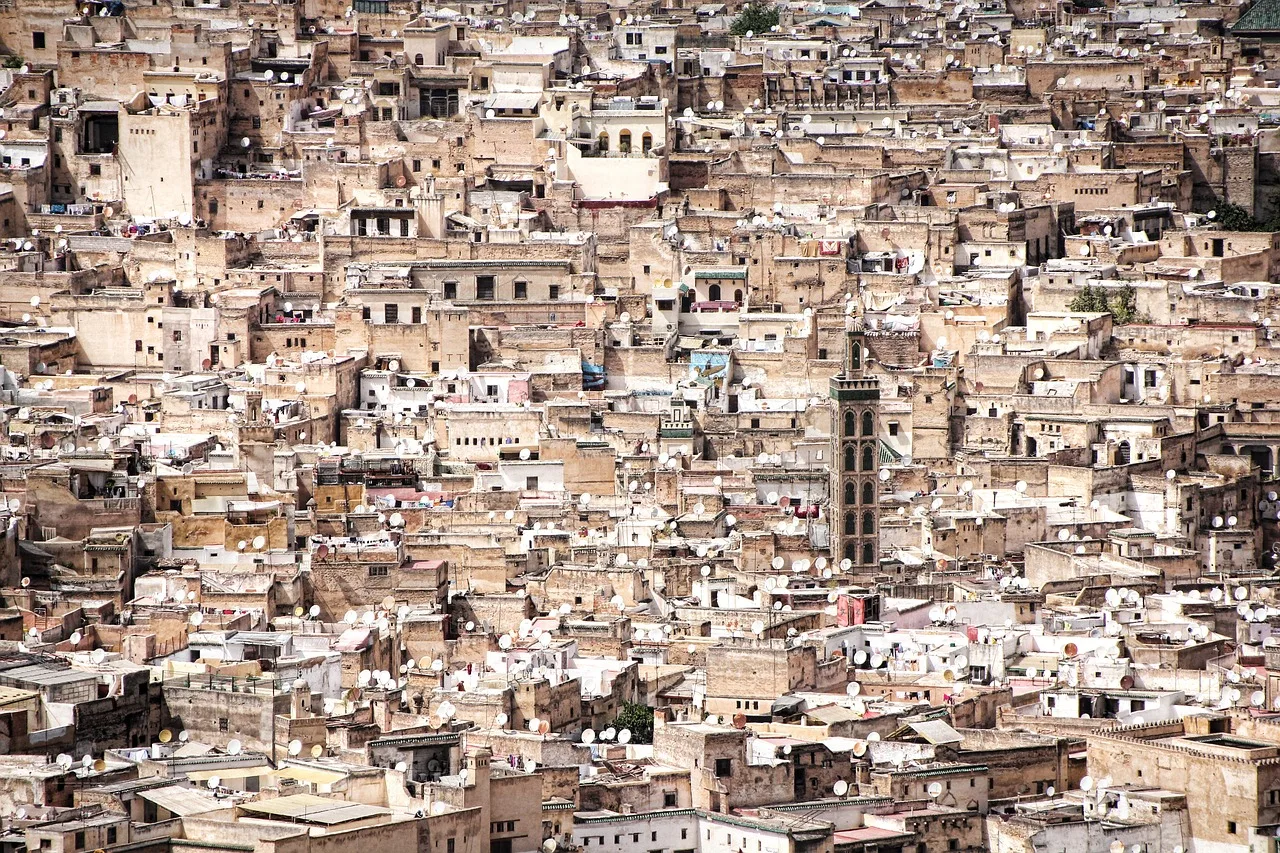
The Fes medina, Fes el Bali, is a UNESCO World Heritage site and one of the largest pedestrian-only urban areas in the world, with an estimated 9,000-plus narrow lanes. It is safe to walk through during the day, but it is also genuinely easy to get lost in, and that disorientation is exactly what some unofficial “guides” rely on.
A few practical rules make the medina far easier to navigate safely:
- Politely decline unsolicited offers of help with directions; a friendly local who happens to be going your way is sometimes working for a commission from a nearby shop.
- Keep a general sense of which main gate (Bab Boujloud or Bab R’Cif) you entered through, since these serve as reliable landmarks when you’re turned around.
- Consider exploring with a private local guide for your first walk through the medina. It’s the fastest way to see the tanneries, madrasas, and souks without wasting half a day backtracking.
- Keep bags zipped and worn across the body in the busiest stretches near the Chouara Tannery and the central souks.
Essential Safety Tips for Visiting Fes
- Stay alert in crowded areas. The medina’s souks and main thoroughfares get busy, especially midday and around Friday prayers, which is when pickpocketing risk is highest.
- Don’t flash valuables. Leave flashy jewelry at home and keep phones and cameras out of sight when not in use.
- Agree on prices before you buy. Bargaining is expected in the souks, asking the price upfront (and expecting to negotiate) avoids most shopping-related friction.
- Dress modestly. Morocco is a conservative country, and modest dress, especially around religious sites, reduces unwanted attention and shows respect for local customs.
- Trust your instincts. If a situation feels off, step into a shop or café and reassess rather than continuing to walk.
Is Fes Morocco Safe for Solo Travelers?
Fes is a common stop for solo travelers, including solo women, and most visit without incident. That said, solo travel in Fes benefits from a bit more planning than a guided trip would need.
Independent travelers should avoid walking alone through quiet medina alleys after dark, keep a charged phone with offline maps or a saved hotel address, and let someone know their rough plans for the day. Solo women in particular report the most comfort when dressing modestly, especially around mosques and religious sites, and when politely but firmly ignoring unwanted attention rather than engaging with it. Locals and riad staff are generally a reliable source of real-time advice if you’re unsure about a specific street or situation.
For travelers who’d rather not navigate the medina alone on a first visit, a private guided tour removes most of the guesswork and lets you focus on actually enjoying the city.
Is Fes Morocco Safe for LGBTQ+ Travelers?
Fes is more conservative than coastal cities like Essaouira, but it remains a common and generally manageable destination for LGBTQ+ travelers who exercise discretion. Homosexuality is illegal under Moroccan law, and public displays of affection between any couple, same-sex or otherwise, are best avoided.
Most LGBTQ+ travelers visit Fes without any issue by staying low-key in public, choosing LGBTQ+-friendly accommodations, and being mindful of local norms around behavior and dress. As with any conservative destination, discretion rather than avoidance is generally the practical approach.
Fes Taxi and Transportation Safety
Taxis are the easiest way to cover longer distances in Fes, but fare disputes are the single most common complaint tourists report. Petits taxis (small, usually red or blue) handle in-city trips and are legally required to run a meter; grands taxis handle longer routes between cities and are typically shared or pre-negotiated.
How to Get a Taxi in Fes
Hail a petit taxi on the street or ask your riad or hotel to call one for you, which is usually the safer bet since hotel-arranged drivers have a reputation to protect. Insist the driver starts the meter, or agree on a fixed price before the ride begins if the meter isn’t working, which is a common line used to justify overcharging. Having your destination written in Arabic script helps, since not every driver reads English or French addresses well.
Best Way to Get Around Fes
Walking is the most practical way to explore the medina itself, since most streets are too narrow for vehicles. For anything outside walking distance, taxis are the next best option, renting a car is rarely worth it unless you’re comfortable with Moroccan driving conditions and plan to explore well beyond the city.
Is Fes Morocco Safe at Night?
Fes is generally safe at night, but the experience varies a lot by neighborhood. The Ville Nouvelle (new town) stays lively after dark, with restaurants, cafés, and shops open late and well-lit streets. The medina is a different story after sunset, many stalls close, the lanes get much quieter, and lighting can be poor in the narrower alleys.
The safest approach is to plan your medina visits for daylight hours and stick to well-traveled, well-lit routes if you’re out in the evening. If you’re heading back to a riad inside the medina late at night, arranging an escort or a pre-booked taxi to your gate is a simple way to avoid an unnecessary wrong turn.
Common Tourist Scams in Fes
Scams, not crime, are the safety issue most travelers actually run into in Fes. The most frequent ones include:
- Fake or unofficial guides who offer help, lead you somewhere, and then demand an inflated fee.
- Commission-based shopping detours, where a helpful local steers you toward a specific shop in exchange for a cut of anything you buy.
- Taxi overcharging, especially when a driver claims the meter is broken.
- Overpriced goods, sold without an upfront price to a visitor who doesn’t know it’s expected to negotiate.
None of these are dangerous, just annoying and avoidable. Agreeing on prices in advance, using official guides, and politely declining unsolicited help handles nearly all of them.
Emergency Numbers and Useful Contacts in Fes
It’s worth saving these before you land:
- Police: 19
- Ambulance / medical emergency: 15
- Tourist Police (Brigade Touristique): available in major tourist areas for scam reports and tourist-specific issues
- U.S. Consulate General, Casablanca: +212-522-642-000 (24-hour emergency line: +212-537-637-200)
If you’re traveling with a private tour operator, your guide or driver is also typically your fastest point of contact for anything that comes up.
Is Fes Safer Than Marrakech or Casablanca?
Fes, Marrakech, and Casablanca have broadly similar safety profiles: low rates of violent crime, moderate petty crime and scam risk concentrated in tourist-heavy areas, and no city-specific advisories from the U.S. State Department. Fes medina is denser and easier to get lost in than Marrakech’s, which is why hiring a local guide pays off more there than almost anywhere else in the country. Casablanca, as a larger working city rather than a historic tourist center, has fewer scam hotspots but also fewer pedestrian-only zones, so ordinary city awareness applies.
In practice, the choice between them rarely comes down to safety. It comes down to what kind of experience you want.
Frequently Asked Questions
Is Fes Morocco safe for tourists?
Yes. Fes has a moderate overall crime rate, but violent crime against tourists is rare. The main risks are petty theft and scams, both of which are easy to avoid with standard precautions.
Is Fes safe for solo female travelers?
Generally, yes. Solo women visit Fes regularly without incident, though dressing modestly, avoiding quiet alleys after dark, and staying alert to unwanted attention are recommended.
Is the Fes medina safe to walk through at night?
It’s manageable but not ideal. The medina gets quiet and poorly lit after dark, so daytime exploring is safer; if you’re out at night, stick to main routes and well-lit areas.
What is the current U.S. travel advisory level for Morocco?
Morocco is currently at Level 2, “Exercise Increased Caution,” due to general terrorism risk across the country. This is not specific to Fes and is reviewed periodically by the State Department.
Is Fes safer than Marrakech?
The two cities have similar safety profiles. Fes medina is larger and easier to get lost in, which makes a local guide more useful there than in Marrakech.
What is the most common scam in Fes?
Unofficial guides offering unsolicited help and then demanding payment, along with taxi drivers claiming a broken meter to justify overcharging.
Do I need to hire a guide in the Fes medina?
You don’t need one, but most first-time visitors find it worthwhile. The medina’s layout is disorienting even with GPS, and a knowledgeable guide will also help you avoid the commission-shop routine some unofficial guides rely on.
The Bottom Line
Is Fes Morocco safe? For nearly every traveler, the answer is yes. Fes carries the same general risks as any major historic tourist city, crowds, scams, and the occasional overcharging taxi driver, none of which is unique to Morocco. Violent crime against tourists is uncommon, and the vast majority of visitors, solo, LGBTQ+, or traveling with family, come away with nothing worse than a story about a persistent souvenir seller.
If you’d rather skip the guesswork on your first trip, our team has been guiding private, family-run tours through Fes and the rest of Morocco for more than 25 years. Get in touch and we’ll help you plan a trip that’s smooth from arrival to departure.