
Is Tangier Safe for Tourists?
Is Tangier safe? Yes. Tangier is a safe, welcoming city where the Atlantic Ocean meets the Mediterranean, and the vast majority of visitors experience nothing more serious than the ordinary caution any traveler brings to a new city. Violent crime against tourists is rare. The real risks are petty theft, overcharging, and the occasional unofficial guide looking for a tip, all of which are easy to avoid once you know what to expect. This guide covers exactly how safe Tangier is today, what to watch for, and how to enjoy the city with confidence, drawing on 25 years of running private tours across Morocco.
This guide is reviewed regularly against official government travel advisories and our own team’s on-the-ground experience in Tangier, so the advice here reflects current conditions rather than outdated assumptions.
Planning your own trip? Browse our private Tangier tours, each one built around your pace, your interests, and a licensed local guide from arrival to departure.
Current Travel Advisory for Tangier
The U.S. Department of State currently places Morocco under a Level 2: Exercise Increased Caution advisory, a general reminder tied to terrorism concerns present across much of the world rather than any specific threat inside Tangier itself. It’s the same advisory level applied to popular destinations like France and Italy, so it’s worth keeping in perspective.
Northern Morocco has also seen periods of increased congestion at border zones, ports, and transportation hubs due to migration pressure in the region. Because Tangier sits at exactly this crossroads, as Morocco main northern port and ferry gateway to Spain, it’s worth planning for the possibility of longer waits at arrival points:
- Build extra buffer time into airport transfers and ferry crossings.
- Expect larger crowds at the port and border areas during peak periods.
- Stay alert near transportation hubs and avoid walking through large crowds where possible.
- Keep car doors locked and windows closed if driving through congested areas.
None of this changes the overall picture that Tangier is safe to visit. It simply means allowing a little more patience at points of entry. We recommend checking your government’s current travel advisory a few days before departure, and for U.S. citizens, enrolling in the free State Department STEP program for real-time updates.
Is Tangier Safe at Night?
Yes, particularly in well-lit, well-populated areas such as the Tangier Corniche, the main Medina, and the central squares. Locals and tourists alike enjoy the waterfront, late dinners, and outdoor cafés well after dark. The same common-sense rules that apply in any coastal city apply here: stick to busy, well-lit streets, avoid wandering into unfamiliar side streets or the quieter edges of the Medina alone, and take a licensed taxi rather than walking long distances at night. If you’re staying in a riad in the old town, ask your host which nearby streets to avoid after dark; they’ll know the current situation better than any guidebook.
Is Tangier Safe for Solo Female Travelers?
Yes. Solo female travelers regularly visit Tangier and report feeling comfortable, particularly during the day and in tourist-frequented areas like the Medina, the Kasbah, and the Corniche. Occasional catcalling or unwanted attention from vendors can happen, as in most of Morocco, but serious incidents against tourists are uncommon. A few precautions help:
- Dress modestly, especially away from the beach and hotel areas, to blend in and reduce unwanted attention.
- Walk with purpose and confidence, and don’t feel obligated to respond to comments from strangers.
- Choose accommodations with strong recent reviews from other solo or female travelers.
- Consider a private guide for your first day in the Medina, so you learn the layout before exploring independently.
Many of our solo female clients tell us that having a private, vetted driver and guide for arrival and the first outing removes almost all the initial uncertainty, after that, most feel comfortable navigating Tangier on their own.
Is Tangier Safe for Families?
Yes. Families with children consistently find Tangier one of the more relaxed introductions to Morocco. The Corniche, city beaches, and Kasbah Museum are all family-friendly, and the pace feels calmer than Marrakech souks or Fes sprawling medina. Hotels and riads catering to tourists are generally well set up for children, and the main safety rules for families are the same as anywhere: keep an eye on kids in crowded markets, hold hands near traffic, and avoid isolated areas after dark.
Our private family tours are built around this exact concern: family-paced itineraries, a private vehicle and driver throughout, and guides experienced with children, so parents can relax and actually enjoy the trip.
Tangier Crime Rate and Common Scams
Violent crime against tourists in Tangier is rare. The crime that does affect visitors is almost entirely non-violent and opportunistic:
- Pickpocketing in crowded areas like markets, the train station, and public buses.
- Overcharging in taxis and some market stalls when a price isn’t agreed on upfront.
- Unofficial guides who approach tourists near the Medina entrances offering tours or directions, then demand payment.
- Distraction scams, where one person diverts your attention while an accomplice targets your bag or pockets.
These patterns are common across Morocco tourist cities, not unique to Tangier, and they’re easy to avoid once you know what to watch for. We’ve broken down exactly how these scams work and how to sidestep each one in our dedicated guide to tourist scams in Morocco, worth reading before any Morocco trip, not just a visit to Tangier.
Essential Tangier Safety Tips
- Use licensed taxis or ride-hailing apps only, and agree on a fare, or confirm the meter is running, before you set off.
- Keep your passport and valuables in your hotel safe, carrying only a copy of your ID and the cash you need for the day.
- Politely decline unsolicited guides near the Medina and Kasbah, hire a licensed guide through a reputable agency instead.
- Dress modestly, particularly when visiting mosques, the Kasbah, or more traditional neighborhoods.
- Stick to busy, well-lit streets after dark, and take a taxi rather than walking long distances at night.
- Learn a few basic phrases. Salam (hello) and Shukran (thank you) go a long way with locals and vendors.
- Build in extra time at the port, airport, and border crossings, especially during busy travel periods.
- Register with your embassy’s travel program before departure so you receive updates if conditions change.
Getting to Tangier Safely
Many travelers reach Tangier by ferry from Spain, a short, scenic crossing (roughly 1.5 to 2 hours from Tarifa or Algeciras) that remains a safe, well-established route. Ibn Battouta Airport and the Tanger Med and Tangier City ports are all modern, well-signposted, and used to handling international arrivals. A few practical notes for a smoother crossing:
- Arrive at the port or airport with more buffer time than you’d normally allow, especially during peak travel periods.
- Keep your documents easily accessible, but not visibly displayed, while moving through crowded terminal areas.
- Confirm your driver and vehicle in advance rather than negotiating with unofficial drivers who approach you at arrivals.
Travelers who book a private Morocco tour with us are met directly at the airport or port by a named driver, removing this layer of uncertainty from day one.
Safest Neighborhoods and Top Attractions in Tangier
Tangier most-visited areas are also its safest, thanks to steady foot traffic and a visible police presence:
- The Medina: Tangier historic old town, full of narrow lanes, markets, and traditional architecture. Busy and safe during the day, stick to the main thoroughfares after dark.
- The Kasbah: a quieter, elevated district within the Medina walls, home to the Kasbah Museum and some of the best views over the Strait of Gibraltar.
- Tangier Corniche: the lively, well-patrolled waterfront promenade, popular for walking, dining, and watching the sunset over the Atlantic.
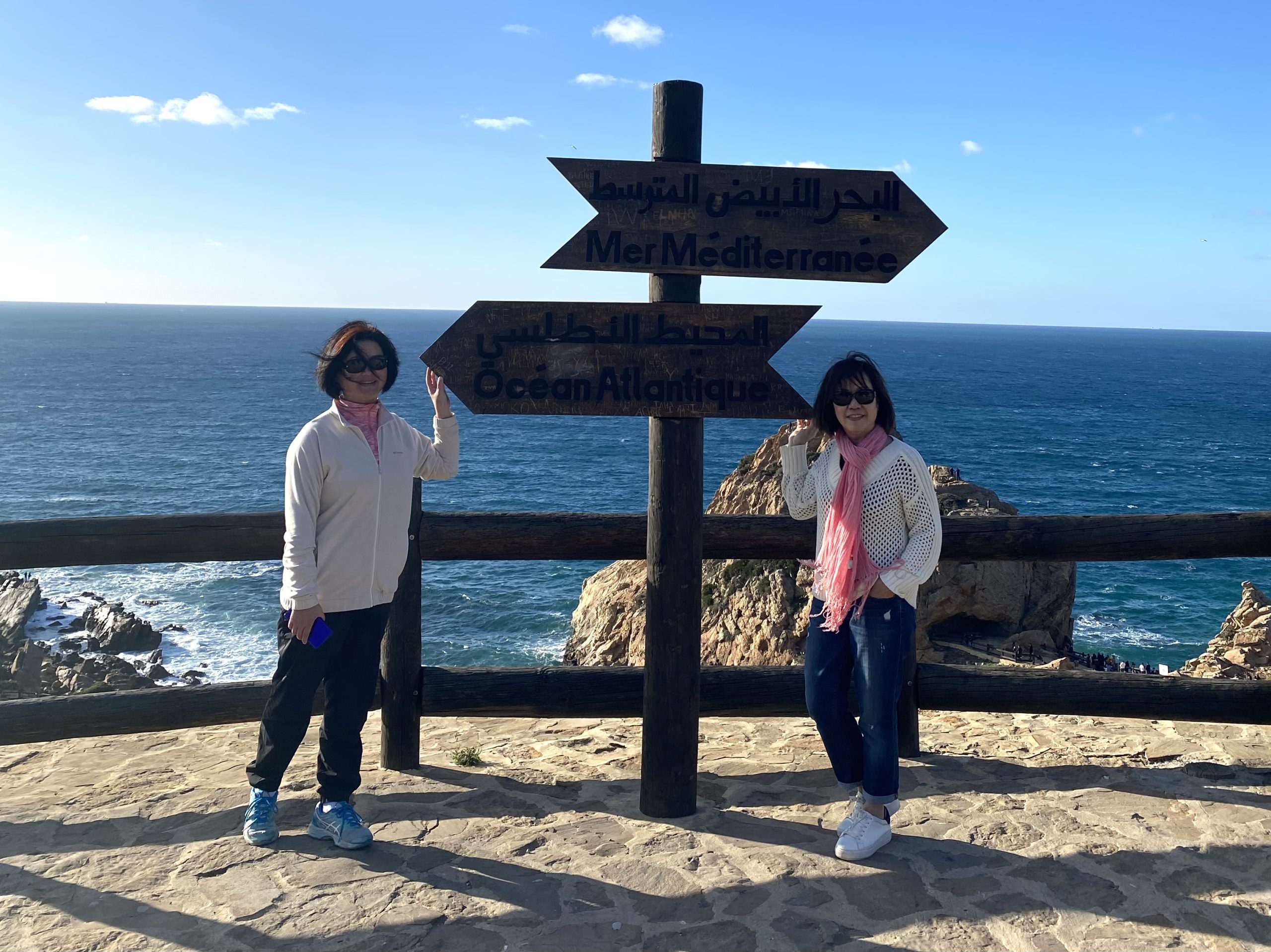
- Cape Spartel: a scenic headland just outside the city where the Atlantic meets the Mediterranean, a relaxed, safe half-day trip.
- Hercules Caves: a well-maintained natural attraction near Cape Spartel, easily combined with the same outing.
How Does Tangier Compare to Other Moroccan Cities?
A common follow-up question is which Moroccan city is safest for tourists. In practice, Marrakech, Fes, Casablanca, Chefchaouen, and Tangier are all considered safe, well-policed destinations, and the differences between them come down to atmosphere rather than risk. Marrakech souks are exciting but dense and better suited to a guided visit; Fes medina is famously maze-like; Casablanca is more of a modern business hub than a tourist center, and Chefchaouen is small, calm, and easy to navigate on foot. Tangier tends to feel slightly more relaxed than Marrakech or Fes, thanks to its coastal layout and steady European influence, while still offering the culture, markets, and history travelers come to Morocco for.
If your trip includes more than one city, our Morocco tour packages are built to move you between destinations safely and comfortably, with the same trusted driver throughout, so you’re not left comparing safety city by city on your own.
Emergency Numbers and Practical Resources
Save these before you land in Tangier:
- Police: 19 (say Tourist Police if there’s a language barrier)
- Ambulance / Fire: 15
- U.S. Embassy (Rabat): +212-537-63-72-00
For practical questions beyond safety, from currency and tipping to what to pack, see our Morocco Travel FAQ’s.
FAQ’s About Tangier Safety
Is Tangier safe for tourists?
Yes. Tangier is one of Morocco safer, more tourist-friendly cities. Violent crime against visitors is rare; the main risks are petty theft and minor scams, both easily avoided with basic precautions.
Is Tangier safe at night?
Generally, yes, especially around the Corniche, main squares, and busy parts of the Medina. Stick to well-lit, populated streets and take a taxi for longer distances after dark.
Is Tangier safe for solo female travelers?
Yes. Most solo female travelers feel comfortable in Tangier, particularly in tourist areas during the day. Dressing modestly and staying alert in quieter areas at night are sensible precautions, not signs of danger.
What is the safest city in Morocco for tourists?
There isn’t one single “safest” city; Marrakech, Fes, Casablanca, Chefchaouen, and Tangier are all considered safe and well-policed. Tangier and Chefchaouen tend to feel the most relaxed and easiest to navigate.
Is the ferry from Spain to Tangier safe?
Yes. The ferry crossing from Tarifa or Algeciras to Tangier is a well-established, safe route used by millions of travelers a year, taking roughly 1.5 to 2 hours.
Can you drink alcohol in Tangier?
Yes. Alcohol is available in licensed hotels, bars, restaurants, and some supermarket sections, though Morocco is a predominantly Muslim country and public drinking outside licensed venues is uncommon.
Should I be concerned about the current travel advisory for Morocco?
Not significantly. Morocco Level 2 advisory reflects general global caution around terrorism rather than a specific threat in Tangier. The more practical point to plan around is allowing extra time at ports, airports, and border crossings during busy periods.
Conclusion: Is Tangier Safe for Your Trip?
Tangier earns its reputation as one of Morocco most approachable cities: rich in history, easy to navigate, and safe for solo travelers, couples, and families alike. The precautions that matter, staying alert in crowds, using licensed transport, and allowing a little extra time at ports and borders, are simple to follow and won’t get in the way of enjoying the city.
For 25 years, our family-run team has guided travelers through Tangier and the rest of Morocco with private, personalized tours, so you can experience the country’s culture and history without navigating the logistics or the guesswork yourself. Get in touch to start planning your private Tangier tour, and let our local expertise take care of the details.