15 Best Places to Visit in Morocco
Morocco is a country of contrasts, where old cities sit close to open desert and mountain towns are only a short drive from the ocean. That range is exactly why the best places to visit in Morocco depend so much on what a trip is actually for. This guide covers 15 destinations, grouped by type, so you can build an itinerary that fits your time and your interests.
We wrote this guide from experience, not from a search results page. As a family-run travel company based in Marrakech, we have spent more than two decades planning private Morocco tours with English-speaking driver-guides. Every place on this list is somewhere we send travelers regularly, and the tips below reflect what actually works on the ground rather than generic travel advice.
If your time is limited, most first-time visitors focus on Marrakech, Fes, the Sahara Desert near Merzouga, and Chefchaouen, then add a coastal stop in Essaouira. With 10 to 14 days, you can also work in the Atlas Mountains, a second imperial city, and more time on the coast. We cover realistic trip lengths in more detail toward the end of this guide.
The Best Places to Visit in Morocco at a Glance
- Marrakech
- Merzouga Desert (Sahara)
- Fes
- Meknes
- Chefchaouen
- Rabat
- Casablanca
- Essaouira
- Agadir
- Tangier
- Asilah
- Ouarzazate, Ait Benhaddou & Dades Valley
- Atlas Mountains & Imlil
- Ouzoud Waterfalls
- Ourika Valley
Best Cities to Visit in Morocco
Morocco cities are where most trips begin, and each one has a distinct character. These six come up most often when people search for the best places to visit in Morocco, and each is worth building real time around rather than rushing through in an afternoon.
1 – Marrakech
Marrakech is the most visited city in Morocco and, for many travelers, the starting point of the whole trip. Known as the Red City for its clay-colored walls, it blends old-world architecture with genuinely lively street life. Spend at least two to three nights here, which is enough time to see the main sights and still use the city as a base for desert or mountain day trips.
Start in Jemaa el-Fnaa, the main square, in the evening when musicians and food stalls fill the space. From there, walk through the souks of the Medina with a local guide, who can point out genuine crafts and quieter side streets you would otherwise miss. Jardin Majorelle, once owned by Yves Saint Laurent, is worth a morning for its blue architecture and desert plant collection, and Bahia Palace, Koutoubia Mosque, and El Badi Palace together show several centuries of Moroccan design in one afternoon. Many visitors end the day with a hammam session or a glass of mint tea at a rooftop café above the Medina.
Marrakech is also the most common starting point for Sahara trips, so if the desert is on your list too, see our Morocco desert tours from Marrakech.
2 – Fes
Fes is Morocco cultural and spiritual center, and its old town is one of the best-preserved medieval cities anywhere in the world. If you want to understand Moroccan history and craft traditions in depth rather than in passing, this is the city to slow down in. Plan for at least two nights.
Fes el-Bali, a UNESCO World Heritage site, is best explored on foot, ideally with a local guide who can explain the symbolism in the architecture as you pass mosques, fountains, and centuries-old artisan workshops. Al-Qarawiyyin University, generally recognized as the world’s oldest continually operating center of higher learning, sits within the medina, and the Chouara Tanneries nearby still dye leather using traditional methods you can watch from above. Save room for authentic Fassi dishes such as pastilla, harira soup, and slow-cooked tagine, which are as much a part of the city’s identity as its architecture.
If you’re arriving from the north or east, check our Morocco desert tours from Fes.
3 – Meknes
Meknes is one of Morocco four imperial cities, but it gets far less attention than Fes, which makes it a good stop for travelers who want real history without the crowds. Sultan Moulay Ismail built it up as his capital in the 17th century, and the scale of that ambition is still visible today.
Bab Mansour, one of the most impressive city gates in North Africa, marks the entrance to the old city, and the Royal Stables and Heri es-Souani granaries nearby show the sheer size of the resources Moulay Ismail commanded. The Mausoleum of Moulay Ismail is open to non-Muslim visitors and offers a quieter, more contemplative stop than the busier medinas elsewhere in Morocco. Just outside the city, the Roman ruins of Volubilis are among the best-preserved archaeological sites in North Africa, and they make an easy add-on if you have a car and driver.
4 – Chefchaouen
Chefchaouen sits in the Rif Mountains and is known simply as the Blue City, for the blue-washed walls that cover the old town. It is one of the most photographed places in Morocco and one of the calmest, with cooler mountain air than the cities to the south. Two nights is usually enough to explore it properly.
Walk the streets of the blue medina, ideally in the early morning before the crowds arrive, then climb to the Spanish Mosque at sunset for a wide view over the town. Local shops here sell handwoven textiles and wool goods made by Rif Mountain artisans, and a cup of mint tea in a riad courtyard or a plate of goat cheese and vegetable tagine is the natural way to end the day. Because of its scenery and slower pace, Chefchaouen is one of the best places to visit in Morocco for couples.
5 – Rabat
Rabat is Morocco capital, and it is noticeably quieter than Marrakech or Fes. If you want meaningful history without the crowds, Rabat is worth a full day, or an overnight stop.
The Hassan Tower and the Mausoleum of Mohammed V are the city’s two most important landmarks, and both reflect the scale of Moroccan royal heritage. From there, the Kasbah of the Udayas, a hilltop fortress with whitewashed walls and Andalusian gardens above the river, is one of the most pleasant places in the country simply to walk. Spend an afternoon on Rabat’s beaches, walk the Corniche for Atlantic views, or visit the Mohammed VI Museum of Modern and Contemporary Art if you want a sense of where Moroccan art is headed today.
6 – Casablanca
Casablanca is Morocco largest city and its commercial center. Many travelers pass through quickly on their way to Marrakech, but it is worth a half-day stop in its own right.
The Hassan II Mosque, built partly over the ocean and open to non-Muslim visitors, is one of the largest mosques in the world and the city’s clear highlight. From there, the Ain Diab Corniche offers oceanfront cafés and walking paths, and the downtown Art Deco district shows a different, more European side of Moroccan urban history. The Old Medina, smaller and less visited than those in Fes or Marrakech, gives a more local look at the city. Because Casablanca has Morocco main international airport, it’s the starting point for most first-time visitors see our Morocco tours from Casablanca for full itinerary options.
Best Desert and Mountain Places to Visit in Morocco
For many travelers, this is the part of the trip they remember most clearly. The desert, the mountains, and the valleys between them offer a different side of Morocco than the cities do, and they are where private transport makes the biggest difference to comfort and pacing.
7 – Merzouga Desert (Sahara)
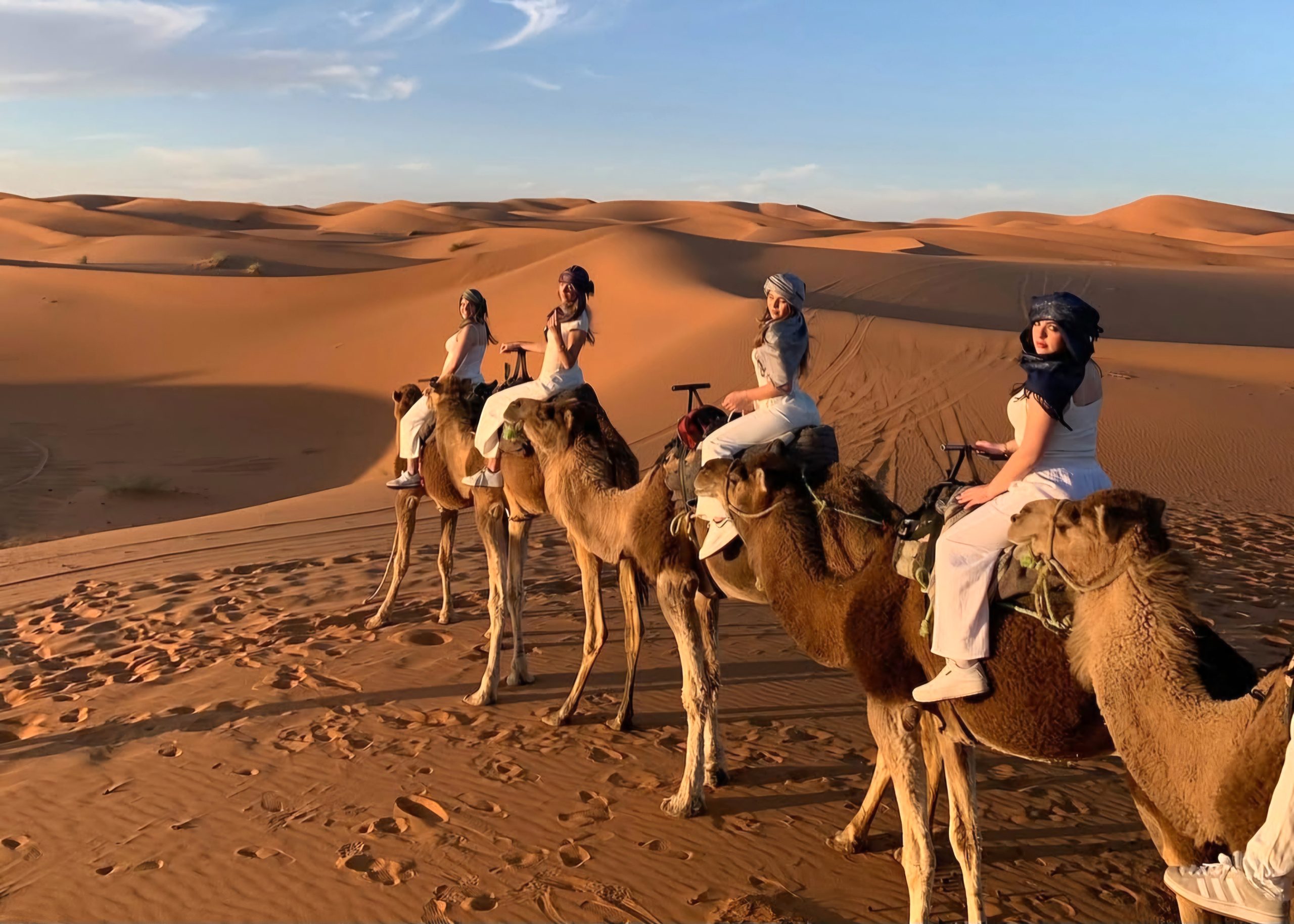
No list of the best places to visit in Morocco is complete without the Sahara. Merzouga, near the Algerian border, is home to the Erg Chebbi dunes, among the tallest sand dunes in the country. Most itineraries include one night in a desert camp, followed by a second night at a nearby hotel so travelers can explore the surrounding area at an easier pace.
A camel trek at sunset across the dunes is the main draw, and it earns the reputation it has. Evenings at the camp often include live music around a fire, and mornings reward early risers with sunrise over the dunes before the drive back. Nearby, Khamlia village is known for Gnawa music, and the market town of Rissani is worth a stop for its traditional ksars, the fortified villages that once anchored desert trade routes.
8 – Ouarzazate, Ait Benhaddou & Dades Valley
Known locally as the film capital of Morocco, this region sits on the classic route between Marrakech and Merzouga, and the scenery and the history here work well together on a single drive day.
Ait Benhaddou is a UNESCO World Heritage kasbah that has appeared in films including Gladiator and Game of Thrones, and the Atlas Film Studios nearby have hosted productions on a similar scale. In Ouarzazate itself, Kasbah Taourirt shows traditional fortress design up close. Further east, the Dades Valley and Todra Gorge add dramatic red rock canyons and short hiking trails, a welcome way to break up a long driving day. Check our day trip to Ouarzazate and Ait Benhaddou for a shorter version from Marrakech.
9 – Atlas Mountains & Imlil
If you want mountain scenery without adding extra days to your trip, the High Atlas Mountains around Imlil are the answer. Imlil sits at the base of Mount Toubkal, the highest peak in North Africa, and it’s the usual starting point for treks into Toubkal National Park.
Even a single day trip from Marrakech puts you in pine forests, terraced valleys, and Berber villages built into the mountainside. Travelers with more time can attempt the two-day route to the Toubkal summit, with an overnight stay at a mountain refuge along the way. For a shorter visit, a guided walk or mule ride through the valleys, followed by lunch at a Berber family home, gives a genuine sense of mountain life without requiring a full trek. See our day trip to Imlil from Marrakech for the full plan.
10 – Ouzoud Waterfalls
The Ouzoud Waterfalls, in the Middle Atlas Mountains, are the tallest waterfalls in North Africa and a popular day trip from Marrakech. The falls drop about 110 meters, surrounded by green cliffs and terraced farmland.
Hiking down to the base of the falls gives the best photo angles and the closest look at the water. A short raft ride across the plunge pool is a common add-on, and it’s worth watching for the Barbary macaques that live in the surrounding trees, one of the few places in Morocco where you can spot them in the wild. Most visitors finish with lunch at one of the restaurants overlooking the falls. See our day trip to Ouzoud Waterfalls for the full plan.
11 – Ourika Valley
Ourika Valley is a 45-minute drive from Marrakech, which makes it one of the easiest ways to see the Atlas Mountains without an overnight stay. The valley is known for its rivers, waterfalls, and Berber villages set into the foothills.
The hike to the Setti Fatma waterfalls is the main activity, with natural pools along the way to cool off in. Local markets and homes along the route offer a chance to learn about mountain life and crafts firsthand, and lunch beside the Ourika River is a relaxed way to end the visit. In winter, the surrounding peaks are often capped with snow, which makes the valley a worthwhile stop in any season. See our day trip to Ourika Valley for the full itinerary.
Best Coastal Places to Visit in Morocco
Morocco Atlantic coast gets less attention than the desert, but it offers a slower pace, fresh seafood, and, in some spots, excellent surfing and wind sports.
12 – Essaouira
Essaouira is a coastal town known for its artist community and steady sea breeze. It has drawn surfers, painters, and travelers looking to slow down after the pace of Marrakech, and its medina, a UNESCO World Heritage site with whitewashed walls and blue shutters, is one of the most relaxed places to spend a day on the coast.
Walk the Skala de la Ville, a sea wall lined with old cannons, for wide ocean views, then head to the harbor to watch fishing boats return before trying fresh seafood at the market. Essaouira is also one of the best spots in Morocco for kitesurfing and windsurfing, thanks to reliable coastal wind that draws enthusiasts from well beyond Morocco. If Marrakech is your base, see our day trip to Essaouira from Marrakech.
13 – Agadir
Agadir is Morocco main beach resort city, and the best option if you want a straightforward beach holiday alongside your cultural stops. It was rebuilt after an earthquake in 1960, so its layout is modern, with long beaches and palm-lined streets rather than a historic medina.
Agadir Beach is one of the longest and safest swimming beaches in Morocco, and the cable car up to the Kasbah ruins is worth the short trip for the view over the city and the Atlantic. Souk El Had, one of the largest traditional markets in the country, is a good stop for spices and argan oil before you move on. Agadir also works well as a base for the nearby surf towns of Taghazout and Imsouane, both a short drive up the coast.
14 – Tangier
Tangier sits at Morocco northern tip, where Africa and Europe are separated by only a narrow strait. For more than a century it has attracted writers and artists, and its mix of Moroccan, Spanish, and French influences gives it a different feel from the rest of the country.
The Kasbah Museum, housed in a former sultan’s palace, is a good starting point for the city’s history, and the Caves of Hercules on the coast are known for their striking rock formations and local legends. Walk the medina and finish at Café Hafa, a long-running café known for its ocean view and unhurried atmosphere. See our Morocco tours from Tangier if you’re starting or ending your trip here.
15 – Asilah
Asilah is a small coastal town known for its street art and quiet pace. Its whitewashed medina, painted with murals, makes it one of the more distinctive stops on Morocco Atlantic coast, and it sees far fewer visitors than the larger coastal towns nearby.
The town is at its most colorful during the summer Asilah Arts Festival, when artists from around the world repaint the walls of the medina. The rest of the year, it’s a quiet place to walk streets where Spanish-influenced buildings sit next to Moroccan design, spend an afternoon at Paradise Beach, or walk the old ramparts for coastal views.
Planning a Trip Around These Destinations
A few practical questions come up often once travelers start comparing these places against each other, and it’s worth addressing them directly rather than leaving them for the FAQ section alone.
Most visitors don’t try to see all 15 places in a single trip. A 7-day trip usually covers Marrakech, the Atlas Mountains, and the Sahara Desert near Merzouga, while a 10 to 14-day trip can add Fes, Chefchaouen, and a coastal stop such as Essaouira or Rabat. Our one week in Morocco itinerary lays out a realistic route if your time is limited. Meknes, Asilah, and the Dades Valley are worth knowing about if you’ve already covered the main circuit on a past trip, since they see far fewer tour groups but offer similar history and scenery. And while Morocco train network covers the main cities well, the desert, the mountains, and the smaller towns are easier and more comfortable with a private, English-speaking driver-guide, particularly on a first visit, since it saves time between stops and lets you adjust the plan as you go.
For more planning detail, see our guides on the best time to visit Morocco and whether Morocco is worth visiting.
FAQ’s About Traveling to Morocco
What is the best place to visit in Morocco for couples?
Marrakech and Chefchaouen are the top picks. Marrakech offers riads, the Jardin Majorelle gardens, and desert nights near Merzouga, while Chefchaouen offers quiet blue streets and a slower pace suited to travelers who want to relax rather than sightsee non-stop.
What are the best places to visit in Morocco with family?
Fes, Rabat, and Essaouira work well for families. Fes and Rabat have safe, walkable historic centers, and Essaouira has beaches and an easy pace. The Merzouga Desert is also popular with families, thanks to camel rides and comfortable desert camps. Our Morocco family tours are built around this kind of schedule.
Where is the best place to go in Morocco for a beach holiday?
Agadir and Essaouira are Morocco top beach destinations. Agadir has long, resort-style beaches suited to swimming and relaxing, while Essaouira combines a historic medina with beach time, seafood, and water sports.
What is the most beautiful city in Morocco?
This depends on personal taste, but Chefchaouen, Fes, and Marrakech are named most often. Chefchaouen is known for its blue streets, Fes for its medieval architecture, and Marrakech for its palaces and gardens.
How many days do I need to visit the best places in Morocco?
Plan for at least 10 to 14 days to comfortably see highlights such as Marrakech, Fes, the Merzouga Desert, and Chefchaouen. This gives enough time to move between cities, the desert, and the coast without rushing.
Is Morocco safe for tourists?
Morocco is generally safe for tourists. As in any country, it helps to stay aware of your surroundings, respect local customs, and avoid isolated areas at night. With these basic precautions, most trips go smoothly.
What is the best time to visit Morocco?
The best time to visit Morocco is spring (March to May) or fall (September to November), when temperatures are mild across most of the country. Summers are hot, especially in the desert, and winters are cooler in the north and in the mountains.
Plan Your Trip to the Best Places to Visit in Morocco
Reading about these places is a good start. Seeing them with a driver-guide who knows the back roads and the right time to reach Jemaa el-Fnaa is another matter entirely. As a family-run Morocco travel company, we build private itineraries around the destinations in this guide, departing from Marrakech, Casablanca, Fes, or Tangier, and adjusted to your pace and interests.
Browse our Morocco tour packages or get in touch to start planning your own trip to the best places to visit in Morocco.