How Safe Is Morocco for Tourists?
How safe is Morocco for tourists? It is one of the first questions almost every traveler asks before booking a trip, and it deserves a straight answer: Morocco is a safe, welcoming country for tourists, with a low rate of violent crime, a large and well-regulated tourism industry, and a visible security presence in every major city. The realistic risks are petty theft and low-level scams rather than danger to your person. The U.S. State Department currently rates Morocco at Level 2, Exercise Increased Caution, the same level applied to France, Germany, and the United Kingdom.
This guide walks through what the current safety data actually shows, what the official travel advisories mean in practice, and the small number of situations that do trip travelers up, so you can plan your trip with confidence rather than guesswork. If you would like a second opinion on your itinerary, get in touch with our team. We have been running private, guide-led tours across Morocco for years, and safety is one of the first things we talk through with every traveler.
Morocco Safety Overview: Advisories, Crime Rate, and What They Mean
Morocco welcomed well over 17 million international visitors last year, making it one of the most-visited countries in Africa and the Arab world. Against that volume, serious crime against tourists remains rare. Most reported incidents involve pickpocketing, inflated taxi fares, or pressure-selling in the souks, not violence.
Here is how the major English-speaking governments currently rate travel to Morocco:
- United States: Level 2, Exercise Increased Caution.
- United Kingdom: No advice against travel to any part of Morocco; standard precautions recommended.
- Canada: Exercise a high degree of caution.
- Australia: Exercise a high degree of caution.
None of these advisories tell citizens to avoid Morocco or reconsider travel. They sit in the same general band as advisories for Spain, Italy, and the UK itself, which reflects broad regional caution rather than a specific threat to visitors.
A Level 2 advisory is also one of the most misunderstood parts of trip planning. It is the second-lowest of four tiers, and it is currently applied to dozens of popular destinations worldwide. For Morocco, the rating is tied to a general, region-wide terrorism risk rather than a specific plot or pattern targeting tourists. In practice, it simply means staying alert in crowded public places, avoiding demonstrations even when they appear peaceful, and registering your trip with your government’s travel program so your embassy can reach you in an emergency. Because advisories are reviewed periodically, it is worth checking your government’s official travel page again a few weeks before departure.
Why Morocco Is Considered a Safe Travel Destination
Government Investment in Tourism Security
Tourism is one of Morocco largest economic sectors, and the government treats visitor safety accordingly. Marrakech, Fes, Casablanca, and Tangier all have a dedicated tourist police brigade, along with CCTV coverage across central tourist zones and train stations. Licensed guides go through formal certification, which is part of why hiring one, rather than accepting help from someone who approaches you on the street, changes how a trip feels almost immediately.
Moroccan Hospitality Builds a Different Kind of Safety
Beyond formal security measures, Moroccan culture works in a visitor’s favor. Hospitality is a genuine point of national pride, and it is common for shopkeepers, drivers, and hotel staff to go out of their way to help a lost or confused traveler find their way. That warmth does not replace ordinary street sense, but it does mean that most interactions with strangers in Morocco are well-intentioned, including the ones that open with an unsolicited sales pitch.
How Morocco Compares to Other Destinations
Travelers often weigh Morocco against other North African or Middle Eastern destinations, and the comparison generally favors Morocco. Its advisory level and violent crime rate sit closer to Southern Europe than to higher-risk countries in the wider region, and its tourism infrastructure, from airport arrivals to guided tours, is considerably more developed than in many neighboring countries. Solo female travelers in particular tend to report an easier experience in Morocco well-touristed cities than in some other regional destinations, largely thanks to the density of tourist police and the number of established riads and hotels.
Is Morocco Safe? A City-by-City Breakdown
Marrakech
Marrakech is Morocco most-visited city, and it shows in the security presence around Jemaa el-Fnaa and the main medina entrances. Petty theft is the primary concern here, simply because of the crowds, so keeping bags zipped and worn in front of you in the souks is worthwhile advice. The medina narrow, maze-like lanes can also make it easy to lose your bearings after dark, which is one reason travelers choose a private tour from Marrakech with a local guide rather than navigating solo on a first visit.
Outside the old city, Marrakech newer districts, Gueliz and Hivernage, feel closer to a modern European city, with wide boulevards, international restaurants, and a lighter scam presence. Both halves of the city are safe to explore; they simply call for different levels of street awareness.
Fes
Fes is home to one of the largest car-free medieval medinas in the world, and its layout is genuinely disorienting even for experienced travelers. The safety profile is similar to Marrakech old city, low risk of violent crime, but a higher chance of getting turned around or approached by unofficial guides near the main gates. A licensed guide here is less a luxury than a practical way to see the tanneries, madrasas, and workshops without losing a day inside its thousands of alleyways.
Travelers arriving through Fes often build a broader loop from there, and our tours from Fes are designed around exactly that kind of first-time visitor.
Casablanca and Rabat
Casablanca is Morocco modern business capital, with wide streets, international hotel chains, and the country’s busiest international airport. A lower density of first-time tourists means a correspondingly lower rate of tourist-targeted scams than in Marrakech medina, though ordinary city precautions still apply after dark. Rabat, the political capital, has an even quieter, more orderly feel, with government buildings, embassies, and a well-kept old town.
Both cities work well as arrival or departure points for a broader itinerary, and travelers flying into Casablanca often use it as the starting point for a tour from Casablanca that continues on to Marrakech, Fes, or the coast.
The Sahara Desert and the Atlas Mountains
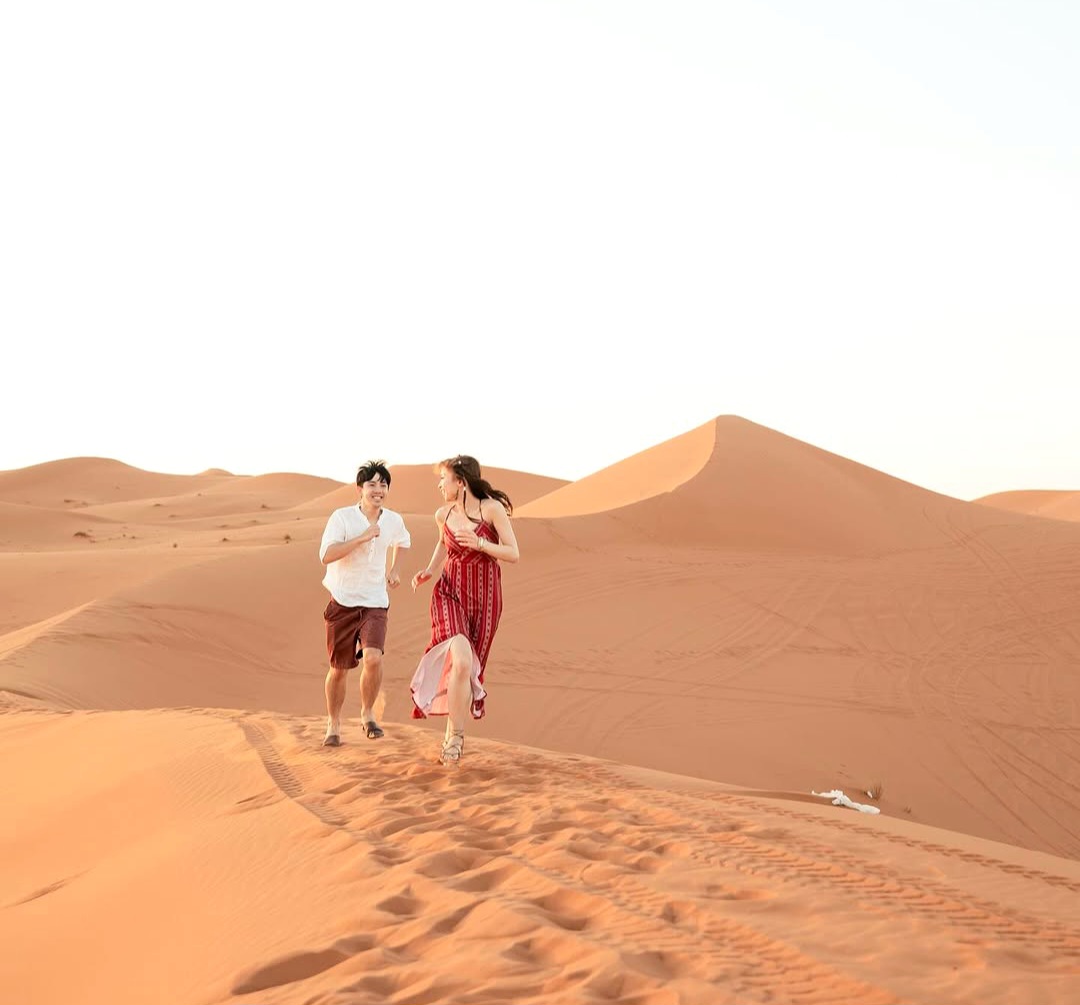
Desert camps near Merzouga are private, well-organized operations, and overnight stays with an experienced local outfitter are considered one of the safest ways to experience the dunes. The main practical risks in the desert are heat and dehydration rather than crime, so spring, fall, and winter are the more comfortable seasons for a desert excursion.
The High Atlas Mountains, including the villages around Imlil, were affected by the September 2023 earthquake, but the region has undergone substantial rebuilding since. Popular hiking routes are open again, guided treks are running as normal, and visiting supports the local economy directly. Our day trip to Ourika Valley from Marrakech covers what today’s Atlas Mountains route looks like for visitors.
Common Scams in Morocco and How to Avoid Them
Nearly every safety complaint from tourists in Morocco traces back to one of a handful of recurring scams rather than serious crime:
- Unofficial guides who approach you near a medina gate or major site and later pressure you toward a shop that pays them a commission.
- Unmetered taxis that quote an inflated flat rate instead of using the meter or an agreed fare.
- Unsolicited help at train stations or with luggage, followed by a demand for payment.
- Overpriced tea invitations, where a friendly chat leads to a hard sell in a nearby shop.
Inflated souvenir prices, which negotiation almost always brings down significantly.
None of these are dangerous, and all are easy to sidestep, agree on taxi fares before getting in, book guides only through a hotel or a licensed operator, and politely decline help you did not ask for. If a situation ever feels pressured or uncomfortable, walking away is always the right move.
Health, Food, and Water Safety in Morocco
Morocco healthcare system is solid in major cities, with well-stocked pharmacies and good private clinics, though facilities thin out considerably in rural areas. Tap water is treated but not generally recommended for drinking, bottled water is inexpensive and available everywhere, including at desert camps. Street food is part of the experience and generally safe at busy stalls with high turnover, the same rule of thumb that applies in most countries.
No vaccinations are required to enter Morocco, though routine vaccines such as tetanus, hepatitis A and B, and typhoid are commonly recommended by travel clinics. Because healthcare costs for foreign visitors are paid out of pocket, comprehensive travel insurance for Morocco that covers medical treatment and evacuation is one of the most useful things to arrange before departure.
Seasonal and Environmental Safety
Morocco main environmental risks are seasonal rather than constant. The rainy season, from November through March, can bring flash flooding in mountain and desert areas, occasionally affecting roads. Summer heat in the Sahara and inland valleys regularly exceeds 100°F, which is why spring and fall remain the more comfortable windows for desert travel. Earthquakes are rare but not unheard of, and building codes for hotels and riads in tourist areas have tightened since 2023.
Timing matters culturally, too. During Ramadan, many restaurants close during daylight hours and the pace of city life shifts. It is not a safety issue, but it is worth planning around if your visit overlaps.
Essential Safety Tips for Your Trip to Morocco
- Keep valuables, your passport, cards, and phone, in a money belt or a bag worn in front of you in crowded markets.
- Agree on taxi fares before getting in, or ask your hotel to call a registered taxi.
- Book guides only through a licensed tour operator or your hotel, never through someone who approaches you on the street.
- Dress modestly, particularly outside hotels and resort areas, which reduces unwanted attention and shows respect for local customs.
- Stick to bottled water and busy, high-turnover food stalls.
- Avoid walking alone through empty medina alleys after dark; stay in well-lit, populated streets.
- Register your trip with your government’s travel program, STEP for U.S. citizens, before departure.
- Keep a digital and paper copy of your passport stored separately from the original.
- Avoid demonstrations, even ones that appear peaceful.
- Trust your instincts. If a situation feels off, it is fine to simply walk away.
Is Morocco Safe for Every Type of Traveler?
Safety in Morocco is not one-size-fits-all, and the practical advice shifts slightly depending on who is traveling.
Solo travelers generally do well in Morocco, since well-touristed cities have a steady flow of other visitors and a strong hotel and guide infrastructure. The main friction solo travelers report is extra attention from vendors, not genuine danger.
Solo female travelers can and do explore Morocco safely every year, though modest dress and awareness of surroundings go further here than in many Western destinations. For a deeper look at what to expect, see our guide on Morocco safety for women traveling solo.
Families tend to have an easy time in Morocco, where children are widely welcomed and treated warmly by locals. Our Morocco family tours are built around pacing and itineraries that work well for younger travelers.
LGBTQ+ travelers should know that Morocco is a socially conservative country where same-sex relationships are not legally recognized, and public displays of affection are not customary for any couple. Many LGBTQ+ visitors travel comfortably with discretion, and our gay Morocco tours are planned with that context in mind.
American tourists face the same general safety picture as travelers from other Western countries, with a few U.S.-specific details worth knowing, from the State Department’s exact advisory wording to entry requirements. We cover that in full in our dedicated guide, How Safe Is Morocco for American Tourists?
How Best Morocco Travel Keeps You Safe
Safety questions come up in nearly every conversation we have with travelers planning a first trip to Morocco, and it is something our team addresses directly rather than glossing over. Every private tour we arrange includes a licensed driver, a guide who knows the specific region you are visiting, and accommodations we have vetted personally. If plans need to change mid-trip, whether that is weather, a closure, or simply a change of heart, our team is reachable to adjust the itinerary rather than leaving you to sort it out on your own.
If you would like help building an itinerary around your comfort level, reach out to our team and we will walk you through the options.
FAQ’s About How Safe is Morocco for Tourists?
Is Morocco safe to visit right now?
Yes. Morocco remains open to tourism, and current travel advisories reflect general regional caution rather than a specific threat to visitors. Millions of tourists visit each year without incident.
Is Morocco safe for tourists?
Yes. Morocco continues to invest heavily in tourism infrastructure and security, including ahead of co-hosting the 2030 FIFA World Cup with Spain and Portugal. Normal travel precautions are all that is typically needed.
Is it safe to walk around Marrakech or Fes at night?
In well-lit, busy areas, yes. It is best to avoid empty medina alleys late at night and to use a licensed taxi or arrange transport through your hotel rather than walking alone through unfamiliar backstreets after dark.
Is Morocco safer than Egypt or Tunisia?
Morocco tourism infrastructure and violent crime rate compare favorably with several other North African destinations, and its current travel advisory level sits closer to Southern Europe than to higher-risk countries in the region. That said, every destination has its own risk profile, and this comparison is only one factor to weigh alongside your own itinerary and interests.
Do I need travel insurance for Morocco?
It is not legally required to enter the country, but it is strongly recommended. Morocco does not offer free healthcare to foreign visitors, and comprehensive coverage that includes medical treatment and evacuation offers real peace of mind, particularly for desert or mountain excursions.
Is it safe to visit the Sahara Desert?
Yes, especially with an established local outfitter running the camp. The main risks are heat and dehydration rather than crime, so spring, fall, and winter remain the more comfortable seasons for a desert excursion.
Is Morocco safe after the 2023 earthquake?
Yes. The Atlas Mountain regions affected by the earthquake, including areas around Imlil and Al Haouz province, have undergone significant rebuilding, and popular hiking and touring routes are open again.
Conclusion: How Safe Is Morocco for Tourists?
So, how safe is Morocco for tourists overall? By nearly every available measure, current government advisories, low rates of violent crime, and the experiences of the millions of visitors who travel there each year, Morocco is a safe and welcoming destination. The realistic risks are petty theft and low-level scams, both straightforward to avoid with a little awareness and a licensed guide. With that groundwork in place, there is little standing between you and everything Morocco does best: walking the medinas of Marrakech and Fes, watching the sun set over the dunes near Merzouga, and hiking the trails of the Atlas Mountains.