12 Days Tour from Casablanca
12 Days Tour from Casablanca: What to Expect
This 12 days tour from Casablanca is built for travelers who want to see the full range of Morocco without feeling rushed between stops. Over less than two weeks, the route carries you from the modern energy of Casablanca through the imperial cities of the north, into the dunes of the Sahara, and finally to the color and pace of Marrakech, with enough breathing room along the way to actually enjoy each place rather than just check it off a list.
The journey opens in Casablanca with a visit to the Hassan II Mosque before heading to Rabat and then north into the Rif Mountains to Chefchaouen, where the blue-washed medina and slower rhythm set an easy tone for the first few days. From there, the route runs through Volubilis, Meknes, and Fes, three stops rich with Roman ruins, imperial history, and UNESCO-listed heritage, before climbing through Ifrane and the Cedar Forest and dropping into the Ziz Valley on the way to Merzouga, where a camel trek into the Erg Chebbi dunes and a night in a private desert camp mark the halfway point of the trip.
The second half of this 12 days Morocco tour moves through Todra Gorges and the Dades Valley, then on to Ouarzazate and Ait Ben Haddou before crossing the High Atlas Mountains into Marrakech. A day trip to the Ourika Valley rounds out the itinerary before your final transfer, giving you one last taste of Morocco’s mountain scenery before heading home. Since every trip with Best Morocco Travel is private, this 12 days Morocco itinerary from Casablanca can be adjusted in pace, hotel category, or stops to match what you actually want out of the trip.
Highlights of This 12 Days Morocco Tour from Casablanca
- Visit the iconic Hassan II Mosque in Casablanca.
- Explore Rabat’s Hassan Tower and Kasbah Udayas.
- Wander the blue streets of Chefchaouen’s Medina.
- Walk among ancient Roman ruins at Volubilis.
- Tour Meknes imperial gates and historic granaries.
- Discover Fes medina with an expert local guide.
- Cross Ifrane and the Cedar Forest en route.
- Ride camels across the golden Erg Chebbi dunes.
- Camp overnight beneath the stars in Merzouga.
- Hear traditional Gnawa music in Khamlia village.
- Walk through dramatic Todra Gorges and Dades Valley.
- Visit Ait Ben Haddou and Ouarzazate film studios.
- Explore Marrakech’s souks, palaces, and Jemaa el-Fnaa.
- Take a day trip to the Ourika Valley.
Included & Not Included:
- Private transportation with air conditioning
- English/Spanish-speaking driver
- Accommodations during the tour
- Camel ride in the Sahara Desert
- All Breakfasts & three Dinners
- Entrance fees to monuments
- Lunches & drinks
- Tips (optional)
- Flights
12 Days Morocco Tour Itinerary from Casablanca
Day 1: Welcome to Casablanca, Morocco
Your 12 days tour from Casablanca begins the moment you land at Mohammed V International Airport, where your private driver will be waiting to take you straight to your hotel. There’s no itinerary to follow on this first afternoon, so use the time however suits you best: rest off the flight, or head out and get an early feel for the city at your own pace.
Casablanca doesn’t run on the same rhythm as Morocco’s older imperial capitals. It’s the country’s economic center first and a historic city second, with a skyline and street life that feel noticeably more modern than what you’ll see later in the trip. The one stop worth prioritizing is the Hassan II Mosque, built directly over the Atlantic and ranking among the largest mosques in the world, and one of the few in Morocco open to non-Muslim visitors on a guided interior tour. As evening settles in, the Corniche fills with locals out for a walk along the water, a relaxed way to close out your first night before the tour properly begins.
Day 2: Casablanca – Rabat – Chefchaouen [346 km]
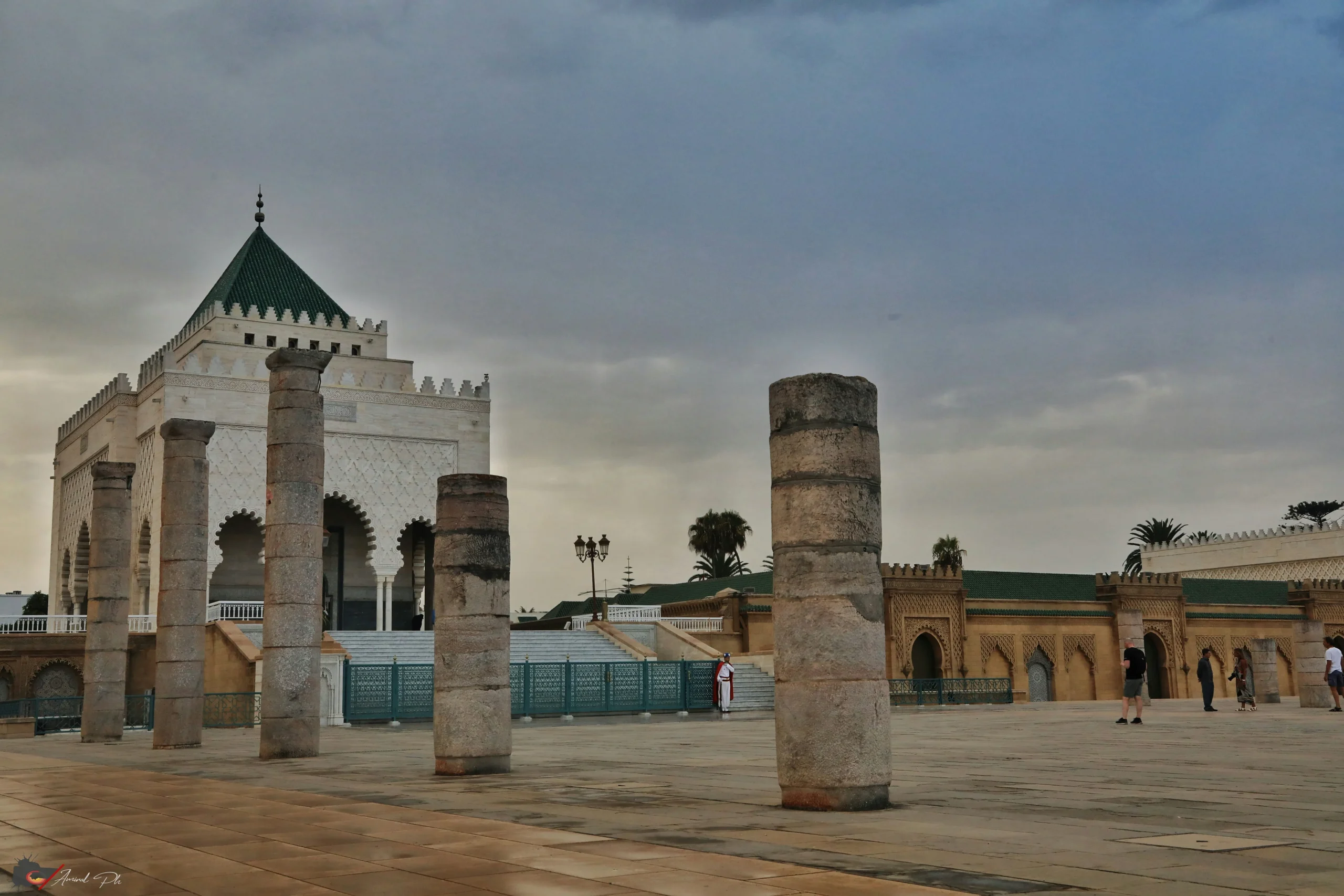
After breakfast, the drive heads north along the coast to Rabat, a city that feels distinctly different from Casablanca: calmer, greener, and shaped by its long history as a seat of political power. The Hassan Tower is the first stop, an unfinished 12th-century minaret that never got the mosque it was built for, standing today as one of the country’s most recognizable ruins. Right beside it is the Mausoleum of Mohammed V, where detailed zellige tilework and carved cedar ceilings are worth slowing down for. From there, the Kasbah of the Udayas offers a quieter contrast, its whitewashed alleys leading out to a clifftop terrace over the Atlantic.
By early afternoon, the route turns inland and climbs into the Rif Mountains toward Chefchaouen, and the scenery shifts noticeably as the elevation increases. Your first look at the town’s famous blue-painted buildings comes on arrival, and the evening is left open for an unhurried walk through the medina before settling in for the night.
Day 3: Free Day in Chefchaouen
Today has no fixed schedule, which is exactly the point. Chefchaouen rewards slow, unplanned wandering, its blue-toned alleys shift shade with the light throughout the day, and the small shops selling wool goods, leather, and local crafts are worth browsing without a set plan. Plaza Uta el-Hammam, the town’s main square, is a good place to stop for mint tea and watch the day unfold around you.
If you’d rather add some activity to the day, the walk up to the Spanish Mosque takes roughly 30 to 45 minutes and rewards the climb with a wide view over Chefchaouen’s rooftops and the surrounding hills, particularly good around sunset.
Day 4: Chefchaouen – Volubilis – Meknes – Fes [265 km]
Leaving the mountains behind, the road opens into flatter countryside on the way to Volubilis, generally considered Morocco’s best-preserved Roman site. What survives here, a triumphal arch, standing columns, and mosaic floors still largely intact after nearly two thousand years, gives a genuine sense of how far Roman influence once extended into North Africa.
From there, the route continues to Meknes, the least-visited of Morocco’s four imperial cities and, in part because of that, one of the more relaxed to explore. Bab Mansour, its monumental gate, is regarded as one of the finest examples of Moroccan gate architecture, while the Sahrij Souani basin and the old royal granaries hint at the scale this city once reached under Sultan Moulay Ismail. The day ends in Fes, where a traditional riad inside the old medina walls awaits for the next two nights.
Day 5: Fes Guided City Tour
Fes holds one of the largest car-free urban areas in the world, and having a local guide here makes a genuine difference, the medina’s alleys twist and cross with little obvious logic for a first-time visitor. The day starts at Bab Boujloud, the ornately tiled Blue Gate, before heading into souks selling everything from spices to hand-stitched leather goods.
Along the way, you’ll stop at the Bou Inania Madrasa, one of the finest surviving examples of Marinid-era architecture, and pass the exterior of Al-Qarawiyyin, widely recognized as the world’s oldest continuously operating university. The Nejjarine Fountain and its adjoining museum offer a quieter moment before the walk continues into the Mellah, the old Jewish quarter, where the architectural style shifts noticeably from the rest of the medina. A rooftop viewpoint late in the day puts the whole tangled cityscape into perspective before you head back for the evening. If Fes turns out to be a highlight, our private tours from Fes page has other route options built around this region.
Day 6: Fes – Ifrane – Azrou – Ziz Valley – Merzouga Desert [458 km]
This is the longest driving day of the trip, though the constantly changing scenery helps the distance pass quickly. Ifrane, with its sloped roofs and manicured parks, looks almost out of place in Morocco, which is exactly why it’s earned its nickname, and it makes for a pleasant short stop along the way. A little further on, the cedar forest near Azrou is home to wild Barbary macaques, often spotted right along the roadside.
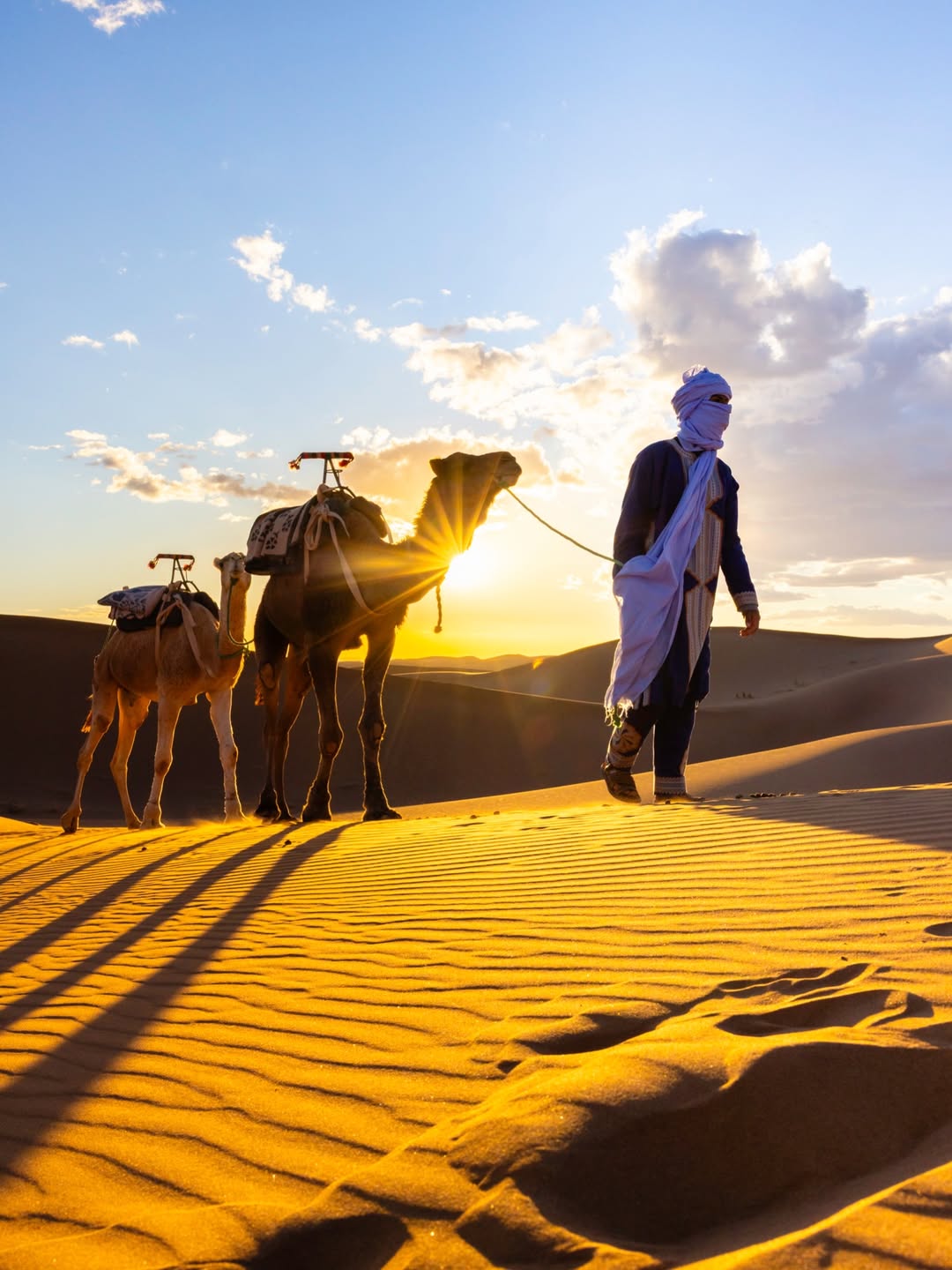
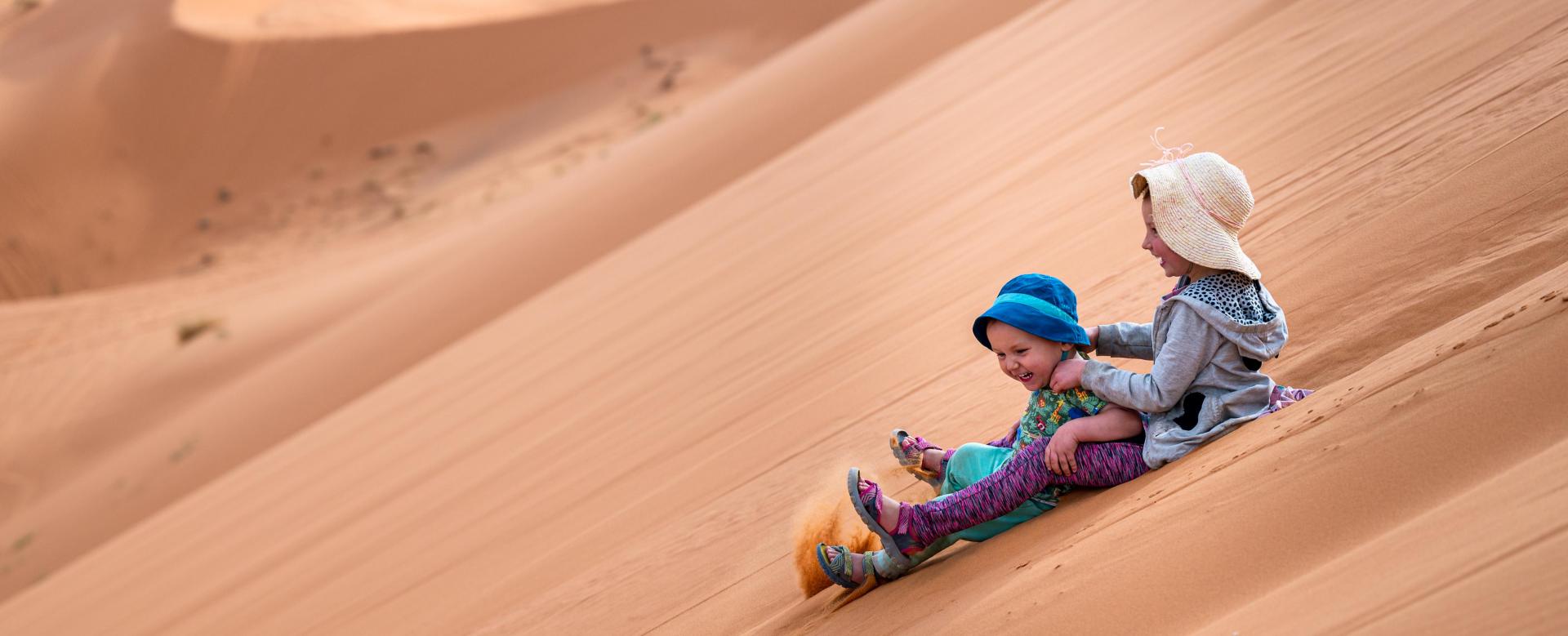
South of the Middle Atlas, past the town of Midelt, the landscape turns drier and more dramatic as you enter the Ziz Valley, a long ribbon of palm groves cutting through otherwise rocky terrain. By late afternoon, you’ll reach Merzouga, where camels are waiting to carry you into the Erg Chebbi dunes for sunset. Dinner and a night under canvas, with live drumming around the campfire, follow at your private desert camp, one of the highlights of this entire 12 days Morocco tour.
Day 7: Merzouga Desert Experience
Most guests choose to wake before dawn for sunrise over the dunes, a quiet, gradually warming hour that’s hard to replicate anywhere else on the trip. Back at camp after breakfast, the day continues with a visit to Khamlia, a small village settled generations ago by families of West African descent and known today for keeping Gnawa musical traditions alive through informal performances.
The rest of the day moves at a slower pace: time to walk the dunes on foot, visit a nearby oasis, or simply take in the scale of the desert before returning to camp for dinner and a second night in the Sahara.
Day 8: Merzouga Desert – Rissani – Todra Gorges – Dades Valley [276 km]
Leaving Merzouga, the route passes through Rissani, historically a trading post on the caravan routes into sub-Saharan Africa and still home to one of the region’s more authentic markets. Erfoud, a short drive further, is known for fossil workshops where 350-million-year-old trilobites and ammonites are cut and polished from stone quarried nearby.
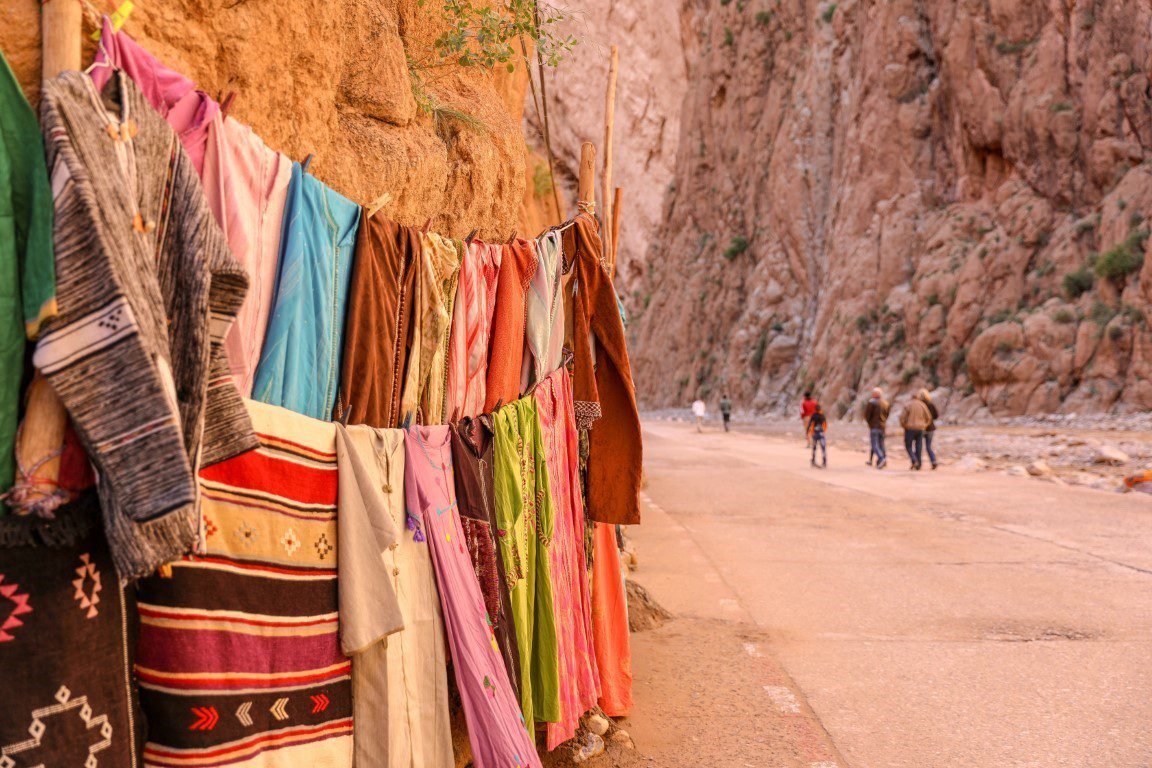
The scenery shifts again at Todra Gorges, where the canyon narrows to just a few meters across with rock walls rising over 150 meters on either side, a genuinely dramatic stop worth the short walk in. The day ends in the Dades Valley, where centuries of erosion have carved rock formations locally nicknamed Monkey Fingers, and a countryside hotel set among them offers a peaceful overnight stay.
Day 9: Dades Valley – Ouarzazate – Ait Ben Haddou – Marrakech [334 km]
The morning drive passes through the Valley of Roses and Skoura Oasis, a stretch known for rose cultivation, old kasbahs, and dense palm groves that have supported farming communities here for generations.
Ouarzazate comes next, nicknamed the door of the desert and known internationally as a longtime filming location for major studio productions, its mix of film sets and historic kasbahs reflects that dual identity well. From there, Ait Ben Haddou comes into view, a UNESCO-listed fortified village of red clay buildings that has appeared in numerous films and remains one of Morocco’s most photographed sites. The final stretch crosses the High Atlas via the Tizi n’Tichka Pass, the country’s highest year-round mountain road, before descending into Marrakech for the night.
Day 10: Marrakech Guided City Tour
Marrakech’s old city moves at a noticeably faster pace than anything earlier in the trip, and the guided tour is built around that energy. The Koutoubia Mosque, visible from much of the city, sets the tone before visits to the Saadian Tombs, rediscovered only in 1917 after being sealed for centuries, and the Bahia Palace, known for its carved cedar ceilings and tiled courtyards. The ruined grandeur of El Badi Palace, once among the most opulent buildings in the Islamic world, rounds out the historical stops.
By afternoon, Jemaa el-Fnaa Square is in full swing, with storytellers, musicians, and food stalls setting up as the day winds down. The surrounding souks are worth a slow, unhurried walk before heading back to your riad for the evening. If Marrakech becomes your favorite stop on this 12 days Morocco tour, our tours from Marrakech page has other route ideas that start there.
Day 11: Ourika Valley Day Trip from Marrakech
Today takes you from Marrakech into the Ourika Valley in the Atlas Mountains, one of the most popular nature escapes near the city. You’ll pass through traditional Berber villages and green valleys set against striking mountain scenery, with rivers running alongside much of the route. There’s time to browse local markets and see rural Moroccan life up close, and travelers wanting more activity can take an optional hike to the Setti Fatma waterfalls for good views and cooler mountain air, before heading back to Marrakech for the night. For more on this route, see our Ourika Valley day trip page.
Day 12: Transfer to Marrakech or Casablanca Airport
On the final day of your 12 days Morocco tour, enjoy a relaxed morning before your transfer to either Marrakech or Casablanca Airport, depending on your flight home. This marks the end of your journey through Morocco, and we hope to welcome you back again soon.
You Might Also Like
Looking for more time in Morocco? Explore our other Casablanca departure tours.
Tour Map
Note Bien
Note: This itinerary is customizable to match your preferences and duration of stay. Contact us for personalized tour options and exact pricing based on group size and accommodation preferences.
Book This Tour :



FAQs About This 12 Days Tour from Casablanca
Is 12 days enough to see Morocco?
Yes. A 12 days tour from Casablanca gives you enough time to cover Morocco’s main regions.
How much does a 12 days Morocco tour cost?
The price of a 12 days Morocco itinerary depends on the season, accommodation category, and level of customization you choose. Options range from standard hotels and desert camps to luxury riads and premium desert experiences, so the trip can be shaped to fit different budgets and travel styles.
What type of vehicle is used during the tour?
You’ll travel in a comfortable, air-conditioned private vehicle with a professional driver-guide throughout the trip. For desert routes and longer distances, a Toyota Land Cruiser or similar 4×4 is used to keep the ride smooth and safe across all terrain types.
What should I pack for a Morocco desert tour?
Pack light, with clothing suited to changing weather throughout the day. Daytime temperatures are usually warm, while desert nights can turn surprisingly cool. Useful essentials include sunglasses, sunscreen, a hat, comfortable walking shoes, a light jacket, and a small day backpack for daily excursions.
Can this 12 days Morocco itinerary be customized?
Yes. This 12 days Morocco tour from Casablanca can be fully customized around your interests, with flexible accommodations, activities, destinations, and pace, whether your priority is culture, adventure, photography, or simply relaxing along the way.
Can I start this tour from Marrakech instead of Casablanca?
Yes, this itinerary can also be adapted to start from Marrakech, with small adjustments to the route while keeping all the major highlights of the original trip intact.