Is Morocco Safe for Americans?
Is Morocco safe for Americans? Yes, for the great majority of U.S. travelers. Morocco has a mature, well-developed tourism industry built around international visitors. Americans travel throughout the country each year, exploring its historic cities, the Atlas Mountains, the Atlantic coast, and the Sahara Desert without significant incident. Like any international destination, Morocco carries certain risks. The U.S. government documents these risks in detail, and a well-prepared traveler simply understands that guidance rather than avoiding the country altogether.
This guide is written specifically for American travelers. It draws on both the current U.S. State Department advisory and 25 years of hands-on experience arranging private travel throughout Morocco for U.S. clients. Below, we cover the questions Americans ask most: the current safety rating, entry requirements, the laws that most often surprise U.S. visitors, and the practical realities of money, health care, and transportation on the ground. For a deeper look at a specific city or at solo female travel, we link to our dedicated guides throughout.
What Is the Current U.S. Travel Advisory for Morocco?
The U.S. Department of State currently rates Morocco at Level 2: Exercise Increased Caution, citing terrorism risk. The advisory was reissued on April 21, 2025, and the guidance page was last updated July 30, 2026. So it reflects present conditions, not outdated information. A Level 2 rating is not a recommendation against travel. It sits two full tiers below “Do Not Travel,” and it simply asks visitors to stay alert.
If you decide to travel, the State Department recommends a few concrete steps. Stay alert in areas frequented by tourists. Avoid demonstrations and large crowds. And enroll in the Smart Traveler Enrollment Program (STEP), which lets the nearest U.S. embassy or consulate reach you during an emergency. Registration takes a few minutes and is well worth doing before you fly.
Save these numbers before you land: 190 for police (19 from a landline), 150 for ambulance and fire, and 177 for the Gendarmerie Royale. The U.S. Consulate General in Casablanca handles services for American citizens, since the U.S. Embassy in Rabat does not offer walk-in consular services. The after-hours emergency line is +212-537-63-72-00. Because advisories change, check travel.state.gov again shortly before departure, not just during early planning.
Do Americans Need a Visa for Morocco?
No. U.S. citizens can enter Morocco visa-free for stays of 90 days or fewer. Your passport needs at least six months of remaining validity and one blank page for stamping. If you plan to stay longer than 90 days, request an extension before that window closes. Otherwise, you will need to appear before a Moroccan judge and possibly pay a fine before leaving. No vaccinations are currently required for entry, though it’s worth checking the CDC’s Morocco-specific health guidance before you go.
Why Do Americans Feel Especially Welcome in Morocco?
Morocco was the first country in the world to formally recognize U.S. independence, back in 1777. That relationship has never broken. In practice, this shows up in real, everyday ways: English is increasingly spoken alongside French and Arabic in tourist areas, and the tourism sector actively caters to American visitors. Hospitality toward U.S. travelers tends to feel genuine rather than purely transactional. This history will not change your daily precautions, but it helps explain why American tourism to Morocco keeps growing.
What Should Americans Know Before They Arrive?
A few practical matters are worth sorting out before you pack. Dress modestly at religious sites, in rural areas, and in traditional neighborhoods covered shoulders and knees are appropriate. Resorts and beach areas are more relaxed. The Moroccan dirham is a closed currency, so you can only exchange it inside the country. Declare foreign currency over roughly $1,500 USD on arrival, and convert any leftover dirhams before you leave. Firearms, drones, and satellite phones all require prior government authorization; without it, they will be confiscated at customs. And keep timing in mind: the rainy season, October through March, brings a real risk of flash flooding on rural roads, while summer heat in the interior and desert can be intense. Plan your routes and packing list accordingly.
Crime and Petty Theft: What Americans Should Actually Expect
Violent crime against tourists is uncommon in Morocco. Petty theft, though, is a real and ongoing concern in crowded tourist areas. Pickpocketing happens most often in souks, open-air markets, and on public transportation, where dense crowds provide cover. Bag snatching occurs too, including theft from parked cars, so never leave valuables visible inside a vehicle. Aggressive panhandling is common in busy tourist districts. A firm, polite decline while you keep walking is usually enough to end it.
The right response to these risks is simple, not extreme. Do not display cash, jewelry, or electronics. Keep your bag closed and within sight in crowds. Use registered taxis rather than unmarked cars. And use ordinary judgment about walking alone after dark in unfamiliar neighborhoods. These are the same habits an experienced traveler would use in any major international city.
What Scams Should Americans Watch For?
In popular tourist areas, you will likely be approached by people offering unsolicited directions, tours, or other services. Some offers are genuine. Others are set up to end in a request for payment you never agreed to. The safest approach is to arrange guides and tours through your hotel or a licensed operator, not through a stranger on the street. A firm decline is perfectly fine if you would rather skip the interaction entirely.
Two scam types deserve special mention, since Americans are frequent targets. Online romance and “stranded traveler” scams usually begin with an online relationship, or with a claim that a U.S. citizen urgently needs money abroad. Legitimate requests do not arrive this way. Dating app safety is a related concern, since criminals have used dating platforms in Morocco to set up robberies. If you use one while traveling, meet in public, video-call before meeting, and tell a trusted contact your plans. Bargaining in the souks, by contrast, is not a scam at all it is simply how the markets work. Agree on a price before you buy.
Is Morocco Safe for American Women?
Yes, with the right preparation. Morocco is a Muslim-majority country, and its social norms differ from those in the U.S. Women traveling alone may occasionally get unwanted attention, especially in crowded tourist areas. Dressing modestly outside resorts, traveling with a companion when possible, and arranging transportation in advance all help significantly. For a full breakdown of etiquette, recommended destinations, and specific safety habits for women, see our complete guide: Traveling to Morocco as a Woman.
Is Morocco Safe for Americans Traveling Alone?
Yes, solo travel here is entirely doable. First-time visitors, though, should plan more carefully than they might for a trip to Western Europe. Medinas are intentionally maze-like, and unofficial guides can be more persistent than you’re used to at home. Choose reputable accommodations. Keep a trusted contact informed of your itinerary. Secure your important documents. And rely on established transportation providers between cities. Travelers who want independence without managing every logistical detail often find that a private, custom itinerary strikes the right balance.
City-by-City Safety Overview for American Travelers
- Marrakech is well set up for tourism. Its Medina calls for a bit more awareness, since narrow, crowded lanes are shared by pedestrians, motorcycles, and bicycles. Full guide: Is Marrakech Safe for Tourists?
- Fes has one of the most intricate medinas in the country. A licensed guide is genuinely useful here. Full guide: Is Fes Safe for Tourists?
- Casablanca, Morocco main commercial center, has a more urban crime profile than Marrakech or Fes. The same precautions you’d use in any large city apply. Full guide: Is Casablanca Safe for Tourists?
- Tangier, Morocco gateway to Europe, is generally safe. Stick to well-lit, populated areas after dark. Full guide: Is Tangier Safe for Tourists?
- Rabat, the capital, is widely considered one of the calmest, most orderly cities in Morocco. Full guide: Is Rabat Safe for Tourists?
- The Sahara Desert region around Merzouga carries no inherent danger. Reaching it involves long distances, though, which makes careful planning and a reliable driver matter more than any risk you’d face once you arrive.
What Moroccan Laws Should Americans Know Before Traveling?
Several Moroccan laws differ sharply from U.S. law, and they are worth knowing before you land. Drugs remain fully illegal, including cannabis, regardless of decriminalization trends in parts of the U.S. Same-sex relations are criminalized, with penalties of up to three years in prison. LGBTQ+ travelers do visit Morocco regularly, but public displays of affection can bring legal or social consequences. Photographing government buildings, palaces, or other sensitive sites is restricted, so ask first if you’re unsure. Public criticism of the King, the government, or Islam can carry legal consequences. Bounced checks and unpaid hotel bills are treated as fraud, not civil disputes, and can result in a passport being held until the matter is resolved. Finally, passports and medications cannot be mailed or couriered into Morocco they will be confiscated at customs.
How Should Americans Handle Money and ATMs?
ATMs are widely available in Moroccan cities and generally accept U.S. cards. Use machines inside banks or hotels when you can, and stay alert while withdrawing cash. Many small shops and restaurants take cash only, and larger businesses that do accept cards sometimes add a surcharge. Carry a reasonable amount of cash for daily spending, and keep it out of sight.
Are Food and Water Safe for American Travelers?
Moroccan food is one of the best reasons to visit, and there’s no need to avoid it. Tagines, couscous, fresh bread, and mint tea are safe at restaurants and market stalls that look clean and busy. Tap water is not considered safe to drink in most of the country, so stick to sealed bottled water throughout your trip. Use similar caution with ice unless you know its source.
One more point matters more to Americans than they often expect. Most U.S. health insurance, including Medicare and Medicaid, does not cover care abroad. Moroccan hospitals typically require cash payment before treatment. Supplemental travel insurance with medical evacuation coverage is not optional it is the one thing most likely to matter if something goes wrong.
How Should Americans Get Around Morocco Safely?
City “petit” taxis are generally safe by day and color-coded by city: red in Casablanca, blue in Rabat, tan in Marrakech. Always ask the driver to run the meter. Rideshare apps exist, but they operate in a legal gray area, with formal regulation expected before Morocco co-hosts the 2030 World Cup. Some friction between rideshare and taxi drivers has been reported near airports and hotels, so use some caution. Trains between major cities are generally safe, though occasional theft happens, so keep your bag in sight. City buses are not a recommended option for tourists.
If you plan to drive, modern highways connect the main cities well. Mountain roads, though, can be narrow and poorly lit, and flash flooding is a real risk from October through March. Most first-time American visitors find a private driver more relaxing than self-driving, especially on longer routes toward the desert.
How Can Americans Stay Safely Connected?
Update your phone’s software before you leave home. Avoid public Wi-Fi, and use a reputable VPN for sensitive accounts. A local SIM card is inexpensive and easy to find at Moroccan airports. It’s genuinely useful for navigation and staying in touch, without the cost of international roaming.
How Best Morocco Travel Supports American Visitors
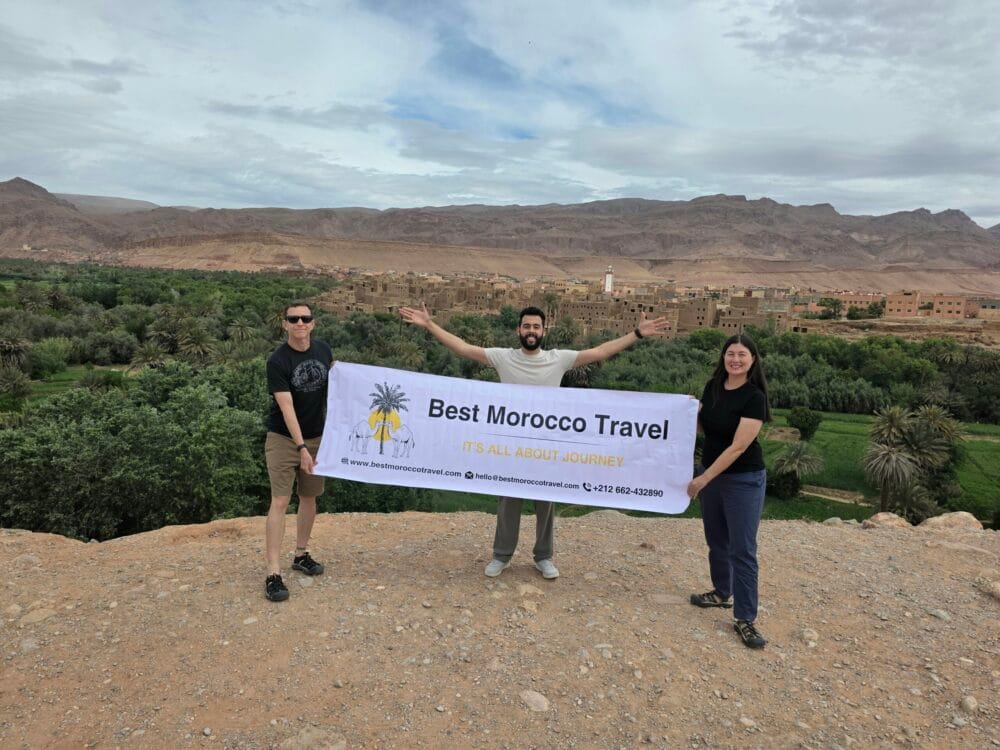
Working with an established local operator changes the experience for American travelers visiting Morocco for the first time. Best Morocco Travel has spent 25 years designing private Morocco tours exclusively. We do not run shared group tours. Instead, clients travel on their own itinerary and at their own pace, with professional drivers and knowledgeable local guides handling the logistics.
Our team stays available around the clock throughout each client’s stay. If a question comes up or plans need to change, you get a direct response from a real person, not an automated reply.
Is Morocco Safe for Americans? The Bottom Line
Morocco rewards preparation, not excessive caution. American travelers can explore its imperial cities, the Atlas Mountains, the Atlantic coast, and the Sahara Desert within a tourism industry that has spent decades learning to host international visitors well. The current U.S. advisory, the everyday precautions above, and the legal differences we’ve outlined are not reasons to stay home. They are simply what you need to know to make the decision with real confidence. If you’d rather not manage every detail yourself, a private itinerary with Best Morocco Travel takes care of the planning and the logistics, so you can focus on the trip itself.