Morocco Travel Tips
If you’re searching for the best Morocco travel tips before your trip, you’re already doing the smart thing. Morocco is one of those destinations that rewards a little planning. The country moves fast, the culture is rich, and the landscapes change dramatically from one region to the next, from the blue streets of Chefchaouen to the golden dunes of the Sahara. Show up prepared, and it’s one of the easiest, most rewarding places you’ll ever visit. Show up without a plan, and it can feel overwhelming fast.
This guide covers everything first-time visitors ask us before booking a trip: when to go, how many days you need, what to pack, how much things cost, and how to stay safe and comfortable from the moment you land. Whether you’re planning your own route or looking into a private Morocco tour, these are the essentials worth knowing before you go.
Best Time to Visit Morocco
Morocco is a year-round destination, but the season you pick shapes the entire trip. We’ve covered this in more depth in our guide on the best time to visit Morocco, but here’s the short version.
- Spring (March to May): Spring is generally considered the best time to visit Morocco. The Atlas Mountains are green, wildflowers are blooming in the valleys, and temperatures across the country sit in a comfortable range. This is peak travel season, so book your riad and tours a few weeks ahead.
- Fall (September to November): Fall is a close second to spring. The summer heat has broken, days are warm without being extreme, and evenings are pleasant almost everywhere, including the desert. Many travelers actually prefer fall because the crowds are slightly thinner than spring.
- Summer (June to August): Summer in Morocco is hot, especially inland. Marrakech regularly passes 100°F (38°C), and the Sahara gets even hotter during the day. If you’re traveling in summer, plan desert activities for early morning or evening, and consider spending more time on the coast in Essaouira or Agadir, where the Atlantic breeze keeps temperatures manageable.
- Winter (December to February): Winter surprises a lot of first-timers. Daytime temperatures in Marrakech and Fes are usually mild and pleasant. Nights are a different story, especially in the Sahara and the Atlas Mountains, where temperatures can drop close to freezing. If your itinerary includes an overnight desert camp in winter, pack warm layers.
How Many Days Do You Need in Morocco?
This is one of the questions we hear most, and the right answer depends on your pace and priorities.
- 5 to 6 days covers the essentials: Marrakech, a day trip into the Atlas Mountains, and a two-day Sahara Desert tour.
- 7 to 10 days allows you to add Fes, Chefchaouen, and more time in the desert without feeling rushed.
- 12 to 16 days is enough for a full loop through the Imperial Cities, the Sahara, the Dades and Todra Gorges, and down to Marrakech or Casablanca, with breathing room to relax along the way.
Morocco is larger than it looks on a map, and mountain roads take longer to drive than the distance suggests. A common mistake is booking a rushed one-day “desert tour” from Marrakech, not realizing that Merzouga, home to the real Sahara dunes, is roughly a 9 to 10-hour drive away. If the desert is a priority, give it at least two to three days including travel time, or consider a multi-day desert tour that builds the driving time into a proper itinerary.
Is Morocco Safe to Travel?
Morocco is generally a safe country to visit, including for solo travelers and solo women. We go into more detail in our article on whether it’s safe to travel to Morocco, but here are the basics.
General Safety Tips
- Keep valuables out of sight in busy markets, especially in Marrakech Jemaa el-Fnaa and the medinas of Fes.
- Always agree on the price before taking a taxi or accepting help from someone who offers to guide you through the medina. This can help avoid unexpected charges later.
- Use registered taxis or arrange transport through a trusted operator, especially for longer trips outside the cities.
Solo Female Travelers
Solo women generally report positive experiences in Morocco, though a bit more attention on the street is common compared to Europe or North America. Dressing modestly, staying in well-reviewed riads, and traveling with a reputable tour company for desert or mountain trips all help make the experience smoother and more comfortable.
Traveling to Morocco With Family
Morocco is a family-friendly destination. Moroccans are generally warm toward children, and many riads and tour operators can arrange family-appropriate accommodations and pacing.
Entry Requirements and Visa Information
Most visitors from the United States, Canada, the United Kingdom, the European Union, and Australia can enter Morocco visa-free for stays of up to 90 days, though requirements can change, so it’s worth checking your country’s current entry rules before you book flights. Make sure your passport is valid for at least six months beyond your travel dates. Morocco does not currently require a visa for short tourist stays for most Western passport holders, but it’s always smart to double-check with the nearest Moroccan consulate or your airline before departure.
What to Wear in Morocco
Morocco is a Muslim-majority country, and while cities like Marrakech and Casablanca see plenty of Western tourists, modest dress is appreciated almost everywhere, and necessary in some settings.
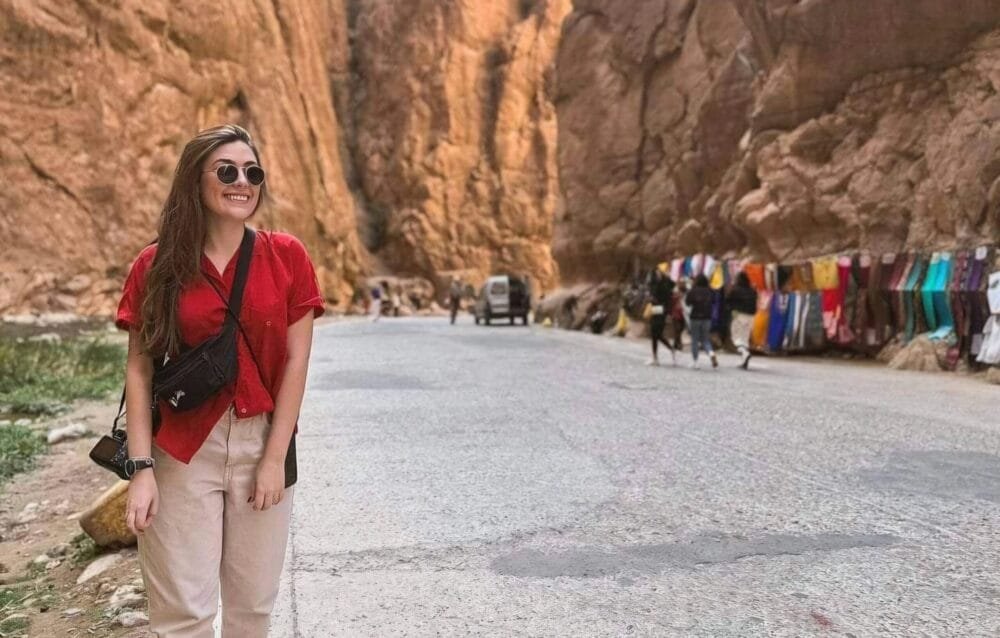
- For Women: Loose clothes that cover your shoulders and knees are a good choice for comfort and respect in Morocco. Lightweight maxi dresses, wide-leg pants, and long skirts work well in the heat while staying respectful. A scarf is useful for both sun protection and modesty, and it’s often required to enter mosques or certain religious sites.
- For Men: Shorts are fine in resort areas and riads but can draw attention in more traditional neighborhoods. Lightweight pants and breathable button-up shirts are the safer everyday choice, especially in smaller towns.
- For the Desert: Pack layers no matter the season. Days are hot, nights are cold, and sand gets into everything. A light jacket for the evening, closed shoes for walking on dunes, and a headscarf or buff to block blowing sand are all worth the space in your bag.
Morocco Packing List Essentials
Beyond clothing, a few items come up again and again as things travelers wish they’d packed.
- Sunscreen and SPF lip balm, since desert and city sun is both intense
- A reusable water bottle, since tap water isn’t recommended for drinking
- A portable phone charger for long travel days between cities
- Cash in small denominations of Moroccan dirham, since many smaller vendors and rural areas don’t accept cards
- A basic first-aid kit with stomach remedies, just in case
- Earplugs, if you’re a light sleeper near a mosque, since the call to prayer happens before sunrise
- Comfortable walking shoes, since medinas involve a lot of uneven, cobbled ground
Money, Budget, and Currency Tips
Currency
Morocco currency is the Moroccan dirham (MAD), and it’s a closed currency, meaning you generally can’t buy it before you arrive. ATMs are widely available in cities and airports, and exchanging money at a local bank or currency exchange office usually gets a better rate than exchanging at your home airport.
How Much Does a Trip to Morocco Cost?
- Budget travelers can get by on roughly $40 to $60 a day, covering hostels or budget riads, street food, and public transport.
- Mid-range travelers should expect $80 to $150 a day, covering a comfortable riad, a mix of restaurant meals, and private transport for day trips.
- Private, guided experiences, including multi-day desert tours or fully customized itineraries, cost more but remove most of the planning, logistics, and language barriers, which matters a lot on a shorter trip.
Tipping and Haggling
Tipping is common in Morocco. For everyday services, 10 to 15 dirhams is usually appropriate, while guides and drivers on multi-day tours may receive more. Haggling is common in Morocco souks and is considered a normal part of shopping, not a sign of disrespect. A good rule of thumb is to start at roughly half the asking price and negotiate from there.
Getting Around Morocco
Morocco has a solid network for a country its size, but options vary a lot depending on where you’re headed.
- Trains (ONCF): Trains offer a comfortable and reliable way to travel between Morocco major cities, including Casablanca, Rabat, Fes, Tangier, and Marrakech.
- Buses (CTM and Supratours): Buses serve more destinations, including smaller towns that are not connected by train, and they are an affordable option for longer journeys.
- Grand Taxis: Grand taxis run set routes between cities and towns and are commonly used for shorter regional trips.
Private Drivers and Guided Tours
For reaching the Sahara Desert, the Atlas Mountains, or multi-stop routes through the countryside, a private driver or guided tour is by far the most practical option, since public transport doesn’t reach many of these areas directly, and the routes involve mountain passes that are easier to navigate with a local driver who knows the road.
Morocco Food and Drink Tips
Moroccan food is one of the highlights of any trip, and it’s worth going in with a little context.
What to Try
Tagine is one of Morocco best-known dishes. It is a slow-cooked meal made with meat, vegetables, and spices, traditionally prepared in a clay pot called a tagine. Couscous is traditionally served on Fridays. Harira, a tomato and lentil soup, is a comforting starter, and mint tea, often called “Moroccan whiskey” by locals, is poured everywhere from street stalls to formal dinners.
Food and Water Safety
Tap water isn’t recommended for drinking; stick to bottled or filtered water, including for brushing your teeth if you have a sensitive stomach. Street food is generally safe and delicious as long as you choose stalls with high turnover and visible cleanliness.
Ramadan Considerations
Traveling to Morocco during Ramadan, avoid eating, drinking, or smoking in public in the day as a sign of respect for those fasting. Many restaurants open later in the evening after iftar, so check their hours in advance when planning your meals.
Cultural Etiquette and Customs
Morocco has a rich mix of Arab, Berber, and French influences, and a few etiquette basics go a long way.
- Always ask permission before photographing people, especially in markets and rural villages.
- Non-Muslim visitors generally cannot enter active mosques in Morocco, although a few historic mosques are open to tourists.
- Public displays of affection are best kept low-key, particularly outside major cities.
- Greetings matter. A simple “salam” or handshake goes a long way in showing respect.
Choosing an Operator
Book with a licensed, experienced operator. The drive out to Merzouga passes through remote mountain roads, and comfort, safety, and camp quality vary a lot between companies.
Staying Connected: SIM Cards and Wi-Fi
Staying connected in Morocco is easier than most first-timers expect. Local SIM cards from providers like Maroc Telecom, Orange, or Inwi are cheap and available at the airport or in city shops, and most offer affordable data packages that work well even in rural areas. Wi-Fi is common in riads, hotels, and cafes in the cities, though it can be slower or unavailable once you’re out in the desert or deep in the mountains. If staying connected during your Sahara Desert tour matters to you, ask your tour operator ahead of time about signal coverage at the specific camp you’ll be staying in, since it varies by location.
Health Tips for Traveling to Morocco
No special vaccinations are required to enter Morocco for most travelers, though routine vaccines should be up to date, and it’s worth checking with a travel clinic a few weeks before departure for personal recommendations. Travel insurance that covers medical care is strongly recommended, especially if your itinerary includes desert excursions, mountain trekking, or activities like quad biking. Pharmacies are widely available in cities and marked with a green cross, and pharmacists can often help with minor ailments without needing a doctor’s visit. If you have any prescription medication, bring enough for the full trip along with a copy of the prescription, just in case.
Common Mistakes First-Time Visitors Make
- Underestimating driving distances between cities and the desert
- Not carrying enough cash for smaller towns and markets that don’t accept cards
- Packing only summer clothes for a desert trip without planning for cold nights
- Not negotiating prices in the souks, where haggling is part of the culture
- Booking a rushed one-day “desert tour” that never actually reaches the real Sahara dunes
- Skipping travel insurance, which is worth having for a country with mountain roads and desert excursions
Frequently Asked Questions About Morocco Travel
Is Morocco expensive to visit?
No, Morocco is generally affordable compared to Europe, especially outside of luxury accommodations.
Do I need to speak French or Arabic?
It helps, but it’s not required. English is widely understood in tourist areas, hotels, and by most tour guides.
What language do Moroccans speak?
Arabic and Berber (Tamazight) are the official languages, with French widely spoken as well, especially in business and tourism.
Can I drink alcohol in Morocco?
Yes, alcohol is available in many hotels, restaurants, and licensed shops, though it’s less common in smaller, more traditional towns.
Is it customary to tip in Morocco?
Yes, tipping is expected for guides, drivers, and restaurant service, generally in the range of 10 to 15 dirhams for casual service.
Conclusion
Morocco rewards travelers who plan a little ahead but stay flexible once they land. Between the medinas, the mountains, and the Sahara, the country looks completely different depending on the season, the pace, and who’s showing you around. Whether you’re mapping out your own route or looking for a fully private, guided experience across the desert and beyond, a little preparation goes a long way toward making the trip feel effortless instead of overwhelming.
Ready to plan your trip? Explore our Private Morocco Tours and Morocco Desert Tours, or contact us to build a custom itinerary around your travel style and schedule.