Moroccan People
Moroccan people are shaped by a long history that connects North Africa with the Arab world, the Sahara, West Africa, the Mediterranean, and Europe. Morocco identity includes Amazigh, Arab-Islamic, Saharan-Hassani, African, Andalusian, Jewish, and Mediterranean influences. The country’s Constitution recognizes this diversity as part of a unified Moroccan national identity.
For travelers, understanding Moroccan people means looking beyond a single idea of Moroccan culture. People in Morocco speak different languages, follow different regional customs, and have family backgrounds that reflect many parts of the country’s history. From Amazigh communities in the Atlas Mountains to the historic Jewish quarters of Fes and Marrakech, Moroccan culture has developed through many generations of interaction.
What Are Moroccan People Like?
Moroccan people are often known for their hospitality, strong family relationships, respect for guests, and social traditions. Daily life can vary considerably between large cities, small towns, mountain villages, coastal communities, and desert regions, so there is no single way to describe every Moroccan.
Family and community remain important parts of everyday life. Meals can become social occasions, tea is commonly offered to guests, and conversations often take place around food and shared hospitality. Visitors may notice that social interactions can feel more personal than they are accustomed to in the United States, particularly when they are invited into a Moroccan home.
Morocco is also a modern country with a young, urban population and an economy connected to international business, tourism, education, and technology. In cities such as Casablanca, Rabat, Marrakech, Tangier, and Fes, traditional customs exist alongside modern lifestyles.
Are Moroccans Arab or Amazigh?
Moroccans are not all from one ethnic or cultural background. Amazigh heritage is an important part of Morocco, while Arab-Islamic heritage has also played a major role in shaping Moroccan society. Many Moroccan families have identities that reflect more than one historical influence. Morocco official description of its national identity recognizes Arab-Islamic, Amazigh, and Saharan-Hassani components, alongside African, Andalusian, Hebraic, and Mediterranean influences. This makes it more accurate to describe Moroccan identity as diverse rather than placing every Moroccan into one ethnic category.
The Amazigh People of Morocco
The Amazigh are an important Indigenous population of North Africa, with deep historical roots in Morocco. Amazigh communities have preserved their own languages, traditions, music, crafts, clothing, architecture, and social customs across generations. Amazigh culture can be experienced in many parts of Morocco, particularly in the Rif, Middle Atlas, High Atlas, Anti-Atlas, and southern regions. The cultural traditions of one Amazigh community may differ from another, so Amazigh culture should not be treated as a single uniform tradition.
The Amazigh language is officially recognized alongside Arabic in Morocco, and Tifinagh is used to write Amazigh. Visitors may encounter Amazigh languages, symbols, jewelry, carpets, music, and architecture while traveling through mountain and rural areas. A visit to an Amazigh village can offer a more personal understanding of rural Moroccan life. Travelers can see traditional homes, agricultural practices, local crafts, and family traditions while learning directly from people who live in these communities.
Arab Heritage in Moroccan Culture
Arab heritage became an important part of Moroccan society through the spread of Islam, the Arabic language, historical migration, scholarship, trade, and political development. Arabic is one of Morocco two official languages and remains central to religion, education, administration, media, and everyday communication. Moroccan Arab culture is not identical to the culture of other Arab countries. Centuries of interaction with Amazigh communities, Andalusian populations, Jewish communities, sub-Saharan Africa, and Mediterranean societies helped create the distinctive culture found in Morocco today.
This mixture can be seen in architecture, music, food, clothing, religious traditions, literature, and Moroccan Darija. It is one reason Moroccan culture can feel familiar in some ways to visitors from the Arab world while still being distinctly Moroccan.
Moroccan Jews and Jewish Heritage
Jewish communities have been part of Moroccan history for many centuries. Moroccan Jewish heritage can be found in historic neighborhoods, synagogues, cemeteries, museums, architecture, family names, music, crafts, and food traditions. Cities such as Fes, Marrakech, Essaouira, Meknes, and Casablanca have important Jewish heritage sites. The mellah, traditionally the Jewish quarter of a Moroccan city, remains an important part of the historical story of several Moroccan cities.
Jewish influence also became part of Moroccan culture through cuisine, craftsmanship, music, commerce, and everyday life. Morocco’s official description of its national identity specifically recognizes Hebraic heritage as one of the influences that contributed to the country’s cultural identity. Travelers interested in this history can include Jewish heritage sites in a private Morocco itinerary rather than seeing them as separate from the wider story of Moroccan culture.
Black Moroccans and Morocco African Heritage
Black Moroccans are part of Morocco population and have contributed to the country’s history and cultural life. Morocco location in North Africa has connected it with sub-Saharan Africa for centuries through trade routes, migration, scholarship, religion, and cultural exchange. African influence can be especially visible in southern Morocco and in musical traditions such as Gnawa music. Essaouira is closely associated with Gnawa culture and hosts a major annual festival dedicated to the music.
The history of Black communities in Morocco is complex and includes different family backgrounds and historical experiences. It is therefore better to discuss Black Moroccans as part of Morocco wider population rather than treating them as one homogeneous group. Morocco official account of national identity recognizes African heritage as one of the influences that has helped shape Moroccan culture.
Andalusian Heritage in Morocco
Andalusian heritage is another important part of Moroccan culture. After the movement of people from Al-Andalus into North Africa, Andalusian traditions influenced Moroccan music, architecture, cuisine, craftsmanship, and urban culture.
The influence is particularly visible in northern Morocco. Cities such as Tetouan and Chefchaouen have historical connections with Andalusian culture, while Fes and other historic cities also preserve architectural and artistic traditions influenced by Andalusian civilization.
Moroccan music provides another example. Andalusian musical traditions remain part of Morocco cultural heritage and continue to be performed and taught today. The Moroccan National Tourist Office also identifies Arab, Jewish, and Andalusian influences in historic Fes and points to the Andalusian heritage of Tetouan.
What Languages Do Moroccan People Speak?
Morocco is multilingual. Arabic and Amazigh are the country’s two official languages. Moroccan Darija is the most common spoken form of Arabic in everyday life, while French is widely used in business, education, administration, and communication. Spanish is particularly common in parts of northern Morocco and is also spoken in some southern areas.
Moroccan Darija
Darija is the Moroccan Arabic dialect used in everyday conversations. It has developed through centuries of contact between Arabic and Amazigh languages, as well as influences from French and Spanish. Travelers may hear words and expressions that differ significantly from Modern Standard Arabic. Learning a few basic Darija expressions such as salam for hello, shukran for thank you, and beslama for goodbye can make everyday interactions easier and more personal.
Amazigh Languages
Amazigh includes several regional varieties spoken by different communities. Commonly discussed varieties in Morocco include Tarifit in parts of the Rif, Tamazight in areas of the Middle Atlas and central Morocco, and Tashelhit in parts of the High Atlas, Anti-Atlas, and Souss region. The Amazigh writing system, Tifinagh, can be seen on signs, public buildings, cultural materials, and other official uses.
French, Spanish, and English
French remains widely used throughout Morocco, especially in cities and professional settings. Spanish has a stronger presence in northern Morocco because of historical and geographic connections with Spain. English is increasingly common among younger Moroccans and people working in tourism and international business. For American travelers, communication is usually manageable in major tourist destinations, especially in hotels, restaurants, and tourism services.
Daily Life and Family Culture in Morocco
Family plays an important role in Moroccan society. Many people maintain close relationships with parents, siblings, grandparents, cousins, and extended relatives. Family gatherings often revolve around meals, religious occasions, weddings, and other celebrations.
Moroccan families live in many different ways. Some households follow traditional arrangements, while others have lifestyles similar to families in other modern urban societies. Casablanca, Rabat, Tangier, and Marrakech have large professional communities, while rural areas may maintain more traditional patterns of work and family life. Food remains an important part of social life. A meal is often more than simply something to eat; it can be a way to welcome guests, maintain family relationships, and celebrate important occasions.
Moroccan Hospitality and Tea Culture
Hospitality is an important part of Moroccan social customs. Offering tea, food, or a place to sit is a common way to welcome guests, although individual customs naturally vary from one family and region to another. Moroccan mint tea is particularly associated with hospitality. Tea may be prepared and served during family visits, social meetings, business conversations, and encounters with guests.
Visitors should not assume that every Moroccan follows exactly the same hospitality traditions. Urban and rural customs can differ, and personal habits vary. Still, accepting a cup of tea and taking a moment to talk can be a simple way to connect with local people.
Moroccan Food and Cultural Traditions
Moroccan food reflects the country’s layered cultural history. Couscous, tajine, pastilla, harira, rfissa, and other dishes are part of a culinary tradition influenced by Amazigh, Arab-Andalusian, Jewish, and regional Moroccan cooking.
Couscous has deep roots in Amazigh culinary traditions and is commonly associated with Friday family meals. Tajine refers both to a traditional cooking vessel and to the dishes prepared in it, with versions using vegetables, chicken, meat, fish, dried fruit, or other ingredients. Food also changes from one region to another. Coastal areas have their own seafood traditions, mountain communities use local ingredients, and southern Moroccan cuisine reflects Saharan and African influences.
Moroccan Clothing and Traditional Crafts
Traditional Moroccan clothing includes garments such as the djellaba, kaftan, gandora, and regional Amazigh clothing. Styles, colors, materials, and designs vary according to location, occasion, family tradition, and personal preference.
Morocco is also known for traditional craftsmanship. Carpets, leatherwork, pottery, ceramics, metalwork, woodwork, embroidery, and jewelry are produced in different regions, with many techniques passed from one generation to another.
Amazigh carpets and jewelry are particularly associated with rural and mountain communities, while cities such as Fes, Marrakech, and Meknes are known for long-established craft traditions. Exploring a traditional souk can therefore provide insight into both Moroccan commerce and cultural heritage.
Moroccan Weddings, Holidays, and Celebrations
Moroccan weddings can involve several days of celebrations, although the exact traditions vary by family, region, and budget. Clothing, music, food, ceremonies, and the role of extended family can all differ. Religious holidays also have an important place in Moroccan life. Ramadan changes the rhythm of daily life, with families gathering for evening meals after the daily fast. Eid celebrations bring families together for food, visits, prayers, and hospitality. Morocco also has cultural and regional festivals connected to music, agriculture, Amazigh heritage, and local traditions. Gnawa music, for example, has an important cultural presence in Essaouira and other parts of Morocco.
Moroccan Customs Travelers Should Know
Visitors can make their experience easier by understanding a few basic Moroccan customs.
- Greet people politely. A simple salam alaykum is widely understood and appreciated.
- Dress respectfully. Morocco is generally tolerant of different clothing styles, but modest clothing is appropriate when visiting rural communities, religious sites, and family homes.
- Ask before photographing people. Some people may prefer not to be photographed.
- Use your right hand when eating or offering something. This is a common courtesy in traditional settings.
- Respect Ramadan customs. During daylight hours, avoid eating, drinking, or smoking openly in places where people are fasting.
- Be patient in markets. Bargaining is part of the shopping experience in many traditional souks, but it does not apply everywhere.
- Accept hospitality when appropriate. Tea or food may be offered as a gesture of welcome.
- Follow local guidance at religious sites. Access rules vary, and some places are open only to Muslims.
These customs are practical guidelines rather than strict rules for every situation. Morocco includes modern cities, rural communities, tourist areas, and many different social environments.
Regional Differences Among Moroccan People
Morocco is geographically and culturally diverse, so the experience of meeting Moroccan people changes from one region to another.
In Marrakech, visitors encounter a major tourism center with a mix of local residents, business owners, artisans, guides, and people from different parts of Morocco. The city combines historic medina traditions with modern neighborhoods and international tourism.
Fes is strongly associated with Moroccan history, scholarship, craftsmanship, and traditional urban culture. Its medina preserves architectural and cultural traditions connected with Arab, Jewish, and Andalusian influences.
Casablanca and Rabat have more metropolitan lifestyles. Casablanca is Morocco’s largest commercial center, while Rabat combines government institutions, residential neighborhoods, historic sites, and modern urban life.
In the Atlas Mountains, visitors can meet Amazigh communities whose languages, architecture, agriculture, crafts, and traditions reflect local mountain environments. The Moroccan National Tourist Office specifically promotes visits to Amazigh villages as a way for travelers to learn about local customs and daily life.
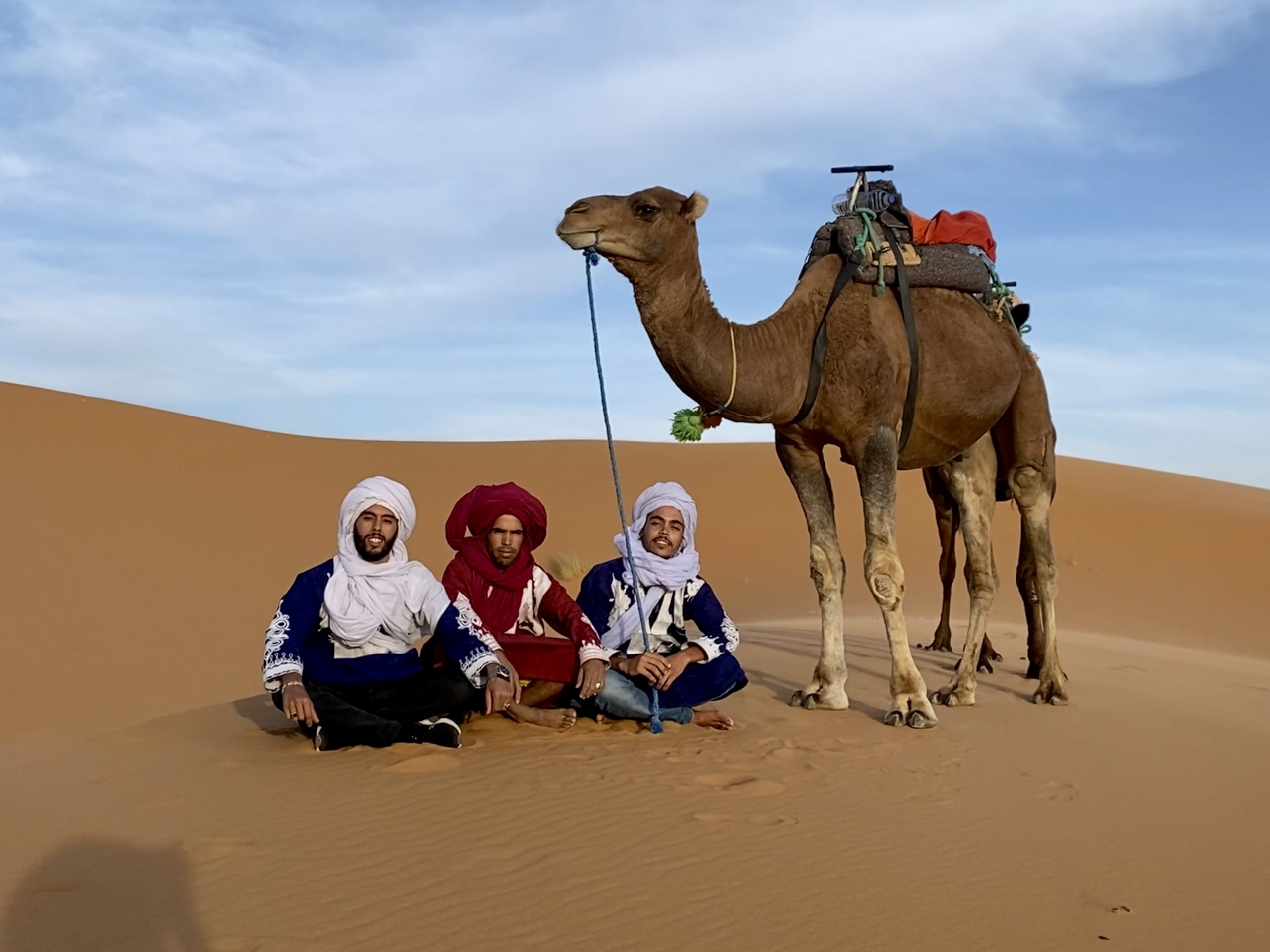
In northern Morocco, cities such as Tangier, Tetouan, and Chefchaouen show stronger Mediterranean and Andalusian influences. In the Sahara and southeastern regions, travelers encounter traditions connected with desert communities, caravan routes, and Saharan heritage.
How Travelers Can Experience Moroccan Culture
The best way to understand Moroccan people is through respectful interaction rather than simply visiting monuments. Eat local food, speak with guides and artisans, visit markets, learn a few words of Darija, and take time to understand how people live in the places you visit.
A private trip can also make cultural experiences more flexible. With a private itinerary, travelers can spend more time in places that interest them, visit local communities with appropriate guidance, and combine major cities with the Atlas Mountains, traditional villages, or the Sahara.
If you are planning a customized itinerary, you can explore Private Morocco Trips for routes that can be adapted around your interests, travel style, and schedule. For travelers particularly interested in local communities, desert traditions, and southern Morocco, Morocco Desert Tours can combine the Sahara with cultural stops along the route.
Frequently Asked Questions About Moroccan People
What are people from Morocco called?
People from Morocco are called Moroccans. The term includes people with different ethnic, linguistic, regional, and family backgrounds.
Are Moroccan people Arab or Amazigh?
Moroccan people can have Arab, Amazigh, mixed, or other family backgrounds. Morocco officially recognizes Arab-Islamic, Amazigh, and Saharan-Hassani components within its national identity, together with African, Andalusian, Hebraic, and Mediterranean influences.
Are Moroccans African?
Yes. Morocco is a North African country, and Moroccan identity includes important African historical and cultural influences. The country’s connections with sub-Saharan Africa can be seen in trade history, migration, music, food, and cultural traditions.
What language do Moroccan people speak?
Arabic and Amazigh are Morocco official languages. Darija is widely spoken in everyday conversations, while French is widely used and Spanish is common in parts of northern and southern Morocco. English is also increasingly used in tourism and international settings.
What religion do Moroccan people follow?
Islam is the predominant religion in Morocco, and it has an important influence on public life, family traditions, holidays, food customs, and daily routines. Morocco also has a long Jewish history, and Jewish heritage remains an important part of the country’s cultural history.
Understanding Moroccan People
Moroccan people cannot be described by one ethnicity, language, regional tradition, or lifestyle. Morocco culture has developed through the interaction of Amazigh, Arab-Islamic, Saharan-Hassani, African, Andalusian, Jewish, Mediterranean, and other historical influences.
For travelers, that diversity is best understood by spending time with local people and experiencing different parts of the country. A conversation over mint tea, a meal with local ingredients, a visit to an Amazigh village, a walk through a historic medina, or time spent with a local guide can reveal aspects of Moroccan culture that a sightseeing itinerary alone cannot provide. Morocco is therefore more than a destination of historic cities and desert tours. Its people, languages, family traditions, food, crafts, and regional cultures are an essential part of understanding the country itself.