10 Days Morocco Tour from Casablanca
10 Days Morocco Itinerary: What to Expect
This 10 days Morocco tour from Casablanca is a private, driver-guided itinerary built around the country’s most requested route, the imperial cities, the Rif and Middle Atlas mountains, and a night in the Sahara Desert. It’s one of our most booked itineraries because it fits neatly into a two-week vacation window while still covering the north, the desert, and Marrakech without rushing between stops.
The trip starts in Casablanca and moves through Rabat, Chefchaouen, Fes, and the Sahara before finishing in Marrakech (or back in Casablanca, if your flight requires it). Along the way you’ll walk through UNESCO-listed medinas, drive across the Middle Atlas cedar forests, and spend a night at a private camp in the Erg Chebbi dunes. Because it’s a private tour, the pace, hotels, and stops can be adjusted to fit your dates and interests, this itinerary is the starting template, not a fixed group schedule.
Highlights of This 10 Days Morocco Tour
- Visit the Hassan II Mosque in Casablanca.
- See Rabat Hassan Tower and the Kasbah of the Udayas.
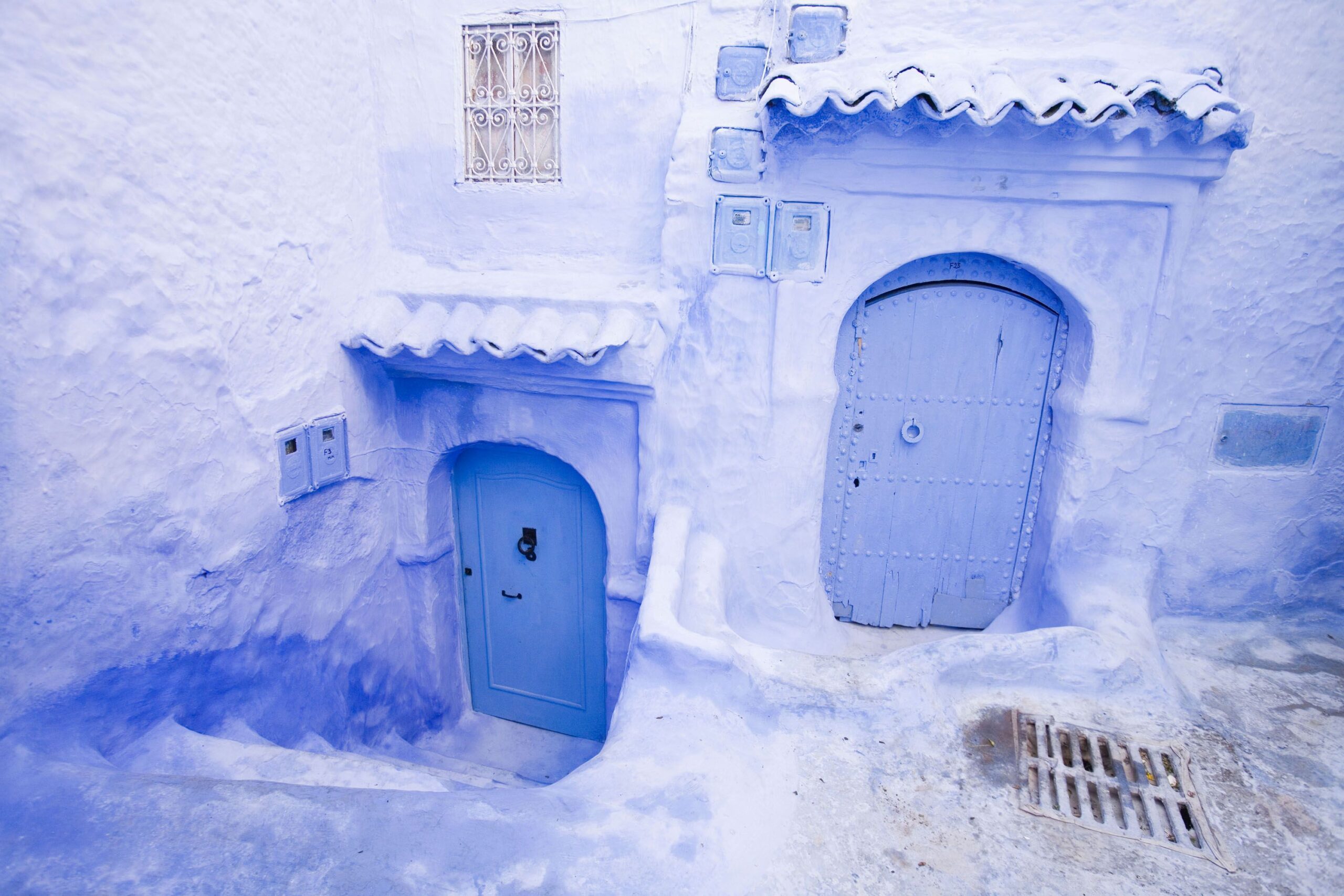
- Walk the blue streets of Chefchaouen in the Rif Mountains.
- Explore the Roman ruins at Volubilis, a UNESCO World Heritage Site.
- Visit the imperial city of Meknes and the Bab Mansour gate.
- Spend a full day touring Fes medina with a local guide.
- Drive through Ifrane and the Middle Atlas cedar forest of Barbary macaques.
- Cross the Ziz Valley palm groves on the way to Merzouga.
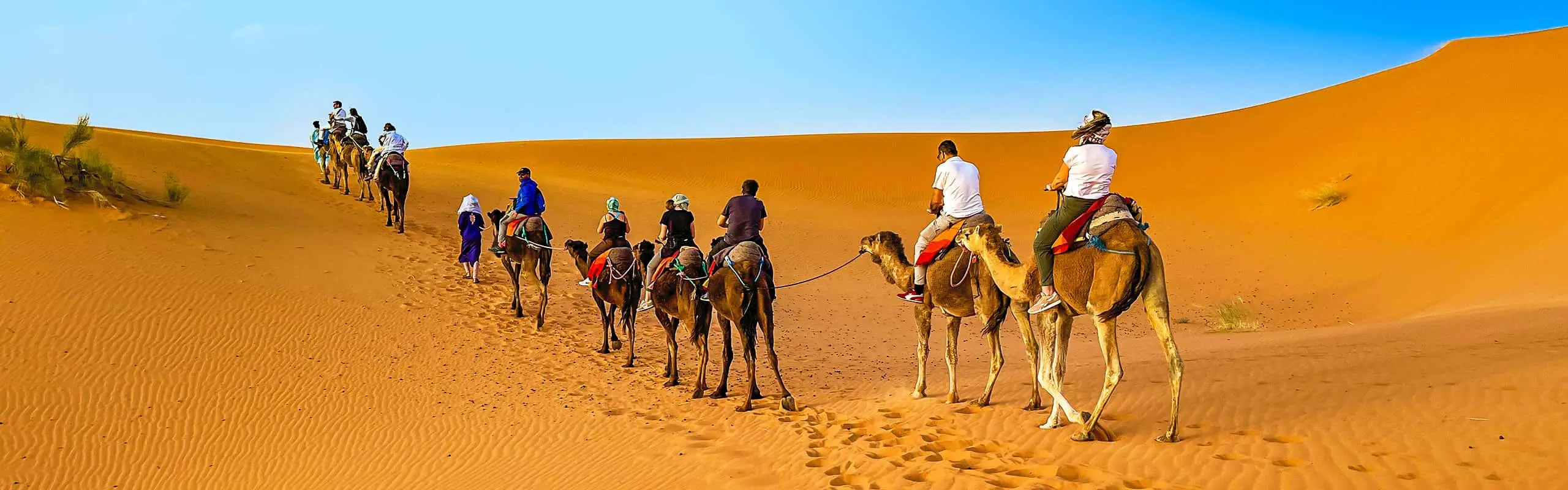
- Ride a camel into the Erg Chebbi dunes and sleep at a desert camp.
- Walk through the Todra Gorge and Dades Valley rock formations.
- Visit Ait Ben Haddou, the fortified UNESCO village used in several films.
- Cross the High Atlas Mountains via the Tizi n’Tichka.
- Spend a full day in Marrakech with a local guide.
Included & Not Included:
- Private transportation with air conditioning
- English/Spanish-speaking driver
- Accommodations during the tour
- Camel ride in the Sahara Desert
- All Breakfasts & three Dinners
- Entrance fees to monuments
- Lunches & drinks
- Tips (optional)
- Flights
10 Days Morocco Tour Itinerary From Casablanca
Day 1: Casablanca to Rabat [120 km]
Your 10 days Morocco tour from Casablanca starts with pickup at Mohammed V International Airport, where your driver-guide will be waiting. The first stop is the Hassan II Mosque, built directly on the Atlantic coast and known for its carved wood ceilings, detailed mosaics, and a minaret that’s among the tallest religious structures in the world. It’s one of the few mosques in Morocco that non-Muslim visitors can enter, so it’s worth the stop even on a short first day.
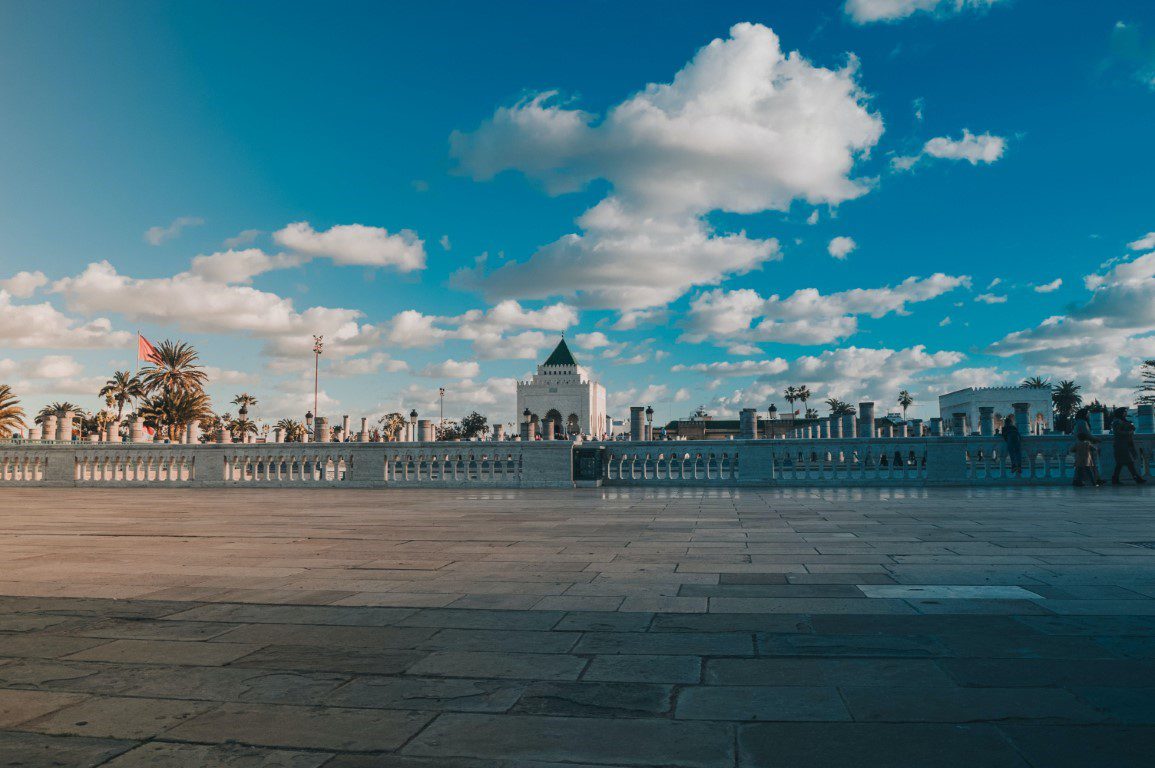
From Casablanca, you’ll continue to Rabat, Morocco capital. Here you’ll see the Hassan Tower an unfinished 12th-century minaret and the Kasbah of the Udayas, a fortified old quarter with narrow blue-and-white streets overlooking the river mouth and the ocean. And Overnight in Rabat.
Day 2: Rabat to Chefchaouen [252 km]
After breakfast, the drive continues north into the Rif Mountains toward Chefchaouen, passing through farmland and small villages along the way. Chefchaouen is known for its blue-painted medina, and while photos of the town are common online, walking through it in person with the alleys quiet in the early morning or late afternoon is a different experience than a quick group-tour stop.
You’ll have free time to explore the medina at your own pace, browse the wool and leather shops, and stop for mint tea at one of the rooftop cafés overlooking the town and the surrounding hills. Overnight in a riad in Chefchaouen.
Day 3: Chefchaouen – Volubilis – Meknes – Fes [245 km]
This is a full travel day with two historical stops before reaching Fes. Your first stop is Volubilis, a well-preserved Roman site and UNESCO World Heritage Site, known for its detailed mosaics, ancient columns, and remains of the Roman forum. It’s one of the better-preserved Roman sites in North Africa, and having a guide here helps a lot of the detail in the mosaics is easy to miss without context.
From Volubilis, you’ll continue to Meknes, one of Morocco four imperial cities and the former capital under Sultan Moulay Ismail. The Bab Mansour gate is the main landmark here, known for its green-and-white tilework, and you’ll also have time in the old medina and at the Mausoleum of Moulay Ismail.
The day ends in Fes, where you’ll check into a riad inside the medina walls a more atmospheric option than a hotel outside the old city, and typically closer to everything you’ll see the next day.
Day 4: Guided Tour of Fes
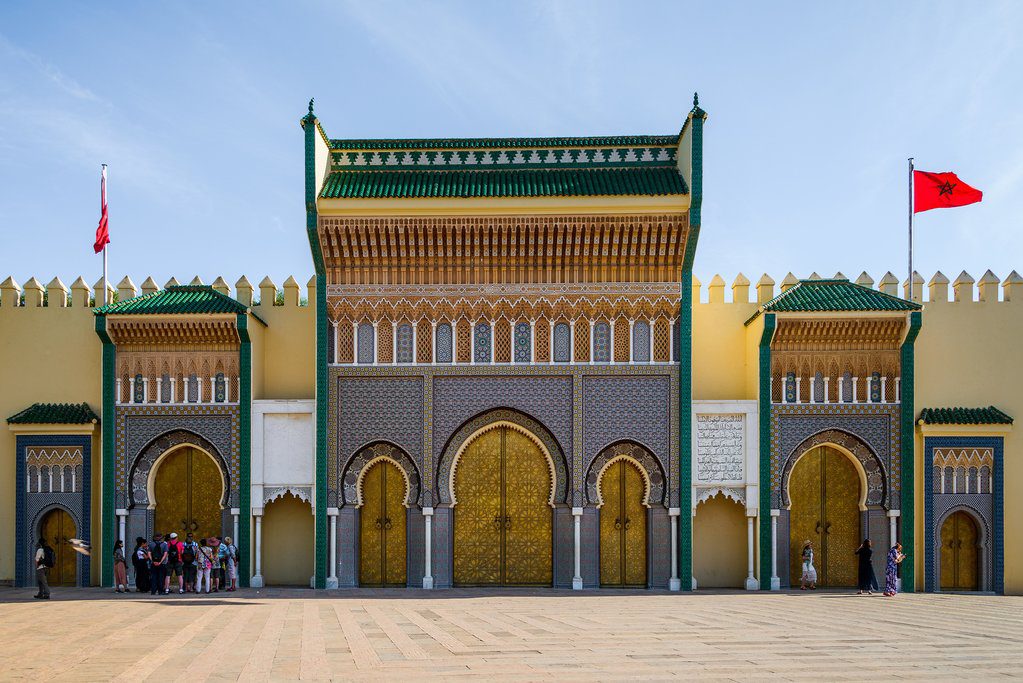
A full day in Fes with a local guide, starting at the gates of the Royal Palace before entering the medina itself a UNESCO World Heritage Site and one of the largest car-free urban areas in the world. The medina is genuinely easy to get lost in, which is part of why a guide is worth having here more than almost anywhere else on the trip.
You’ll visit Al Quaraouiyine, recognized as one of the oldest continuously operating universities in the world, the Bou Inania Madrasa, and the Chouara Tanneries, where leather has been dyed using the same methods for centuries (mint leaves are handed out at the entrance for a reason the smell is strong). You’ll also walk through the Mellah, the old Jewish quarter, before ending at a viewpoint over the medina rooftops. Overnight in Fes.
Day 5: Fes – Ifrane – Cedar Forest – Ziz Valley – Merzouga Desert [452 km]
This is the longest driving day of the trip, but also the one with the most changing scenery. Leaving Fes, the route climbs into the Middle Atlas Mountains, starting with Ifrane a town built in a European alpine style in the 1930s that looks almost nothing like the rest of Morocco.
From Ifrane, the road passes through cedar forest where Barbary macaques are often visible right along the roadside. The landscape then shifts again through small Berber villages and mountain passes before dropping into the Ziz Valley, where the road runs alongside miles of palm groves against the desert backdrop.
By late afternoon you’ll reach Merzouga and transfer by camel into the Erg Chebbi dunes, timed to reach the camp around sunset. Dinner is served at the camp, followed by Berber music around the fire. Sleeping in the desert no phone signal, no light pollution is one of the parts of this trip people mention most afterward.
Day 6: Explore the Merzouga Desert
Most people get up early for sunrise over the dunes, which looks different from sunset the night before and is worth setting an alarm for. After breakfast, the day continues with a visit to Khamlia, a village known for Gnawa music with roots in West Africa, and M’Fis, a former mining settlement.
You’ll also have the option to visit a nomadic family living near the dunes for tea and a look at daily desert life, and in the afternoon there’s time for optional quad biking or dune buggy activities if you want them (these aren’t included by default let us know in advance if you’d like to add them). Overnight again in Merzouga.
Day 7: Merzouga Desert – Rissani – Todra Gorge – Dades Valley [248 km]
Leaving Merzouga, the first stop is Rissani, birthplace of Morocco ruling Alaouite dynasty and home to one of the more authentic markets in the south if your visit lines up with a market day, it’s worth the stop for the spice and date stalls alone.
From there the route climbs toward the Todra Gorge, where limestone walls rise steeply on either side of a narrow river canyon a popular stop for rock climbers, though most visitors just walk the gorge floor. The drive continues into the Dades Valley, passing the Monkey Fingers rock formations before reaching your hotel for the night, set among the valley’s rock formations and palm groves.
Day 8: Dades Valley – Ouarzazate – Ait Ben Haddou – Marrakech [335 km]
Today’s drive passes through the Valley of Roses before reaching Ouarzazate, sometimes called Morocco Hollywood because of the film studios based there (Atlas Studios is an optional stop if you’re interested).
The main stop of the day is Ait Ben Haddou, a fortified ksar and UNESCO World Heritage Site that’s appeared in productions including Gladiator and Game of Thrones. After lunch, the route climbs over the High Atlas Mountains via the Tizi n’Tichka pass, one of the highest paved roads in Morocco, with Berber villages visible along the switchbacks before the descent into Marrakech.
Day 9: Guided Tour of Marrakech
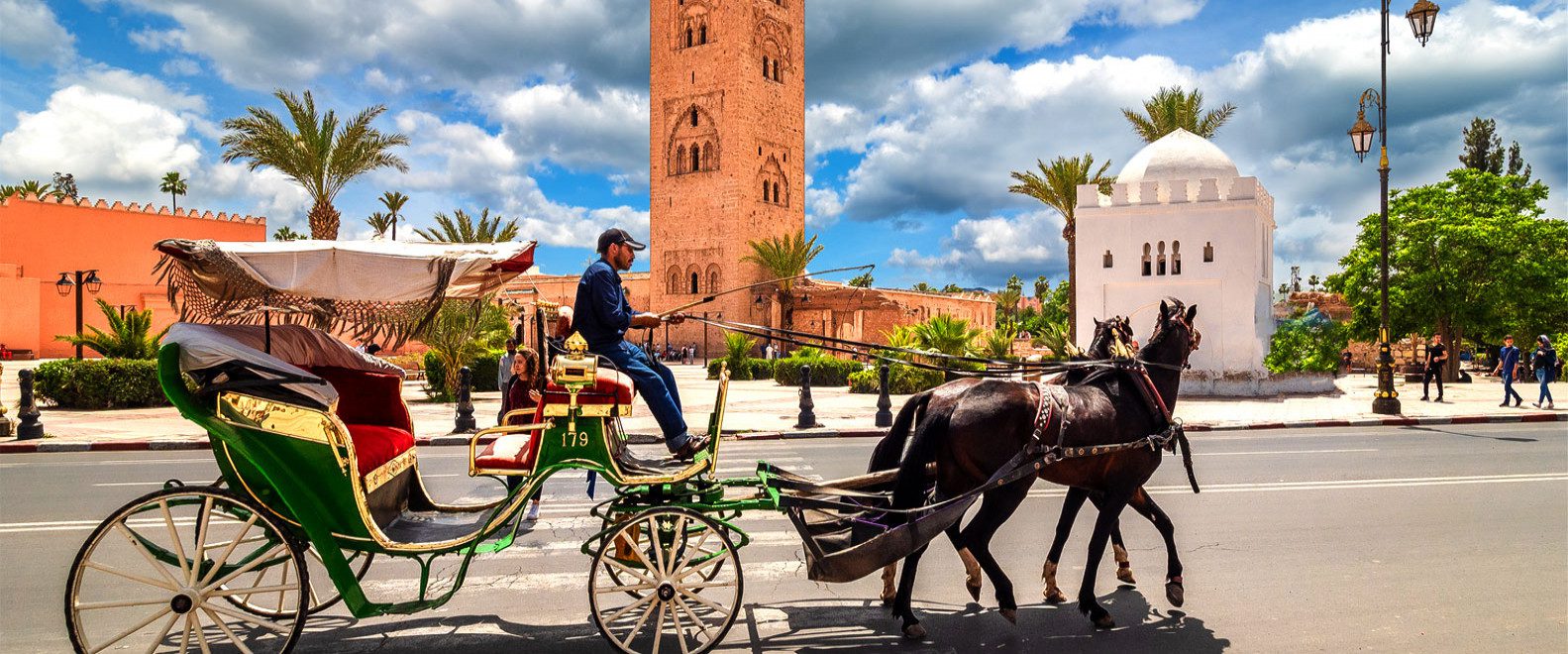
A full day exploring Marrakech with a local guide, starting at Jemaa el-Fnaa square before it gets busy. You’ll visit the Bahia Palace, the Saadian Tombs, the Ben Youssef Madrasa, and the Koutoubia Mosque.
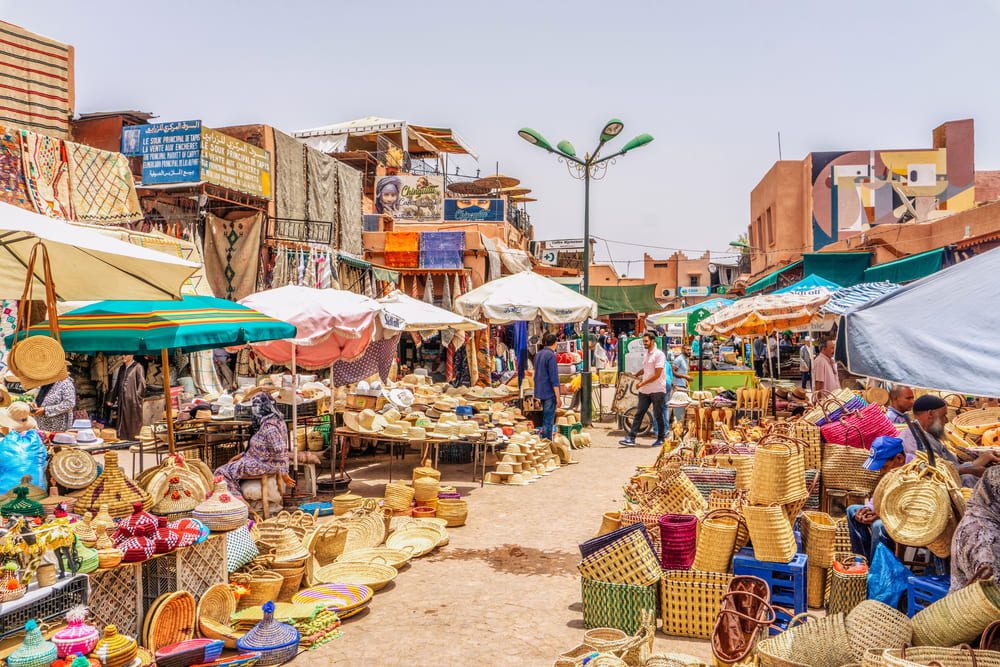
In the afternoon, you can choose between the Majorelle Garden or free time in the souks the medina here is larger and more commercial than Fes, so it’s worth having some unstructured time to browse rather than trying to see everything on a schedule. In the evening, Jemaa el-Fnaa fills with food stalls and performers, which is worth experiencing even if you already saw it that morning.
Day 10: Departure from Marrakech or Casablanca
Breakfast at your riad, then transfer to Marrakech Airport, or back to Casablanca Airport if your flight departs from there. This closes out your 10 days Morocco tour from Casablanca.
Tour Map:
Note Bien
Note: This itinerary is customizable to match your preferences and duration of stay. Contact us for personalized tour options and exact pricing based on group size and accommodation preferences.
Book This Tour :


FAQs About This 10 Days Morocco Tour
Is 10 days enough to see Morocco?
The 10 days Morocco tour from Casablanca is enough to cover main regions the imperial cities, the Rif and Middle Atlas mountains, and the Sahara Desert without the trip feeling rushed. You won’t see everything the country offers, but this itinerary is built to avoid the common mistake of packing in too many stops per day.
How much does a 10 days Morocco tour cost?
Pricing depends on the season, hotel category, and desert camp type you choose, since we offer options from standard riads to luxury accommodations. Contact us with your travel dates and preferences and we’ll send a detailed quote.
What vehicle is used for the tour?
We use air-conditioned vehicles matched to your group size, including the Toyota Land Cruiser Prado, Ford Tourneo Custom, or Mercedes-Benz Sprinter for larger groups. All tours include a private driver-guide for the full 10 days.
How far in advance should I book?
We recommend booking at least a few weeks ahead, and further in advance if you’re traveling during spring (March-May) or fall (September-November), when Morocco weather is best and demand for riads and desert camps is highest.
What should I pack for this itinerary?
Comfortable walking shoes, breathable layers for daytime, and a warmer layer for the desert and mountain evenings, which get cold even when the days are hot. Sunscreen and a hat are worth having for the desert days, and a scarf or shesh is useful for the camel ride if it’s windy.
Can I start this tour from Marrakech instead of Casablanca?
Yes, the same route can run in reverse starting and ending in Marrakech, which works well if your flights land there instead of Casablanca.
Can this itinerary be customized?
Yes. This 10 days Morocco tour from Casablanca is our most requested starting template, but stops, pace, and hotel category can all be adjusted. Let us know what matters most to you more time in the desert, less driving, or a different route through the south and we’ll adjust the plan.
What's the difference between this and a longer Morocco tour?
Longer itineraries (12, 13, 14, or 15 days) generally add more time in the south extra stops in the Anti-Atlas, the Atlantic coast, or a second desert region rather than covering new ground entirely. If you have more time available, a 15 days Morocco tour from Casablanca covers the same route with a slower pace and additional stops.