
Is Rabat Safe for Tourists?
Is Rabat safe for tourists? Yes, Rabat is consistently ranked as one of the safest cities in Morocco, and for most visitors it’s one of the most relaxed places to explore in the entire country. As Morocco political capital, Rabat trades the intensity of Marrakech souks and Fes medina maze for wide boulevards, government buildings, and a calmer coastal pace. It’s a city where you can wander the kasbah, photograph the Hassan Tower, and grab a coffee on the Corniche without the constant hustle you’ll find elsewhere in the country.
This guide is regularly refreshed with the latest crime data, the current U.S. State Department advisory level, and answers to the questions travelers ask most: Is Rabat safe at night? Is Rabat safe for solo female travelers? What scams should I watch for? After more than 25 years arranging private tours across Morocco, we’ve guided thousands of visitors through Rabat medina, royal quarter, and coastline, and we’re sharing exactly what to expect.
Rabat Safety at a Glance
Here’s the current snapshot, based on the latest available data:
- Safety Index: around 66 out of 100, with a Crime Index near 34 both figures trending in a positive direction.
- Daytime safety perception: rated very high by residents and visitors alike.
- Nighttime safety perception: rated moderate still workable with basic precautions.
- U.S. State Department advisory: Level 2, Exercise Increased Caution the same rating currently applied to France, Germany, Spain, and the United Kingdom, largely tied to a regional terrorism-awareness posture rather than any specific threat inside Morocco.
- Most reported issue: non-violent petty theft (pickpocketing, bag snatching); violent crime against tourists remains rare.
- The takeaway: Rabat safety profile looks a lot like any well-run European capital. It calls for street smarts, not alarm.
Understanding Rabat Safety as Morocco Capital
Rabat has served as Morocco administrative and political capital since 1956, and that status shapes everything about how the city feels to visit. The royal palace, parliament, government ministries, and dozens of foreign embassies sit within the city limits, which means a heavier, more visible security presence than you’ll find in Casablanca or Tangier.
Streets in the central districts are clean, well-maintained, and organized. Police patrols are common around government buildings, tourist landmarks, and transit hubs, and law enforcement has a strong track record of keeping incidents low. If you want the fuller picture of what makes Rabat worth a stop on your itinerary beyond just the safety numbers our complete guide to Rabat covers the city’s history, neighborhoods, and top sites in detail.
What Do Rabat Crime Statistics Show?
The most recent crime survey data puts Rabat Crime Index in the mid-30s and its Safety Index near 66 both comfortably on the “safe” side of the scale. Worry levels around home break-ins, car theft, and physical attack all score low to very low. The one category that scores higher than the rest is perceived corruption and bribery, which reflects broader civic frustrations rather than a direct tourist safety risk.
Petty theft is the crime most likely to affect a visitor: pickpocketing in crowded medina lanes, bag snatching near tram stops, and the occasional scam targeting distracted tourists. Violent crime against foreigners is statistically rare and not something the average traveler needs to plan around.
Is Rabat Safe to Walk Around During the Day?
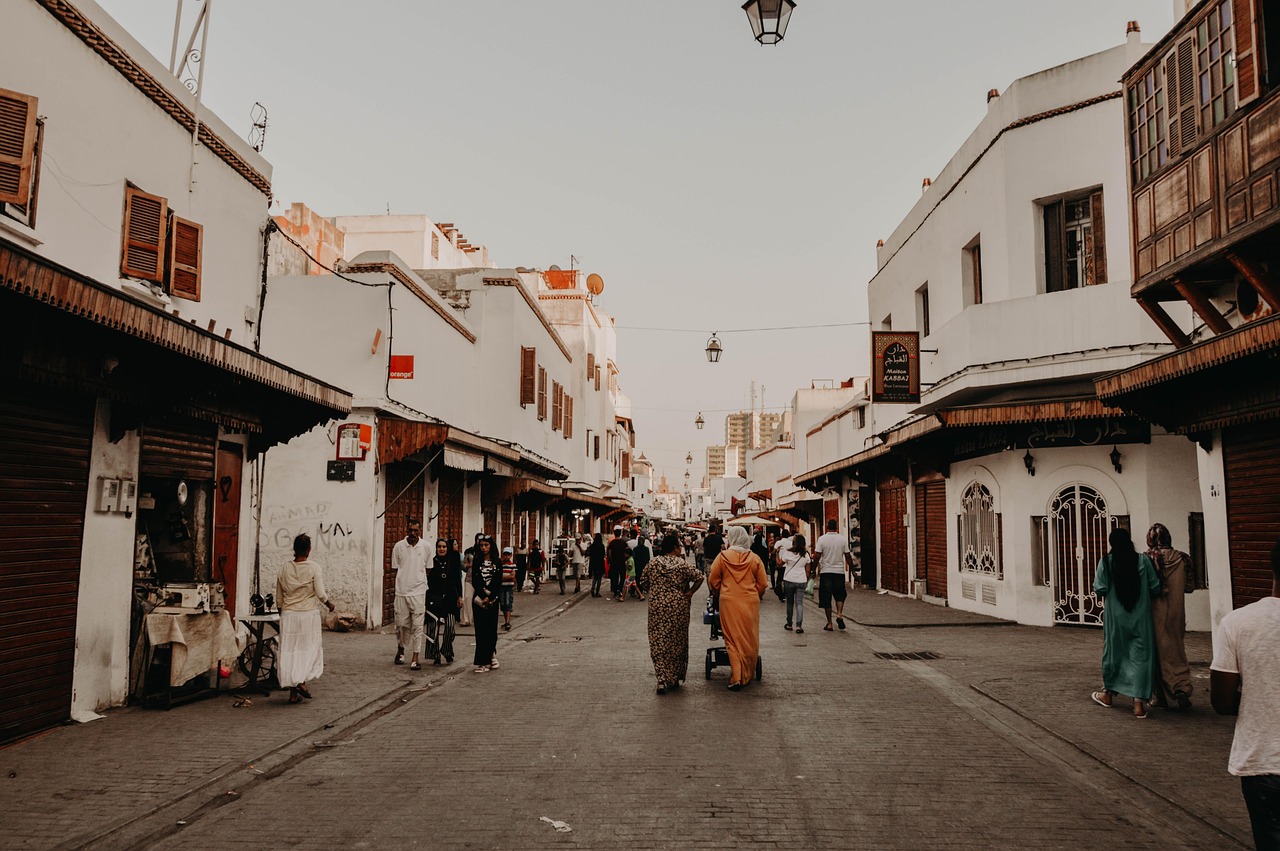
Yes, and daytime is when Rabat is at its best. The city is genuinely walkable the Kasbah of the Udayas, the old Medina, and the palm-lined avenues of the new town are all designed for exploring on foot. Visitors regularly stroll along the Bouregreg River, tour the Hassan Tower and Mausoleum of Mohammed V, and wander through Rabat’s public gardens with no trouble at all.
If you’re building a broader Morocco itinerary and want to see how Rabat stacks up against other cities worth visiting, our roundup of the best places to visit in Morocco is a useful starting point. As always, keep bags zipped and in front of you in crowded areas, and avoid flashing phones, cameras, or jewelry unnecessarily.
Is Rabat Safe at Night?
Rabat is noticeably calmer after dark than Marrakech or Casablanca. Central neighborhoods, the Corniche, and areas around Agdal and Hassan stay busy enough in the evening to feel comfortable for a walk, a late dinner, or a coffee. Many visitors report feeling relaxed strolling the riverfront well into the evening.
That said, nighttime safety still depends on location. Avoid poorly lit or empty streets after dark, particularly if you’ve had a drink or two. Rabat petit taxis and ride-hailing apps run reliably at night and cost little, so there’s rarely a reason to walk through an unfamiliar area alone late at night when a short taxi ride solves the problem.
Is Rabat Safe for Solo Travelers?
Yes. Rabat calmer, more orderly character makes it one of the more comfortable Moroccan cities for solo exploration. Locals are generally helpful with directions, public transport is straightforward, and the city feels less overwhelming than Marrakech medina for a first-time solo visitor.
Standard precautions still apply: don’t overshare personal details with strangers, keep your accommodation address and emergency contacts handy, and let someone know your general plans for the day, especially if you’re heading off the beaten path.
Is Rabat Safe for Solo Female Travelers?
Generally, yes, with a few extra considerations. Rabat is one of Morocco more progressive cities, but solo women may still draw occasional attention, particularly in busier tourist areas. Dressing modestly (covering shoulders and knees) reduces unwanted attention considerably and shows respect for local norms. Some women report occasional catcalling, which is typically non-threatening but can be uncomfortable, a confident, no-engagement response usually ends it quickly. Sticking to well-reviewed accommodations and avoiding solo walks in unlit areas at night rounds out the basics.
Is Rabat Safe for Families?
Yes, and it’s genuinely one of the better Moroccan cities for a family trip. The pace is slower, the layout is easier to navigate with kids, and attractions like the Rabat Zoo, botanical gardens, and family-friendly museums give children plenty to do. Moroccan culture is warm toward children generally, and that hospitality is especially noticeable in Rabat restaurants and public spaces. If you’re planning a multi-generational or family itinerary, our Morocco family tours are built around exactly this kind of pacing, with private transport and flexible stops.
Is Rabat Safe for LGBTQ+ Travelers?
Rabat is more discreetly tolerant than many parts of Morocco, though travelers should know that homosexuality remains illegal under Moroccan law, and enforcement generally focuses on public conduct rather than private life. Same-sex couples who avoid public displays of affection typically encounter no issues. Choosing LGBTQ+-friendly accommodations and traveling with awareness of local norms goes a long way. For itinerary support tailored to this, see our gay Morocco tours.
Is Rabat Safe for Students and Expats?
Very much so. Rabat international universities, embassies, and research institutes attract a large student and expat population, particularly around Agdal, Hay Riad, and Souissi neighborhoods known for being quiet and secure. English is widely spoken in academic and professional settings, and the city’s expat community is active and easy to plug into. If you’re organizing a study trip, our Morocco student tours are designed specifically around group logistics and safety for younger travelers.
What Are the Most Common Scams in Rabat?
This is one of the questions travelers search for most, and it’s worth addressing directly. Rabat’s scams are mostly low-stakes and easy to avoid once you know what to look for:
- The free guide: Someone offers to show you Chellah or the Kasbah, then demands an inflated tip afterward. Only work with officially licensed guides, and agree on any price upfront.
- The tea invitation: A friendly local invites you for mint tea, then presents an inflated bill for items you didn’t order. Order for yourself and check prices before you pay.
- Taxi overcharging: Airport and train station pickups are the most common spot for inflated fares. Ask for the meter or agree on a fixed price before getting in.
None of these are dangerous, but they’re irritating enough to ruin an afternoon. Booking through a private, licensed operator removes most of this friction entirely our guides and drivers handle pricing, entry fees, and logistics up front, so there’s no room for a stranger to insert themselves into your day.
How Does Rabat Compare to Casablanca, Marrakech, and Fes for Safety?
Rabat generally edges out Morocco other major cities on calmness and order, mainly because of its lower population density and heavier institutional security presence. Casablanca, as Morocco largest commercial hub, sees more traffic-related risk and a slightly higher volume of petty crime in busy districts. Marrakech and Fes have denser, more labyrinthine medinas, which create more opportunities for pickpocketing and tourist-targeted scams, even though violent crime remains low across all four cities.
If your trip includes more than one stop, Rabat pairs naturally with a wider tour of Morocco imperial cities, and travelers coming from the north or south often add it onto a route through our tours from Fes or tours from Casablanca.
Practical Safety Tips for Visiting Rabat
- Book reputable accommodations. Choose hotels or riads with strong, recent reviews.
- Dress modestly. Cover shoulders and knees, especially near religious or government sites.
- Use licensed transport. Stick to official taxis, ride-hailing apps, or a private driver rather than unmarked cars.
- Keep document copies. Store digital and physical copies of your passport separately from the originals.
- Avoid demonstrations. They’re infrequent but best observed from a distance, not up close.
- Trust your instincts. If a situation feels off, walk away calmly rather than engaging.
Final Verdict: Is Rabat Safe for Tourists?
So, is Rabat safe for tourists? Based on current crime data, the U.S. State Department’s advisory level, and firsthand experience guiding travelers through the city, the answer remains a confident yes. Solo travelers, families, students, and couples all tend to leave Rabat with the same impression: a calm, walkable capital that delivers Moroccan history and culture without the chaos of the country’s busier tourist hubs.
Taking a few basic precautions modest dress, licensed transport, awareness after dark is really all it takes to have a smooth visit. If you’d like a local team to handle the logistics for you, from private drivers to vetted guides, our about page covers how we’ve been doing exactly that for over 25 years. And if you have more questions about traveling in Morocco generally, our Morocco travel FAQ’s hub covers everything from visas to packing.