Is Marrakech Worth Visiting?
Is Marrakech worth visiting? For most travelers weighing a trip to Morocco, the answer is a confident yes. Marrakech, Morocco famous Red City, pairs a UNESCO-listed medina with palm-filled gardens, Atlas Mountain views, and some of the best food in North Africa, all while remaining easy to reach and genuinely welcoming to first-time visitors. As a Marrakech-based tour company that has spent years designing private tours across Morocco, we get asked this question constantly. Below is the honest answer, what the city actually offers, the current safety picture, the best time to go, what to expect looking ahead, and how to plan a visit that fits the time you have.
Why Marrakech Is Worth Visiting
Marrakech earns its reputation because it delivers several very different kinds of travel experiences in one city. You get the sensory, market-driven energy of the historic medina, the calm of botanical gardens like Jardin Majorelle, the craftsmanship behind centuries-old palaces, and, within a short drive, the Atlas Mountains and the edge of the Sahara. Few cities let you move between call-to-prayer alleyways and rooftop pools in the same afternoon.
The heart of it all is the medina, a UNESCO World Heritage Site since 1985. Its maze of covered souks, traditional riads, and hidden courtyards rewards travelers who like to wander, while the surrounding Ville Nouvelle offers a more modern, French-influenced pace with cafés, galleries, and boutique shopping. That contrast between old and new is part of what makes Marrakech worth visiting for repeat travelers, not just first-timers.
Top Attractions That Make Marrakech Worth the Trip
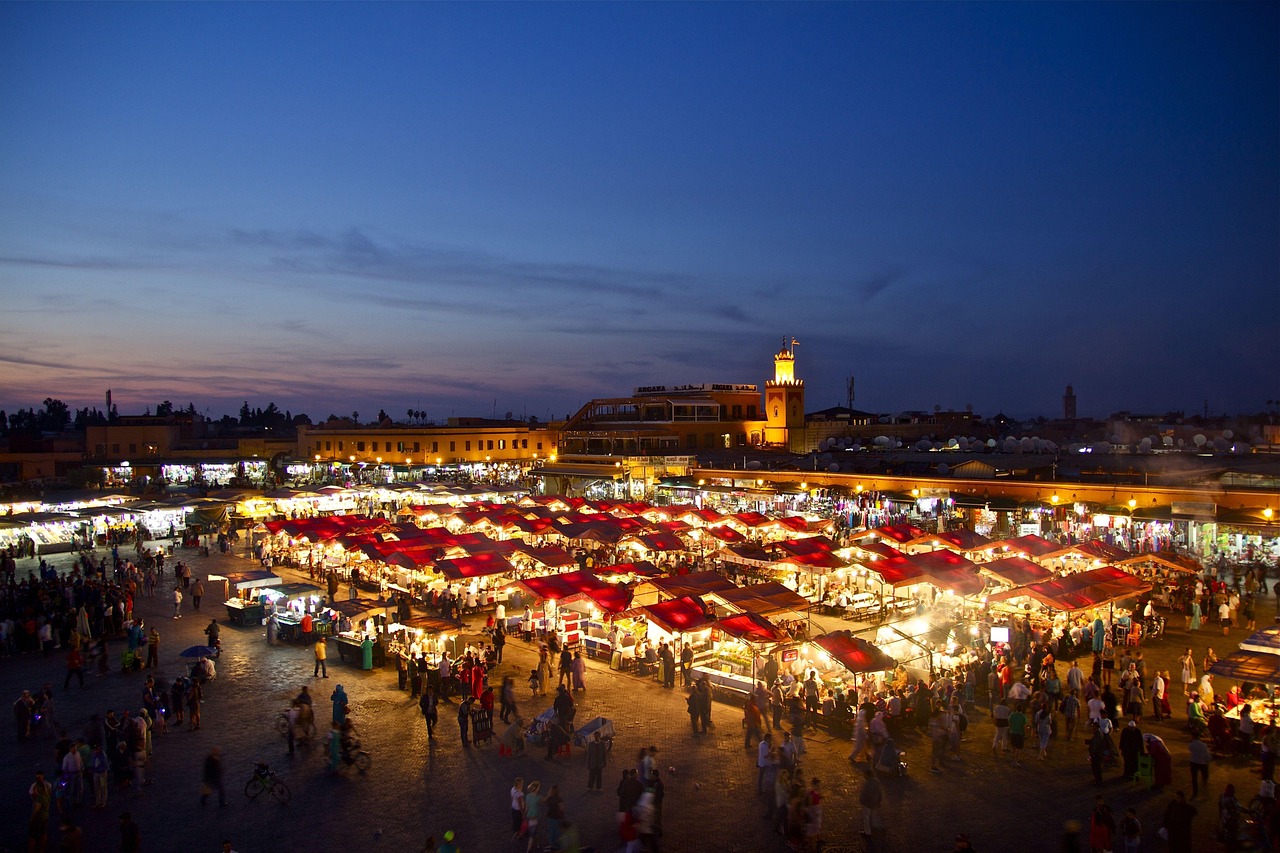
- Jemaa el-Fnaa: The main square and the beating heart of the city. By day it’s fresh orange juice stalls and henna artists; by night, storytellers, musicians, and food vendors take over, turning it into one of the liveliest public squares in the world.
- Jardin Majorelle: A cobalt-blue garden designed by French painter Jacques Majorelle and later owned by Yves Saint Laurent. It’s compact but consistently rated one of Marrakech must-see stops.
- Koutoubia Mosque: The city’s largest mosque and its most visible landmark, with a 12th-century minaret that anchors the skyline (non-Muslim visitors cannot enter, but the exterior and gardens are open to all).
- Bahia Palace: A 19th-century palace with carved cedar ceilings, zellige tilework, and quiet courtyard gardens that show off traditional Moroccan craftsmanship at its best.
- Saadian Tombs: A 16th-century royal mausoleum rediscovered in 1917, tucked behind the Kasbah Mosque and easy to combine with a Bahia Palace visit.
- Le Jardin Secret: A restored 19th-century riad garden in the heart of the medina, less crowded than Majorelle and worth adding if you have more than two days.
Is Marrakech Safe for Tourists?
Safety is the most common concern we hear from American travelers, and it’s a fair question to ask before booking. The U.S. State Department places Morocco at Level 2: Exercise Increased Caution, the same tier assigned to popular destinations like France, Germany, Spain, and the United Kingdom. This advisory reflects a general regional terrorism risk rather than any specific or active threat in Marrakech, and the city has a long, stable track record with tourists.
On the ground, the realistic concern in Marrakech is petty theft rather than violent crime: pickpocketing, overcharging, or persistent vendors in crowded areas like the souks and Jemaa el-Fnaa. This is comparable to what you’d encounter in Barcelona, Rome, or Paris, and it’s easily managed with the same common-sense habits a crossbody bag, keeping valuables out of sight, and staying alert in dense crowds. Dedicated tourist police, known locally as the Brigade Touristique, patrol the medina and main tourist zones and are generally responsive and English- or French-speaking.
For solo travelers, families, and women traveling alone, staying in a riad with a gated entrance and on-site staff adds a real layer of comfort, and hiring a licensed local guide for your first day in the medina removes most of the disorientation that first-time visitors worry about.
The Food Scene: A Real Reason to Visit Marrakech
Moroccan cuisine is, on its own, a compelling reason for a trip. Marrakech food scene ranges from street-food stalls to refined riad dining rooms, and the flavors saffron, preserved lemon, cumin, cinnamon are distinct from anything else in North Africa or the Middle East.
Dishes worth planning your meals around include:
- Tagine: Slow-cooked meat or vegetables with spices, named for the cone-shaped clay pot it’s cooked in.
- Couscous: Traditionally served on Fridays, steamed and paired with vegetables and meat.
- Pastilla: A savory-sweet pie of spiced meat or seafood, almonds, and cinnamon-dusted pastry.
- Mint tea: Morocco national drink, poured from height and served throughout the day as a gesture of hospitality.
Jemaa el-Fnaa food stalls are a fun, affordable way to sample several dishes in one evening, while the medina and Gueliz district both have well-reviewed sit-down restaurants for a more formal meal.
Shopping in the Souks: What to Buy in Marrakech
The souks north of Jemaa el-Fnaa are organized loosely by trade leather, metalwork, textiles, spices and are one of the best places in Morocco to buy handmade goods directly from artisans. Popular purchases include:
- Handwoven Berber rugs
- Leather bags, poufs, and babouche slippers
- Argan oil and Moroccan black soap
- Loose spices and saffron
- Hand-painted lanterns and lamps
Bargaining is expected and part of the culture here, not a hassle to avoid. A good starting point is offering roughly a third to half of the initial asking price and negotiating from there.
Best Time to Visit Marrakech
The best time to visit Marrakech is during spring (March to May) and fall (September to November), when daytime temperatures typically sit in the comfortable 70s to low 80s Fahrenheit and evenings cool down pleasantly. Summer (June to August) brings intense heat, often well above 100°F, which can make midday sightseeing difficult, though early mornings, evenings, and rooftop pools make it manageable if you’re set on visiting then. Winter (December to February) is mild during the day but can be genuinely cold at night, especially in riads without central heating, so pack layers.
If you’re planning a desert extension from Marrakech, spring and fall also offer the most comfortable temperatures for camel treks and overnight camps in the Sahara.
Where to Stay in Marrakech
Accommodation in Marrakech spans the full range of budgets, and where you stay meaningfully shapes the trip:
- Luxury: La Mamounia and Royal Mansour, both set in landscaped grounds a short walk from the medina.
- Boutique riads: Traditional courtyard houses, often with a plunge pool and rooftop terrace, that give a more authentic sense of place than a standard hotel.
- Mid-range hotels: Concentrated in Gueliz and Hivernage, useful if you want easier taxi access and a quieter setting outside the medina walls.
Staying inside the medina puts you in walking distance of the main sights but means navigating narrow, car-free alleys with your luggage, staying in Gueliz trades some atmosphere for convenience. We can help match the right neighborhood to your itinerary when planning a custom Morocco tour.
How Many Days Do You Need in Marrakech?
This is one of the most common questions travelers search before booking, and the answer depends on your pace:
- 1-2 days: Enough to see Jemaa el-Fnaa, the souks, and one or two major sites like Bahia Palace or Jardin Majorelle. Works well as a stopover before heading elsewhere in Morocco.
- 3 days: The sweet spot for most first-time visitors. This allows a full day in the medina, a day for gardens and palaces, and a day for a nearby excursion such as the Ourika Valley or Atlas Mountains.
- 4-5 days: Ideal if you want a more relaxed pace, time for a hammam and cooking class, and room for a longer day trip, such as Essaouira on the coast.
- 6+ days: Best if you plan to combine Marrakech with a multi-day Sahara desert trip or a wider Morocco itinerary covering Fes, Casablanca, or Chefchaouen.
Day Trips and Desert Tours from Marrakech
Marrakech location makes it one of the best bases in Morocco for exploring beyond the city itself:
- Ourika Valley: A short drive into the High Atlas foothills, known for waterfalls, Berber villages, and mountain scenery. See our Ourika Valley day trip for details.
- Ait Ben Haddou: A UNESCO-listed fortified village famous for its appearances in major film and television productions, and a common stop en route to the desert. Explore our Ait Ben Haddou and Ouarzazate day trip.
- Essaouira: A relaxed Atlantic coastal town with fresh seafood, sea breezes, and a very different pace from Marrakech medina. Full details on our Essaouira day trip page.
- Agafay Desert: A rocky desert landscape just outside the city, popular for sunset camel rides and dinner camps for travelers short on time to reach the Sahara proper.
- Ouzoud Waterfalls: Morocco tallest waterfalls, with wild Barbary macaques living nearby, roughly a three-hour drive from Marrakech.
For those wanting the full Sahara experience, multi-day desert tours from Marrakech typically run 2 to 5 days and include camel treks, overnight desert camps, and stops in the Atlas Mountains along the way. Browse our Morocco desert tours from Marrakech or contact us to build a custom itinerary.
Marrakech Beyond: What’s Changing and Why It Still Matters
Marrakech is entering a period of steady growth rather than sudden change. Morocco is preparing to co-host the FIFA World Cup with Spain and Portugal, and Marrakech, as one of the country’s key host cities, is already seeing upgrades to its airport, roads, and hotel capacity as a result. New flight routes from the United States and Europe continue to open, hotels and riads are being renovated or added across the medina and Gueliz, and the city’s convention and events scene is expanding alongside its tourism base.
None of this changes what makes Marrakech worth visiting in the first place. The medina, the souks, and the surrounding mountains and desert will remain the heart of the experience. What it does mean is that Marrakech is likely to get busier and more built-out in the coming years, which makes now a good time to visit if you’d rather experience the city’s current, more intimate pace before the crowds that typically follow a major global sporting event. Travelers planning a trip and beyond should expect more flight options and a wider range of hotels, alongside the same historic medina and desert access that has always drawn people here.
Marrakech Nightlife
Marrakech is in a Muslim-majority country, but the city still has a genuine nightlife scene, particularly in Gueliz and Hivernage. Rooftop lounges overlooking the Koutoubia, live music venues, and stylish cocktail bars operate alongside more traditional evening entertainment like dinner shows with Gnawa music. This mix of conservative daytime customs and lively evenings surprises a lot of first-time visitors in a good way.
Top Tips for Visiting Marrakech
A few practical habits go a long way toward a smooth trip:
- Dress modestly, especially in the medina shoulders and knees covered is a good baseline, even though tourist areas are relatively relaxed.
- Carry cash. Many souk vendors and smaller restaurants don’t accept cards, and ATMs are widely available in Gueliz and near major squares.
- Negotiate with confidence. Bargaining is expected in the souks; it’s a normal part of doing business, not an imposition.
- Hire a licensed local guide for at least your first day. It’s the fastest way to get oriented in the medina and avoid the informal guides who approach tourists uninvited.
- Book excursions with a reputable operator. Desert trips, mountain day trips, and hot air balloon rides are easiest to arrange in advance with a company that has local vehicles and licensed drivers.
What People Also Ask About Marrakech
Is 3 days enough for Marrakech?
Yes, for most travelers. Three days is enough time to explore the medina, visit two or three major sites, and fit in one day trip or cultural activity like a hammam.
Is Marrakech expensive?
Marrakech is generally affordable compared to Europe and North America, with everything from budget guesthouses to five-star riads available. Costs vary widely depending on your hotel choice, dining preferences, and how many guided excursions you book.
Is Marrakech worth visiting in summer?
It can be, but expect very high daytime temperatures. Plan sightseeing for early morning or evening, and prioritize accommodations with a pool.
Can you drink the tap water in Marrakech?
Bottled water is the safer choice for visitors, and it’s inexpensive and widely available throughout the city.
Conclusion: Is Marrakech Worth Visiting?
Yes. Marrakech earns its place on nearly every Morocco itinerary because it combines a genuinely historic medina, world-class food, accessible desert and mountain excursions, and a safety profile in line with major European cities, all within a compact and walkable city center. Whether you have two days or two weeks, Marrakech rewards travelers who come with a little curiosity and a willingness to get lost in its alleys.
If you’re ready to turn this into an actual itinerary, get in touch with our team for a private tour built around your dates, pace, and interests. You might also like our guides to tours from Marrakech, Morocco private tours, and day trips from Marrakech.