Can I Take My Car to Morocco?
Can I take my car to Morocco? For travelers planning a road trip through North Africa, this is usually the first question that comes up, and the answer is yes. Every year, thousands of drivers bring their own vehicles into Morocco by ferry, whether they’re overlanding down from Europe, touring in a campervan, or simply want the flexibility of having their own car on the ground. The process is called temporary vehicle importation, and while it involves a bit of paperwork, it’s manageable once you know the steps. This guide covers the ferry routes, required documents, insurance rules, and customs process so your crossing into Morocco goes smoothly.
Driving to Morocco from Europe
Most drivers reach Morocco by heading south through Spain and boarding a car ferry across the Strait of Gibraltar. A typical route runs from France through Spain, ending with a short sea crossing into a Moroccan port. This overland approach is especially popular with overlanders, campervan travelers, and anyone who wants their vehicle available for the entire trip rather than relying on rentals or organized transport. If you’d rather skip the driving altogether but still want to see the country at your own pace, our private tours across Morocco offer that same flexibility with a local driver-guide handling the road.
Best Ferry Routes for Taking a Car to Morocco
Several ferry crossings allow you to bring a vehicle into Morocco, and the choice usually comes down to where you’re departing from. The most heavily used routes are Algeciras to Tangier Med and Tarifa to Tangier Ville, both running frequent daily departures with crossing times under two hours. Travelers coming from further afield can also use Motril to Nador, Almería to Nador, or the longer Sète-to-Tangier Med route from France. Vehicle ferries typically offer both standard seating and cabins on the longer sailings. It’s worth double-checking your ticket includes a car space specifically, since some low-cost fares are for foot passengers only.
What Documents Do You Need to Take a Car to Morocco?
Bringing a car into Morocco requires a valid passport, the vehicle’s registration document, a driver’s license, insurance coverage that explicitly extends to Morocco, and a completed temporary import form. If you’re driving a car that isn’t registered in your name, you’ll also need a notarized letter of authorization from the owner. Rental vehicles require a rental agreement that specifically permits cross-border travel. Having these documents organized before you reach the port will make the customs process considerably faster.
The Temporary Import Form Explained
The temporary import declaration (commonly known as the D16ter form) is what officially links your car to your passport for the length of your stay. Some ferry operators let you complete this online in advance, while others handle it on board or at the port on arrival. Keep a copy with you throughout the trip, since Moroccan customs will check that the vehicle listed on the form is the one leaving the country when your visit ends.
Do You Need a Visa to Bring a Car Into Morocco?
Visa requirements are separate from vehicle import rules, but it’s worth addressing here since travelers often ask about both together. Most nationalities, including US, UK, EU, and Canadian citizens, can enter Morocco visa-free for tourist stays of up to 90 days. As long as your passport meets validity requirements and your car has the correct paperwork, no additional visa is needed just because you’re arriving with a vehicle.
Taking a Rental Car from Spain into Morocco
Most Spanish rental companies don’t permit their vehicles to cross into Morocco, largely due to insurance restrictions. A handful will make exceptions, but only with written permission, cross-border coverage, and the proper documentation arranged ahead of time. Always confirm this directly with the rental agency before booking, since showing up at the border with an unauthorized rental can mean being turned away at customs. If a rental isn’t practical, one of our Morocco tour packages is often a simpler way to see the country without arranging your own vehicle.
Is Green Card Insurance Required for Morocco?
Yes. Green Card insurance, or an equivalent international coverage certificate, is required to legally drive your own car in Morocco, and it must name Morocco specifically. If your current policy doesn’t extend to Morocco, you can buy short-term local coverage at the port before clearing customs. This generally covers third-party liability and lasts for the duration of your visit.
How Long Can You Keep a Foreign Car in Morocco?
Foreign vehicles can stay in Morocco for up to six months (180 days) within a calendar year. The car remains linked to your passport for that entire window and must exit before the deadline. Overstaying can result in fines, customs complications, or, in serious cases, seizure of the vehicle. Extensions are uncommon and would need to be requested from customs well before your time runs out.
What Happens at Moroccan Customs When You Arrive With a Car?
Border officials will check your passport, registration, insurance, and import form together at the port. Once approved, you’ll receive a stamp or sticker confirming temporary entry for the vehicle, and you may be asked a few routine questions about your trip or ownership. The process generally takes thirty minutes to two hours, depending on how busy the crossing is that day.
What It’s Like Driving Your Own Car in Morocco
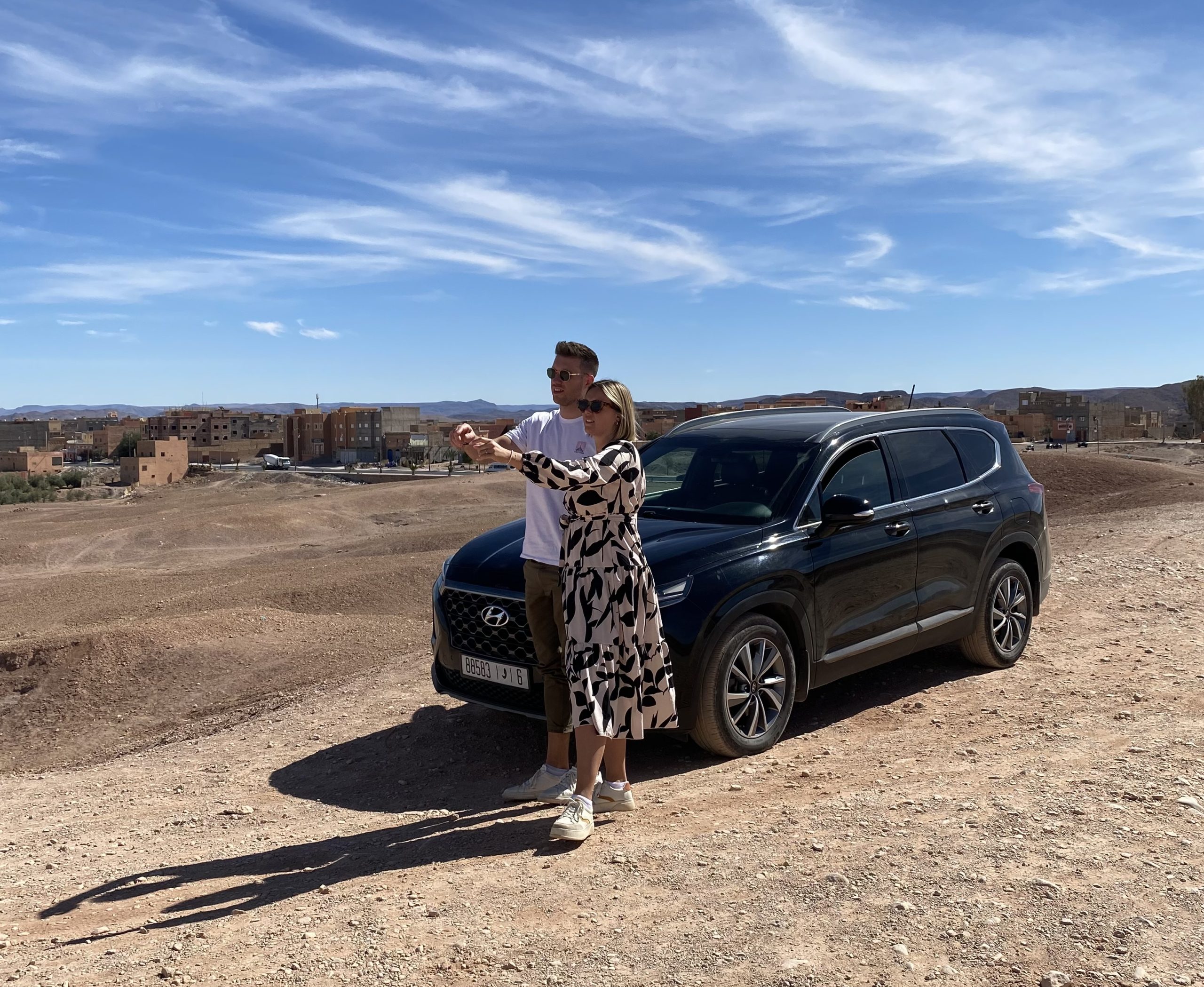
Having your own vehicle opens up parts of Morocco that are harder to reach on standard itineraries. Major highways and city streets are well-maintained, while rural roads through the Atlas Mountains or near the desert can be narrower and less predictable. Traffic drives on the right, speed limits are actively enforced, and checkpoints are common on national routes, so keep your documents within easy reach. Offline map apps like Maps.me tend to work reliably even where mobile signal is weak.
Bringing a Motorhome or Campervan to Morocco
Motorhomes and campervans go through the same temporary import process as standard cars, and Morocco has become a well-known destination for this kind of overland travel. The country’s mix of coastline, mountains, and desert makes it a popular stop for van-life travelers moving through North Africa, though the same document checklist and six-month limit apply regardless of vehicle type.
Can Someone Else Drive Your Car in Morocco?
Yes, but the driver needs a valid license and a notarized authorization letter naming them as an approved driver of the vehicle. All vehicle documents should stay in the car at all times. If a checkpoint stop happens, the driver will need to show both their license and proof they’re legally permitted to be using the car.
Can You Leave Morocco Without Your Vehicle?
No. Customs ties your passport directly to the car’s import status, so trying to exit without the vehicle will be blocked at the border. The only legal path to leaving it behind is paying the applicable duties and converting the vehicle’s status to a permanent import.
Is It Safe to Drive a Foreign-Registered Car in Morocco?
Generally, yes. Foreign and European plates are a common sight in tourist areas like Marrakech, Fes, and along the coast. For extra peace of mind, park in guarded lots overnight, avoid driving remote roads after dark, and stay alert for pedestrians, mopeds, and animals outside the cities. If you’d prefer a driver who already knows the routes and road conditions, our Morocco desert tours are a popular way to reach places like Merzouga without navigating unfamiliar terrain yourself.
What Does It Cost to Ferry a Car to Morocco?
Prices vary by route, vehicle size, and season. As a general guide, a one-way crossing from Algeciras to Tangier Med for a standard car with two passengers usually falls between €130 and €250. Booking a round-trip or open-return ticket often costs less overall and gives you more flexibility on your return date. Some operators bundle basic vehicle insurance into the fare, so it’s worth checking exactly what’s included before comparing prices.
Do You Need to Buy Extra Car Insurance in Morocco?
If your Green Card doesn’t already cover Morocco, yes, you’ll need to purchase local insurance at the port or through a Moroccan provider. This is a legal requirement and generally covers third-party liability at minimum. Coverage is sold in different lengths, from one week up to a month or more, typically priced between €50 and €100.
What If Your Car Breaks Down in Morocco?
Start by contacting your insurance provider to see what roadside assistance is included in your policy. Cities and larger towns have reliable mechanics, and parts for common European and American car models are usually available within a day or two, even if a specific dealership isn’t nearby.
Can You Overstay Your Car’s Import Period in Morocco?
No. Keeping a foreign car in Morocco past the six-month limit can lead to fines or, in more serious cases, the vehicle being seized. Import records are tracked electronically, and you won’t be able to exit the country without proving the car has also left. It’s worth building your departure date around this deadline from the start of your trip.
Practical Tips for Driving a Foreign Car in Morocco
Keep your passport, registration, insurance, and import form on hand at all times, not just when crossing the border. Pack the required safety equipment, a warning triangle, a high-visibility vest, and a working spare tire. Carry cash for fuel, since card payments aren’t always accepted outside major cities. Speed limits are radar-enforced across much of the country, so stick to posted limits, and watch for animals crossing rural roads, particularly around dawn and dusk.
Are Fuel Prices High in Morocco?
Fuel in Morocco is generally cheaper than in most of Europe and roughly comparable to typical US prices, though this shifts with global oil markets. It’s a reasonable expense to budget for on a longer road trip, especially if you’re covering ground between the coast and the desert.
Do You Need a Carnet de Passage for Morocco?
No, Morocco doesn’t require a Carnet de Passage for tourists bringing their own vehicle; the temporary import form covers this. A Carnet is only worth arranging if your route continues further south into countries like Mauritania or Senegal, where one is typically required.
Do You Need to Modify a European Car to Drive It in Morocco?
No modifications are needed to drive a European car in Morocco. It’s worth checking that your headlights are set up appropriately for right-hand traffic and that the vehicle is in good mechanical shape before departure, but there’s no formal technical requirement, and emissions testing doesn’t apply to tourist vehicles.
Final Checklist Before Taking Your Car to Morocco
Before you set off, confirm your passport has at least six months of validity remaining, and gather your vehicle registration and insurance covering Morocco, whether that’s a Green Card or local coverage bought at the port. Bring your driver’s license, and consider an International Driving Permit as a backup. Complete the temporary import form ahead of time if your ferry operator allows it, confirm your ferry ticket includes a car space, and carry a notarized authorization letter if the vehicle isn’t registered in your name. Pack a reflective vest, warning triangle, and spare tire to meet Moroccan road safety requirements.
Prefer to Explore Without the Paperwork?
Bringing your own car gives you independence, but it also means handling ferries, customs, and unfamiliar roads on your own. If you’d rather spend your trip taking in the scenery instead of managing logistics, our team at Best Morocco Travel designs private, fully guided journeys from Marrakech, Fes, Casablanca, and Tangier that cover the same imperial cities, mountains, and desert landscapes, without any of the customs paperwork. As a Marrakech-based, locally owned company, we know these roads well, and our drivers take care of the details so you can focus on the experience. You can learn more about who we are, browse more travel tips on our Morocco travel blog, or contact us to start planning a private Morocco tour.
Taking your own car to Morocco is one of the most flexible ways to see the country, and with the right documents, valid insurance, and an eye on the six-month limit, the process is straightforward from the moment you board the ferry to the day you drive back out.