
What Is a Riad? Morocco's Courtyard Houses Explained
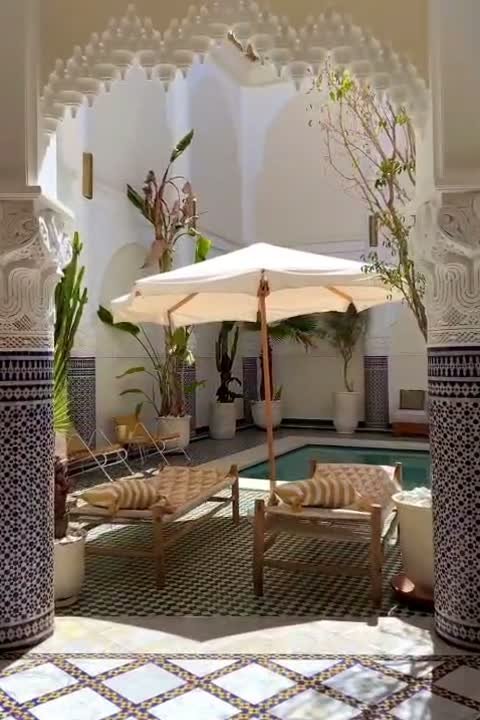
A riad is a traditional Moroccan house built around an open courtyard or garden. From the street you see only a plain wall and a heavy wooden door, but inside the rooms open onto a quiet courtyard with plants, a fountain or a small pool. Today many riads in the old medinas of Marrakech, Fes and other cities have been restored as small guesthouses, and staying in one is a highlight of most trips to Morocco.
What Does the Word Riad Mean?
The word comes from the Arabic word for garden. A true riad has a garden in its central courtyard, traditionally laid out in four parts around a fountain, with orange or lemon trees giving shade. The design looks inward on purpose: it keeps the house cool in summer, private from the busy street, and calm in the middle of the city.
How a Riad Is Built
Most riads share the same features:
- A central courtyard open to the sky, with a garden, fountain or plunge pool.
- Rooms on two or three floors around the courtyard, with windows facing inward rather than onto the street.
- Traditional craftsmanship: zellige mosaic tiles, carved plaster, painted cedar wood and tadelakt, a smooth waterproof lime plaster used in bathrooms.
- A rooftop terrace for breakfast, sunsets and views over the medina.
- Thick walls that keep the rooms cool in summer and warm in winter.
Riad, Dar or Hotel: What Is the Difference?
A dar is also a traditional house around a courtyard, but usually smaller and without a garden. In everyday use many guesthouses call themselves riads either way. A hotel is purpose-built, larger and usually outside the medina, with more facilities such as large pools, gyms and parking. A riad offers fewer rooms, a more personal welcome and a location in the heart of the old city.
What Is It Like to Stay in a Riad?
Most riad guesthouses have between five and fifteen rooms, so they feel more like staying in a home than in a hotel. Breakfast is usually served on the roof terrace or in the courtyard, the staff know every guest by name, and the noise of the medina disappears once the door closes behind you. Because riads sit inside the medina, cars often cannot reach the door, and a porter will meet you nearby to carry your luggage.
A few things to know before you book:
- Rooms vary a lot in size and light, since every riad is a converted historic house.
- Stairs are steep and lifts are rare, which matters for travellers with limited mobility.
- Courtyard rooms can hear voices from the courtyard, while rooftop rooms are quieter.
Riads on Our Tours
On our private tours we choose riads we have stayed in and tested ourselves, in Marrakech, Fes and other cities, and we can match the riad to your budget, from comfortable to luxury. If you are still deciding where to stay, read our comparison of a riad or resort in Morocco. To combine riad stays with the Sahara and the Atlas, explore our private Morocco tours or our Morocco luxury tours.


