Shopping in Morocco
Shopping in Morocco is one of the main reasons travelers fall in love with the country. Between the maze-like souks of Marrakech, the ancient tanneries of Fes, the breezy art stalls of Essaouira, and even a world-class modern mall in Casablanca, Morocco offers one of the most diverse and rewarding shopping cultures anywhere in the world. Every purchase, whether it’s a hand-knotted rug, a bottle of pure argan oil, or a hammered brass lantern, carries centuries of craftsmanship behind it.
This guide covers everything you need to know, where to shop, what to buy, how much to expect to pay, how to haggle like a local, and how modern shopping malls fit alongside the traditional souks. By the end, you’ll be ready to turn shopping in Morocco into one of the true highlights of your trip rather than a stressful guessing game.
Where to Shop in Morocco: Souks, Medinas, and Regional Markets
Each Moroccan city has its own shopping personality, and knowing where to go for what makes a real difference in what you find and how much you pay.
Marrakech has the country’s most famous souks, packed into the narrow lanes surrounding Jemaa el-Fnaa square. Souk Semmarine is the main artery for textiles, leather, and lanterns, while Souk El Attarine is the destination for spices, perfumes, and traditional beauty products. Because Marrakech draws the largest number of visitors, it also has the widest selection of goods and the most competitive bargaining culture in the country.
Fes is best known for leather and ceramics. The Chouara Tannery, one of the oldest working tanneries in the world, is where much of Morocco leather is still dyed and treated using centuries-old methods, and the surrounding medina is lined with workshops selling directly from the source.
Essaouira offers a more relaxed, coastal alternative to the intensity of Marrakech medina. Its souks are known for thuya wood carvings, handwoven textiles, and a growing scene of independent artisan boutiques. If you’re planning a coastal add-on to your trip, our day trip to Essaouira from Marrakech pairs beach time with unhurried souvenir shopping.
Rabat, the capital, has a quieter, more local shopping scene centered on the Kasbah of the Udayas and the old medina, and is a good option for travelers who want an authentic souk experience without the crowds.
What to Buy in Morocco: Top Souvenirs and Local Treasures
Moroccan Rugs and Carpets
Handwoven rugs are the single most sought-after souvenir from Morocco, and for good reason. Berber weavers have produced rugs like Beni Ourain, Azilal, Tinghir and Boucherouite for generations, each with distinct patterns, wool types, and regional symbolism. Prices vary widely depending on size, material, and age, so it helps to ask about the region and cooperative a rug came from before you buy. Turning a rug over to check the back is a simple way to confirm it’s genuinely handmade, real knotwork looks slightly irregular, while machine-made copies look too perfectly uniform.
Moroccan Leather Goods and Babouche Slippers
Morocco leather tradition runs deep, particularly in Fes, where hides are still tanned using methods passed down for centuries. Bags, belts, jackets, and leather poufs are popular buys, and quality leather should feel supple and smell earthy rather than chemical or plasticky. Babouche slippers, the pointed leather slip-ons sold throughout every souk, are lightweight, easy to pack, and come in everything from plain neutral tones to brightly embroidered designs, making them one of the easiest souvenirs to bring home for the whole family.
Moroccan Argan Oil and Beauty Products
Argan oil is Morocco most famous export, and it comes in two forms: culinary, which has a rich, nutty flavor, and cosmetic, which is used for skin and hair care. Look for oil that is cold-pressed and free of additives, ideally sourced from a women’s cooperative in the Essaouira or Agadir region, where most authentic argan oil is produced. Beyond argan oil, black soap, rose water, and exfoliating kessa gloves are staples of the traditional Moroccan hammam ritual and make practical, long-lasting gifts.
Moroccan Spices, Herbs, and Gourmet Treats
No souk visit is complete without walking through a spice market, where mounds of cumin, saffron, paprika, and the signature ras el hanout blend fill the air with color and scent. Dried mint, thyme, and rosemary are also easy to pack and useful in everyday cooking back home. For something sweeter, look for chebakia and kaab ghzal pastries, or a jar of amlou, a rich spread made from argan oil, almonds, and honey.
Moroccan Ceramics and Pottery
Moroccan ceramics are produced mainly in Safi and Fes, each with its own signature look. Fes is known for intricate blue-and-white geometric designs, while Safi produces earthier, more rustic pieces. Hand-painted ceramics typically show small natural variations from piece to piece, which is actually a good sign of authenticity rather than a flaw.
Moroccan Jewelry and Berber Silver
Traditional Berber jewelry, often crafted from silver, amber, and turquoise, reflects tribal symbols and regional identity that go back generations. Souks in Marrakech and Fes both carry a wide range of handcrafted pieces, from simple everyday jewelry to elaborate ceremonial designs, and prices depend heavily on the materials used and the intricacy of the work.
Moroccan Lanterns, Metalwork, and Home Decor
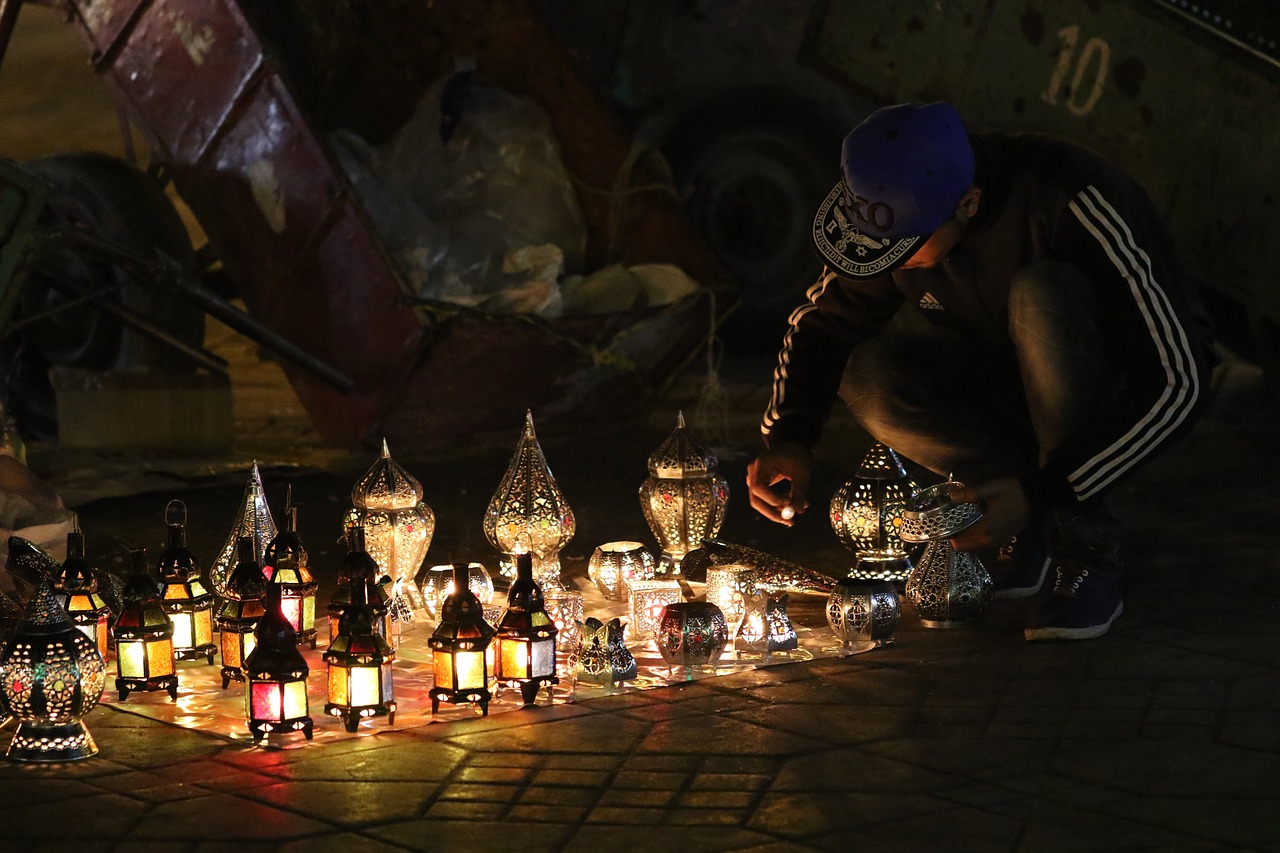
Moroccan lanterns are among the most visually striking souvenirs, hand-punched from brass or iron and often fitted with colored glass that casts intricate patterns of light. They pack down flatter than they look and make a dramatic addition to any home. Beyond lanterns, engraved mirrors, embroidered pillow covers, and carved wooden furniture pieces are popular for travelers looking to bring a touch of Moroccan style into their living space.
Traditional Moroccan Clothing
Kaftans, djellabas, and jabadors are staples of Moroccan fashion and are sold throughout every souk in a range of fabrics and price points. Kaftans tend to be more formal and decorative, djellabas offer a relaxed, everyday silhouette, and jabadors are a popular flowing option for men. Many shops will tailor items on the spot or within a day, which is worth asking about if you want a more precise fit.
Handmade Moroccan Cookware
Tagines and traditional tea sets are functional souvenirs that double as everyday kitchenware. A good clay tagine should feel solid and evenly glazed, while tea sets made from engraved silver or brass are a stylish way to recreate the Moroccan mint tea ritual at home.
Modern Shopping in Morocco: Malls, Boutiques, and Concept Stores
Shopping in Morocco isn’t limited to the souks. Casablanca, Marrakech, and Rabat all have a growing modern retail scene that pairs well with a traditional souvenir hunt.
Morocco Mall in Casablanca
Morocco Mall is the largest shopping mall in Africa, covering roughly 190,000 to 250,000 square meters along the Casablanca coastline. It houses hundreds of stores, including international luxury brands, a large aquarium, an IMAX cinema, and a dedicated Moroccan crafts section, making it a worthwhile stop for travelers who want air-conditioned, fixed-price shopping alongside international and local labels.
Boutiques in Marrakech Guéliz District
Guéliz, Marrakech modern new town, has become a hub for contemporary Moroccan fashion, home decor, and concept stores run by local and international designers. It’s an excellent option for travelers who want curated, gallery-style shopping with fixed prices and a more relaxed browsing experience than the souks.
Hypermarkets for Everyday Shopping
Chains like Marjane and Carrefour operate large hypermarkets in most major cities and are useful for everyday items, packaged Moroccan food products, and last-minute essentials, all at clearly marked, non-negotiable prices.
How to Haggle When Shopping in Moroccan Souks
Bargaining isn’t just accepted in Moroccan markets, it’s expected, and knowing a few basics makes the process far less intimidating.
- Start low, but stay respectful. Offering roughly a third to half of the initial asking price is a common starting point, though this varies by item and vendor.
- Know the item before you shop. Getting a general sense of prices at a few stalls before committing to a purchase gives you a realistic baseline.
- Be willing to walk away. Vendors will often call you back with a better offer, and if they don’t, that’s usually a sign you were already close to a fair price.
- Keep it friendly. Haggling in Morocco is a social exchange, often over mint tea, rather than a confrontation. A smile and a bit of patience go a long way.
- Buy in sets when possible. Asking for a better rate on multiple items is usually more effective than negotiating hard on a single small purchase.
Fixed-price cooperatives, government-certified artisan centers, and modern malls are the exception. Prices there are generally non-negotiable but come with a guarantee of authenticity and fair wages for the artisans.
Practical Tips for Shopping in Morocco
Is Shopping in Morocco Safe?
Shopping in Morocco is generally very safe, and the souks are well used to international visitors. As with any busy market anywhere in the world, keep an eye on your belongings, agree on a price before a vendor wraps an item, and don’t feel pressured to buy anything you’re unsure about.
What Is the Best Time for Shopping in Morocco?
Early morning or late afternoon are the best windows for shopping in Morocco, since the souks are less crowded and the midday heat is easier to avoid, particularly in the summer months. Vendors are often more relaxed and willing to negotiate earlier in the day, before the busiest foot traffic arrives.
Cash or Card When Shopping in Morocco?
Cash is still the standard for most souk purchases, so it’s worth carrying Moroccan dirhams for daily shopping. Larger boutiques, cooperatives, and shopping malls are more likely to accept credit cards, so it’s a good idea to carry both.
What Should You Avoid Buying in Morocco?
Check your home country’s customs rules before buying anything sold as an antique or archaeological artifact. Ordinary handmade souvenirs like rugs, ceramics, spices, and leather goods rarely cause any issues, but genuinely old or historically significant items may require export documentation.
Plan Your Shopping Trip to Morocco with Best Morocco Travel
Shopping in Morocco is best enjoyed with someone who knows which souks are worth your time, which artisans sell authentic work, and how to navigate the medina without getting lost or overpaying. As a locally owned, Marrakech-based company, our team builds each itinerary around private, personalized experiences rather than generic group stops.
Whether you want a dedicated shopping afternoon added to your itinerary or a full day exploring artisan workshops in Fes and Marrakech, our private tours are tailored around your interests. Combine your souk visits with a broader adventure through our tours from Marrakech or tours from Fes, or add on a desert tour for the full Moroccan experience beyond the medina walls.
To learn more about who we are and how we plan every trip, visit our About Us page, browse more travel tips on our blog, or contact us to start planning your Moroccan shopping adventure today.