History of Morocco
The history of Morocco stretches back further than almost any other country in the world, and it’s still being written today. Archaeological finds at Jebel Irhoud, about 60 miles west of Marrakech, pushed back the known origins of our own species: fossils discovered there in 2017 are roughly 300,000 years old, making them the oldest Homo sapiens remains ever found anywhere on Earth. From that starting point, Morocco story runs through Berber kingdoms, Roman outposts, a golden age of Islamic dynasties, European colonization, and a modern kingdom that will help host the 2030 World Cup. Understanding this timeline makes a much bigger difference when you’re standing inside a 1,000-year-old medina than most travelers expect.
If you’d like to see this history in person, our private Morocco tours are built around the country’s imperial cities, kasbahs, and ancient sites, with a local guide who can put each stop in context.
Prehistoric Morocco: History’s Earliest Chapter
Long before any written record, the region that is now Morocco was already inhabited. The Jebel Irhoud fossils show that early humans were living in the Atlas Mountains foothills roughly 300,000 years ago, and later sites tied to the Iberomaurusian culture, such as Taforalt in eastern Morocco, show settled communities with early burial practices dating back over 13,000 years.
The descendants of these early inhabitants are the Amazigh people, more widely known outside Morocco as Berbers, a term many Amazigh consider a colonial-era label. The Amazigh developed agriculture, animal domestication, and tribal governance structures long before outside powers arrived, and their language, Tamazight, is still spoken across the Atlas Mountains, the Rif, and parts of the Sahara today. In 2011, Tamazight was made an official language of Morocco alongside Arabic, a recognition of just how central Amazigh identity remains to the country.
Ancient Morocco: Phoenicians, Carthage, and Rome (Before 682 CE)
By around the 8th century BCE, Phoenician traders had established coastal posts along Morocco Atlantic shore, the most notable being Lixus near modern Larache. Carthage later extended its influence over these coastal settlements, followed by Rome, which absorbed the region into the province of Mauretania Tingitana.
Volubilis, near present-day Meknes, became the Roman Empire’s most important city in the region, complete with paved roads, aqueducts, and a triumphal arch, much of which still stands and is open to visitors today. Roman control never reached far beyond the coast and plains, though; Berber tribes in the Atlas Mountains kept their autonomy throughout the Roman period, a pattern of resistance to outside rule that shows up again and again in Moroccan history.
As Roman power declined, Vandals and then Byzantines briefly held parts of the coast, but it was local Berber tribes who regained control before the next major turning point in Morocco history: the arrival of Islam.
Islam and Morocco Early History (682-1055)
Muslim Arab armies reached Morocco in 682 CE, bringing Islam, the Arabic language, and new systems of law and governance. Berber tribes did not simply adopt these changes wholesale; they absorbed Islam on their own terms, often blending it with existing customs, a dynamic that has shaped Moroccan Islam ever since.
Morocco first Islamic ruling family, the Idrisid dynasty, was founded by Idris I, a great-grandson of the Prophet Muhammad who fled persecution by the Abbasid Caliphate and found refuge in northern Morocco in 789. His son, Idris II, founded the city of Fes, which quickly grew into one of the most important centers of Islamic scholarship in the world. Fes is also home to the University of al-Qarawiyyin, founded in 859 and recognized by UNESCO and Guinness World Records as the oldest continuously operating university on the planet. If Fes is on your itinerary, our tours from Fes include time in the medina where this history is still visible in daily life.
The Almoravid Dynasty (1060-1147)
The Almoravids were a Berber Muslim dynasty that rose out of the Sahara, uniting tribes under a strict interpretation of Sunni Islam. In 1062, they founded Marrakech as their capital, and under their rule Morocco influence extended into Al-Andalus, present-day southern Spain, making the kingdom one of the dominant powers in the western Islamic world.
The Almoravids left a lasting architectural legacy in Marrakech, and their expansion into Iberia marked one of the high points of the Moroccan empire’s reach. Our tours from Marrakech pass through the same streets this dynasty laid out nearly a thousand years ago.
The Almohad Dynasty (1147-1269)
The Almohads, another Berber dynasty from the High Atlas, overthrew the Almoravids and pushed a strict program of Islamic reform centered on monotheism. At their peak, they controlled much of North Africa and southern Spain.
Their architectural legacy is some of the most recognizable in Morocco today, including the Koutoubia Mosque in Marrakech and the unfinished Hassan Tower in Rabat. Internal conflict and mounting pressure from Christian kingdoms in Spain eventually brought the Almohads down, but the religious and architectural foundations they built shaped every Moroccan dynasty that followed.
The Merinid Dynasty (1269-1465)
The Merinids, centered in Fes, brought a period of intellectual and architectural revival. They built madrasas across the country to strengthen Sunni orthodoxy and education, and the Bou Inania Madrasa in Fes remains one of the finest surviving examples of Merinid craftsmanship.
Their reign weakened over time due to internal power struggles and growing pressure from Portugal and Spain, which had begun eyeing Morocco Atlantic coast.
The Wattasid and Saadi Dynasties (1465-1659)
The Wattasids, who descended from the Merinids, struggled to hold Morocco together as Portugal seized a string of coastal cities, including Ceuta in 1415. This period marks the start of sustained Portuguese and Spanish presence on Moroccan soil.
The Saadi dynasty rose as a unifying force, claiming legitimacy through descent from the Prophet Muhammad. Under Sultan Ahmad al-Mansur, Morocco entered a genuine golden age: the 1578 Battle of the Three Kings ended Portuguese ambitions in Morocco for good, and a 1591 military expedition across the Sahara brought the wealthy trading city of Timbuktu under Moroccan control. The Saadian Tombs in Marrakech, rediscovered in 1917 after being sealed for centuries, remain one of the best-preserved examples of this era’s artistry.
The Alaouite Dynasty and the Road to Colonization (1666-1912)
Morocco current ruling family, the Alaouite dynasty, also traces its lineage to the Prophet Muhammad and brought stability after decades of upheaval. Sultan Moulay Ismail (1672-1727) is the era’s most notable figure, remembered for his military campaigns and for turning Meknes into an imperial capital with massive walls, granaries, and royal stables.
Over the following two centuries, the Alaouites worked to balance growing pressure from European powers with the preservation of Moroccan sovereignty, a balancing act that grew harder as the 19th century wore on.
The French and Spanish Protectorate and the Fight for Independence (1912-1956)
In 1912, weakened by debt and European rivalry, Morocco became a French and Spanish protectorate. France controlled the central and eastern regions from Rabat, while Spain administered the north and the far south. The protectorate brought new infrastructure and administration, but also colonial rule that most Moroccans never accepted, and resistance movements grew steadily through the early 20th century.
The push for independence gathered real momentum under Sultan Mohammed V, whose exile by French authorities in 1953 only strengthened Moroccan nationalism. He returned in 1955, and Morocco formally regained its independence on March 2, 1956, ending 44 years of protectorate rule.
Morocco Modern History (1956-Today)
Mohammed V’s son, Hassan II, ruled Morocco from 1961 to 1999, a period of political consolidation and, at times, real tension between the monarchy and opposition movements. His son, King Mohammed VI, has ruled since 1999 and has overseen significant reform, including the 2004 Moudawana, which expanded women’s legal rights within marriage and family law, and the 2011 constitution, which recognized Tamazight as an official language and expanded the powers of Morocco elected government following that year’s regional wave of protests.
Morocco history is still being shaped in real time. On September 8, 2023, a magnitude 6.8 earthquake struck the High Atlas Mountains near Al Haouz province, about 45 miles southwest of Marrakech, killing nearly 3,000 people and damaging historic sites in Marrakech medina, including parts of the city walls and the Koutoubia Mosque. Morocco Ministry of Culture launched an emergency restoration program using traditional building techniques, and landmarks including the Saadian Tombs, El Badii Palace, and El Bahia Palace reopened to visitors within weeks. That restoration work, carried out by master artisans using centuries-old methods, is itself now part of the story of how Morocco protects its heritage.
Morocco global profile keeps growing, too. In December 2024, FIFA confirmed that Morocco will co-host the 2030 World Cup alongside Spain and Portugal, becoming only the second African country ever to host football’s biggest tournament after South Africa in 2010. It’s a fitting moment for a country that has spent 300,000 years absorbing new influences while holding onto its own identity.
Best Historical Sites in Morocco to Visit Today
Morocco history isn’t confined to books, it’s built into the walls of its cities. These are the sites that bring the timeline above to life:
- Volubilis: The best-preserved Roman ruins in Morocco, with mosaics, columns, and a triumphal arch dating to the 3rd century BCE.
- Fes Medina and Al-Qarawiyyin University: A UNESCO World Heritage medina built around the oldest continuously operating university in the world.
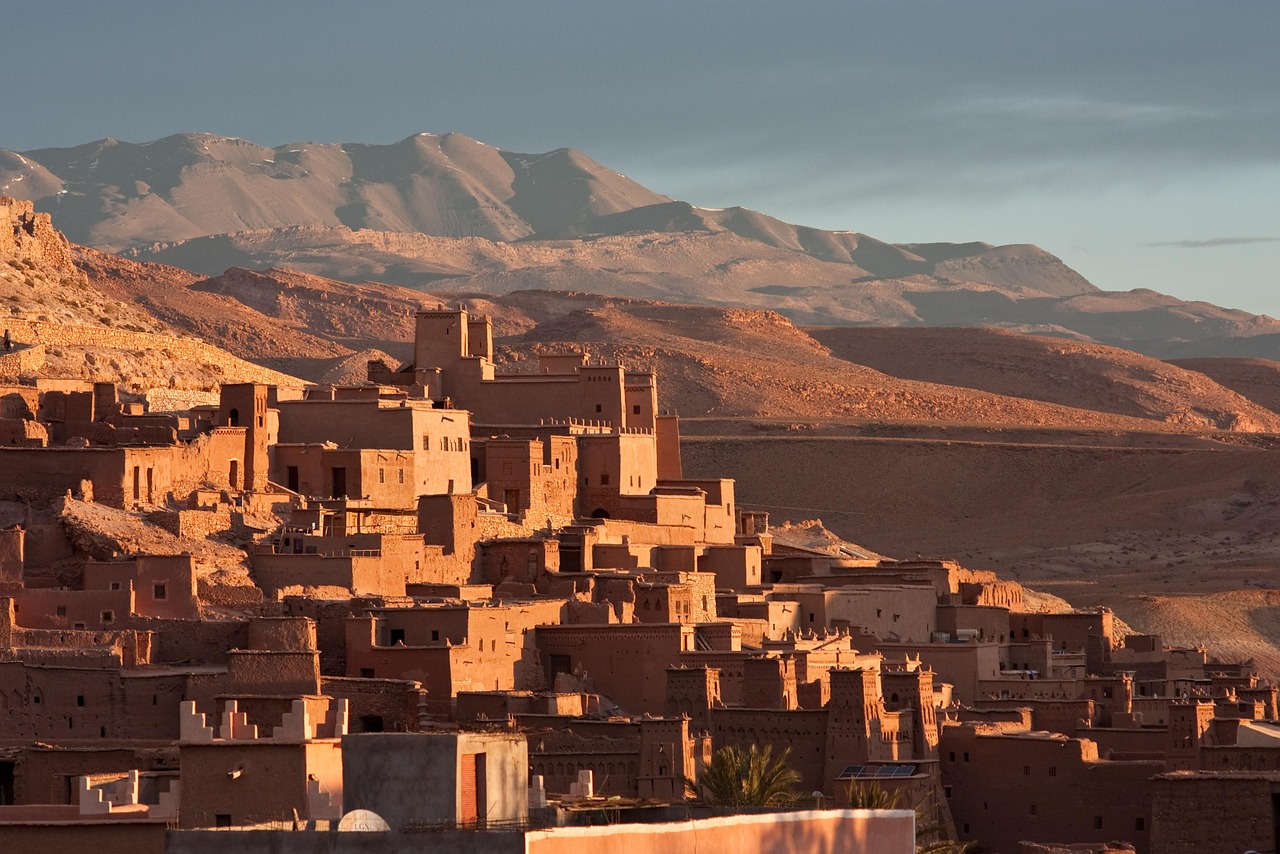
- Kasbah Ait Ben Haddou: A fortified UNESCO-listed earthen village near Ouarzazate, famous for its Merinid-era architecture.
- Meknes: Moulay Ismail’s 17th-century imperial capital, with the Bab Mansour gate and royal granaries.
- Marrakech Medina: Home to the Koutoubia Mosque, the Saadian Tombs, and the Almoravid-founded old city itself.
- Rabat: Morocco capital, with the Hassan Tower, the Chellah necropolis, and the Kasbah of the Udayas.
- Chefchaouen: Founded in 1471 as a defensive outpost against Portuguese incursions, now famous for its blue-washed streets.
- Essaouira: A fortified Portuguese-built port city, formerly known as Mogador, with 18th-century ramparts still intact.
All of these cities are covered across our Imperial Cities of Morocco guide and our best places to visit in Morocco, and each can be included in a custom itinerary through our Morocco tour packages.
FAQ’s About the History of Morocco
What is the history of Morocco?
Morocco history spans over 300,000 years, starting with the earliest known Homo sapiens fossils at Jebel Irhoud. It includes Phoenician and Roman settlement, the arrival of Islam in 682 CE, a succession of powerful dynasties including the Idrisids, Almoravids, Almohads, Merinids, Saadis, and Alaouites, French and Spanish colonial rule from 1912 to 1956, and the modern constitutional monarchy Morocco is today.
Who were the Berbers in Morocco?
The Berbers, who refer to themselves as Amazigh, are Morocco indigenous people, with roots in the region dating back tens of thousands of years. Their language, Tamazight, became an official language of Morocco in 2011, and Amazigh culture remains central to Moroccan identity, cuisine, and traditions today.
When did Morocco gain independence?
Morocco gained independence from France and Spain on March 2, 1956, ending a 44-year protectorate period. Sultan Mohammed V, who had been exiled by French authorities in 1953, returned in 1955 and led the country into independence.
What are the most important Moroccan dynasties in history?
Morocco major dynasties are the Idrisids (789-1055), Almoravids (1060-1147), Almohads (1147-1269), Merinids (1269-1465), Saadis (1549-1659), and the Alaouites (1666-present), who remain Morocco ruling family today.
What is the oldest city in Morocco?
Fes, founded in 789 by Idris I and expanded by his son Idris II in 808, is generally considered Morocco oldest imperial city and one of the oldest Islamic cities in the world still continuously inhabited.
Is Morocco an Arab country or a Berber country?
Morocco is both. The country’s indigenous population is Amazigh (Berber), while Arabic and Islam arrived with the 7th-century conquest. Today Morocco recognizes both Arabic and Tamazight as official languages, and most Moroccans identify with a blend of Arab and Amazigh heritage.
How did the 2023 earthquake affect Morocco historic sites?
The September 2023 Al Haouz earthquake damaged parts of Marrakech medina walls and historic monuments, including the Koutoubia Mosque area, the Saadian Tombs, and El Badii and El Bahia Palaces. Morocco Ministry of Culture launched a restoration program using traditional building methods, and most major sites reopened to visitors within weeks.
What are some notable historical sites in Morocco?
Morocco top historical sites include the Roman ruins of Volubilis, the medieval medinas of Fes and Marrakech, the imperial city of Meknes, Rabat Hassan Tower and Chellah necropolis, the fortified kasbah of Ait Ben Haddou, and the Portuguese-built port of Essaouira.