
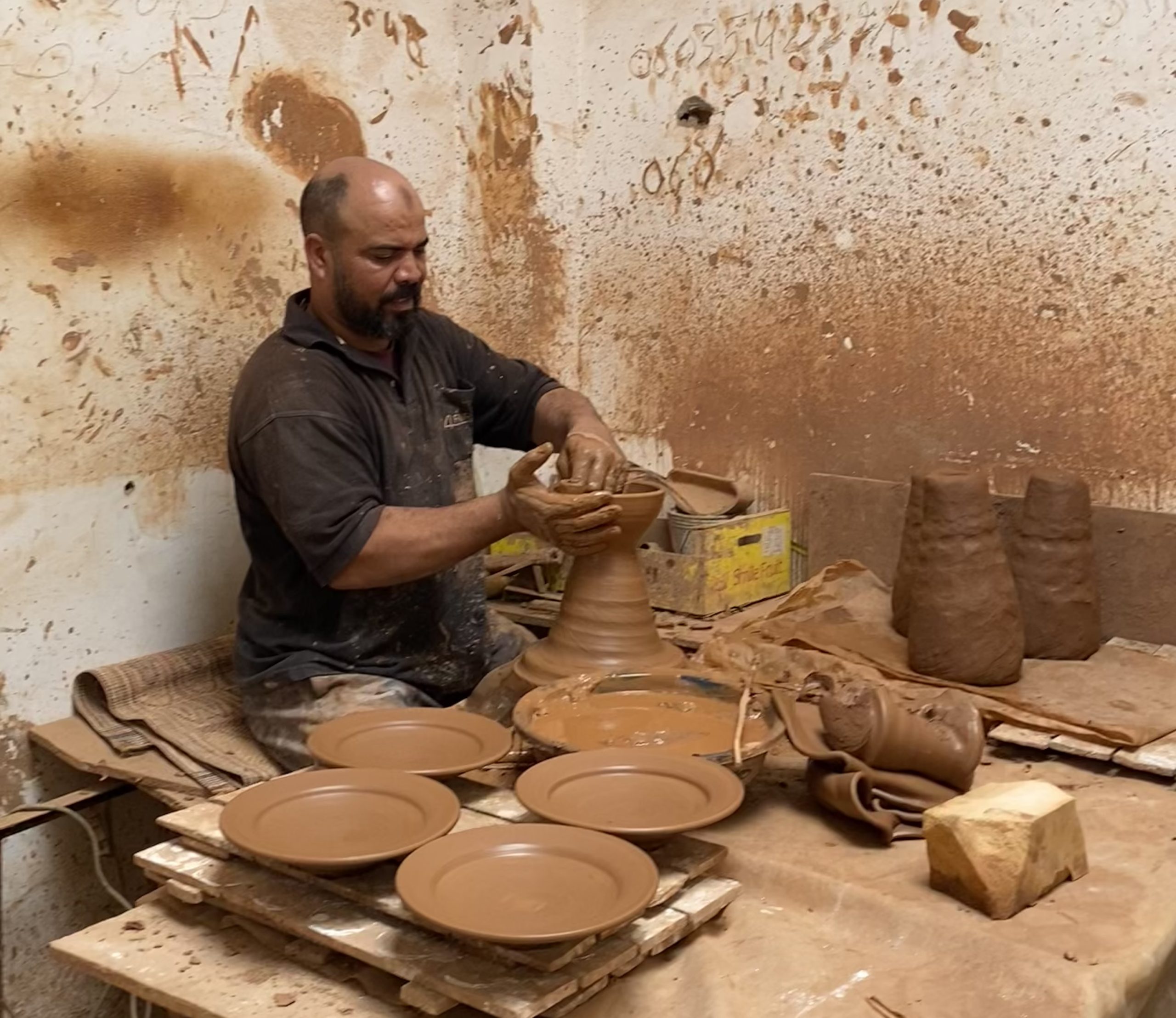
Safi Pottery
Safi Pottery is one of Morocco best-known traditional crafts. The coastal city of Safi has a long history of ceramic production, and local artisans continue to make plates, bowls, tagines, vases, and decorative pieces by hand. For travelers interested in Moroccan culture and traditional crafts, Safi offers a chance to see how this pottery is made and learn why ceramics remain an important part of the city’s identity.
Safi is especially known for its painted and glazed ceramics. Blue is strongly associated with the city’s pottery, although artisans also use green, yellow, white, brown, and natural clay tones. The designs range from simple geometric patterns to more detailed floral and traditional motifs.
Why Is Safi Famous for Pottery?
Safi is famous for pottery because ceramic production has been part of the city’s history for centuries. Archaeological evidence shows pottery production in Safi at least as far back as the Almoravid period. The craft continued through different periods of the city’s history and eventually made Safi one of Morocco main centers for ceramics.
The city also had access to suitable clay and developed a strong community of skilled potters. Over time, local artisans passed their knowledge from one generation to the next. This helped preserve pottery as an important Moroccan craft while allowing new styles and techniques to develop. Today, pottery remains closely connected with Safi. Visitors can explore the pottery district, see artisans at work, and find locally made ceramics in workshops and shops around the city.
The History of Safi Pottery
The history of pottery in Safi goes back many centuries. Archaeological discoveries provide evidence of ceramic production during the Almoravid period, while later historical records show that pottery continued to develop in the city. Safi’s ceramic tradition went through different stages over the centuries. The craft became particularly important again in the 18th century, when Safi had established itself as a major pottery center.
The early 20th century brought another important development. Moroccan ceramic master Boujemaa Lamali founded a ceramics school in Safi in 1920. His work helped develop ceramic education in the city and influenced generations of Moroccan artisans. This history gives Safi pottery a special place among Moroccan handicrafts. The pieces sold today are not simply souvenirs. They are part of a craft tradition that has developed over a long period of time.
How Is Safi Pottery Made?
Making traditional Safi ceramics involves several stages. Artisans first prepare the clay and shape it into the desired form. Many pieces are shaped on a pottery wheel, while other objects require different methods depending on their size and design.
After shaping, the pottery must dry before it goes into the kiln. Artisans then decorate the surface and apply glaze when the type of piece calls for it. A later firing hardens the ceramic and gives glazed pieces their finished appearance.
The process requires skill at every stage. A small difference in the shape, decoration, or firing can change the final result. Handmade pottery can therefore have small variations that make each piece different from another.
Safi Ceramics and Traditional Designs
Safi ceramics are known for their painted decoration and strong use of color. Blue remains one of the colors most closely associated with pottery from the city. However, visitors will also find ceramics decorated with green, yellow, white, brown, and other tones.
Traditional designs often include geometric shapes, lines, floral patterns, and other decorative elements. Some pieces have simple designs, while others feature detailed painting across most of the surface. The variety makes pottery in Safi interesting for both collectors and travelers looking for a Moroccan souvenir. A small bowl may have a very different style from a large serving plate, vase, or decorative tagine.
What Can You Buy in Safi?
Visitors can find many types of handmade pottery in Safi. Common pieces include plates, bowls, cups, tagines, vases, flower pots, amphoras, storage vessels, candlesticks, incense burners, and decorative ceramics. If you want something for everyday use, plates, bowls, cups, and serving dishes are practical choices. Decorative plates and vases can also make attractive additions to a home and offer a simple way to bring Moroccan craftsmanship back with you.
When buying pottery, take a little time to look at different pieces and ask about their origin. Visiting a local workshop can also give you a better understanding of the work behind the finished product.
Where Can You See Safi Pottery?
One of the best places to experience local pottery is the Potters’ Hill, also known as the Colline des Potiers. This area is closely associated with Safi’s ceramic workshops and gives visitors an opportunity to see local artisans working with clay. The pottery district is more than a place to shop. It allows travelers to see part of the production process and understand how pottery remains connected to everyday life in Safi.
Another important place to visit is the National Ceramic Museum of Safi. The museum presents archaeological and ethnographic collections related to Moroccan ceramics and helps explain the development of pottery in Safi and other parts of Morocco.
The museum was established in 1990 and occupies a former fortress overlooking the city. Its collection includes historic pottery as well as works connected with important Moroccan ceramic artists. For current opening hours and admission information, check the National Foundation of Museums before your visit because schedules can change.
What Makes Safi Pottery Different?
Safi pottery has its own character within Morocco wider ceramic tradition. The city is particularly associated with painted and glazed pottery, strong colors, and detailed decoration. At the same time, local production includes both useful household objects and decorative pieces. The long history of ceramic production also sets Safi apart. Visitors can see how traditional skills continue to influence the pottery made in the city today.
For travelers, one of the most interesting parts of Safi pottery is the connection between the finished object and the artisan who made it. Seeing the workshops makes it easier to appreciate the time and skill behind a handmade ceramic piece.
Visiting Safi for Its Pottery
Safi is a good destination for travelers who want to explore Moroccan crafts beyond the better-known tourist cities. A pottery visit can easily be combined with time in the historic medina and other parts of the city. The city sits on Morocco Atlantic coast, so it can also fit into a broader coastal itinerary. Depending on your route, you may combine Safi with destinations such as Essaouira, El Jadida, Casablanca, or Marrakech. Travelers who have a strong interest in Moroccan handicrafts can spend more time exploring the pottery district and museum. Others may prefer to include Safi as one cultural stop during a longer Morocco trip.
Safi Pottery on a Private Morocco Tour
A private tour makes it easier to include places such as Safi without following a fixed group schedule. At Best Morocco Travel, we arrange private Morocco tours based on each traveler’s interests, available time, and preferred route.
Our private trips use air-conditioned vehicles with English-speaking driver-guides. When appropriate, we also arrange local guides, accommodations, and cultural experiences along the route. Travelers interested in Moroccan crafts can include Safi as part of a wider custom itinerary.
You can explore our private Morocco trips to see how a custom itinerary can be arranged around your interests. If you are starting in Marrakech, our Morocco tours from Marrakech can also be adapted to include additional destinations.
For travelers planning a longer trip, Safi can be combined with historic cities, Atlantic coastal towns, the Atlas Mountains, and the Sahara Desert. The route depends on your starting point, travel dates, and the places you most want to visit.
Tips for Buying Pottery in Safi
Buying pottery in the city can be a useful part of your visit, especially if you want a locally made souvenir. Before purchasing, look closely at the shape, decoration, glaze, and overall finish. Ask the seller where the piece was made if its origin matters to you. Handmade ceramics can have small differences between pieces, so comparing several items can help you find the design and quality you prefer.
If you plan to take pottery home, ask the seller to wrap it carefully for transport. Fragile ceramics need extra protection, especially if you plan to place them in checked luggage. Most importantly, take the time to visit a workshop if possible. Seeing artisans shape and decorate the pottery adds context to the piece you eventually take home.
Safi Pottery and Moroccan Craftsmanship
Morocco has a long tradition of handmade crafts, and pottery is one of the clearest examples of how these traditions remain part of daily life. Safi has played an important role in that history and continues to be recognized for its ceramic production.
A visit to Safi offers more than an opportunity to buy Moroccan ceramics. It gives travelers a closer look at the people, techniques, and traditions behind the craft. The pottery district shows the work in its living setting, while the National Ceramic Museum provides historical context. For anyone interested in Moroccan culture, Safi pottery is therefore worth experiencing in the city where the tradition continues today.
Conclusion
Safi Pottery represents one of Morocco long-standing craft traditions. From its centuries-old history to the workshops where artisans continue to shape and decorate ceramics, pottery remains closely connected with Safi’s cultural identity.
The Potters’ Hill, local workshops, and National Ceramic Museum offer different ways to experience this tradition. Whether you want to buy a handmade plate, learn about Moroccan ceramics, or simply see how local artisans work, Safi can add something different to a Morocco itinerary.
For travelers who enjoy culture and traditional crafts, including Safi in a private Morocco tour can be a practical way to explore the city at your own pace while also visiting other parts of Morocco.