What to Wear in Morocco in February
Figuring out what to wear in Morocco in February comes down to one word, layers. The country is in its mild winter shoulder season, so afternoons in Marrakech or Fes can feel warm enough for a t-shirt, while desert nights near Merzouga drop close to freezing. Add in cultural expectations around modest dress, and packing for this trip takes a little more planning than a typical winter getaway. This guide breaks down exactly what to wear in Morocco in February, region by region, along with the weather patterns, cultural context, and packing essentials that make for a comfortable, well-prepared trip.
Morocco Weather in February: What to Expect
Morocco February weather changes noticeably by region, which is exactly why a single packing list rarely works for the whole trip. In Marrakech, Fes, and other inland cities, daytime highs typically reach 60°F to 70°F (15°C to 21°C), pleasant enough for a light sweater rather than a heavy coat.
Mornings and evenings tell a different story, with temperatures dropping to 40°F to 48°F (4°C to 9°C) once the sun goes down. Coastal cities such as Casablanca and Essaouira stay milder overall but see more rainy days, so a packable rain jacket earns its place in your suitcase.
The Sahara Desert around Merzouga swings hardest of all: daytime sun can push readings into the high 60s and low 70s°F (18°C to 24°C), while nighttime cold can fall close to or below freezing. Up in the Atlas Mountains, February still brings genuine winter conditions, including snow at higher elevations.
Morocco February Packing List: Wardrobe Essentials
Once you understand the temperature swings, building a Morocco packing list for February becomes straightforward: pack for a warm afternoon and a cold evening on the same day. Bring breathable fabrics like cotton and linen for daytime wear, then a versatile jacket, fleece, or heavier sweater you can add once the sun sets.
Long-sleeved shirts and full-length pants or skirts do double duty, keeping you comfortable in cooler air while also meeting local expectations around modest dress. A pair of comfortable walking shoes is essential for the uneven, cobblestoned streets of the medinas, and if the Sahara or the Atlas Mountains are on your itinerary, pack sturdier, closed-toe footwear as well.
What to Wear in Morocco in February for Women
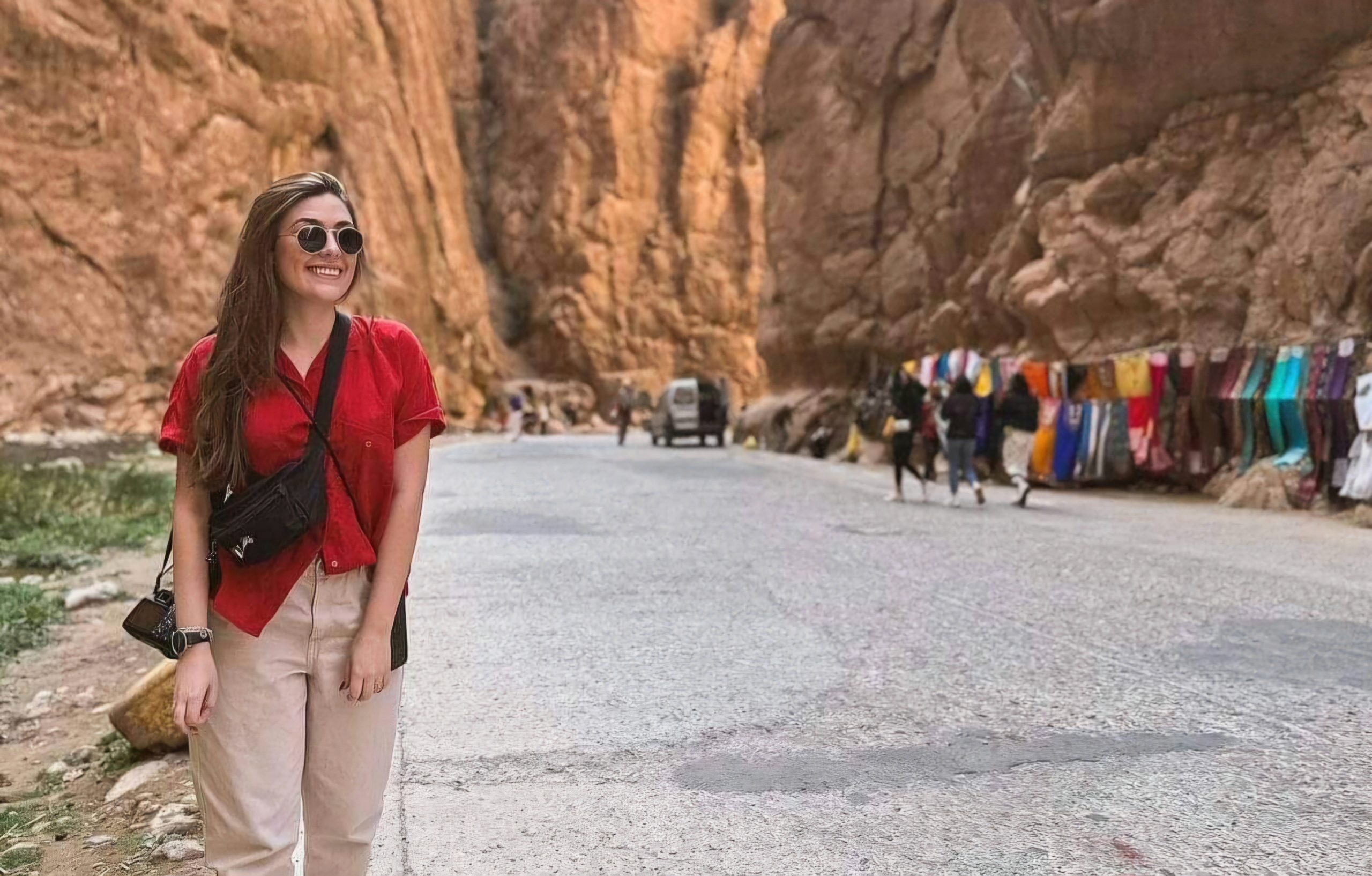
For women, the short answer is layers you can add or remove as the day warms up and cools down again. A long-sleeved top or blouse paired with wide-leg pants or an ankle-length skirt is a reliable daytime combination, and a light cardigan or sweater covers the chillier hours. A scarf is worth packing for more than warmth alone it doubles as a modest cover for your shoulders when visiting mosques, kasbahs, or more traditional neighborhoods. Comfortable flats or walking shoes beat sandals for most of the trip, since you’ll be covering plenty of ground on cobblestones and dirt paths.
What to Wear in Morocco in February for Men
Men can keep things simple with lightweight, long-sleeved shirts and comfortable trousers or chinos for daytime sightseeing, then layer on a medium-weight jacket, hoodie, or sweater once temperatures drop in the evening. Jeans or chinos hold up well on medina walks, and a pair of sturdy, comfortable shoes will carry you through hours of exploring. A scarf isn’t just a women’s accessory here many male travelers pack one for both warmth and sun protection on desert excursions. As in most of Morocco, shorts are best saved for resort pools rather than city streets or religious sites.
Layering for the Sahara: Day and Night Extremes
Packing for the Sahara Desert in February means preparing for two completely different climates in the same 24 hours. During the day, strong sun calls for lightweight, breathable long sleeves and looser pants that protect your skin without trapping heat.
Once night falls, the desert cold sets in fast, so a warm jacket or fleece, a hat, and a scarf to block blowing sand become essential. Pack warm socks and sturdy, closed shoes for the dunes, since sandals offer little protection against cold sand and rocky terrain.
Travelers joining an overnight camp in Merzouga on one of our Sahara Desert tours often note that the extra layer they nearly left behind became the one they relied on most.
Morocco February Packing List: Accessories and Extras
A few small accessories round out your Morocco packing list for February and solve problems before they start. Sunglasses and sunscreen are worth packing even in winter, since the sun stays strong at midday across most regions. A hat or scarf helps protect your face and neck from sun, wind, and desert sand, while a lightweight, packable rain jacket covers the occasional shower along the northern and Atlantic coasts. A reusable water bottle and a small daypack round things out nicely for day trips and city walking.
Morocco Dress Code and Cultural Etiquette
A few items are best left at home. Shorts, tank tops, and sleeveless tops are generally not well received outside resort pools and private riad courtyards, particularly in medinas, souks, and religious sites. Transparent or very tight-fitting fabrics can draw unwanted attention, so opt for looser, breathable layers instead. High heels and flip-flops both struggle on Morocco uneven cobblestone streets, making comfortable, closed walking shoes the far better choice for exploring.
Start Planning Your Private Morocco Trip
Packing the right clothing is only part of planning a smooth trip. Our team designs private Morocco tours built around your pace, interests, and comfort, with local guides who know exactly which routes, riads, and viewpoints make the most of February’s mild, uncrowded season.
Whether you’re dreaming of the medinas on a private tour from Marrakech or a night beneath the stars on one of our Sahara Desert tours, we handle the logistics so you can focus on the experience. For more trip-planning essentials, check out our Morocco Travel FAQs, or browse our companion guides on what to wear in Morocco in March and what to wear in Morocco in December if your travel dates are flexible.
Contact us today, and let’s start planning your personalized Morocco itinerary.
Frequently Asked Questions
Is it cold in Morocco in February?
It depends on where you are and what time of day it is. Afternoons in cities like Marrakech and Fes feel mild and sunny, but mornings, evenings, and desert or mountain nights can turn genuinely cold, so layering is essential.
Can I wear shorts in Morocco in February?
Shorts are generally fine at resort pools and private riad courtyards, but they’re best avoided in medinas, souks, and religious sites, where longer pants or skirts are more appropriate and also warmer for the cool evenings.
Do I need a warm jacket for a Morocco trip in February?
Yes, especially if your itinerary includes the Sahara Desert or the Atlas Mountains, where nighttime temperatures can drop close to freezing. Even in the cities, a jacket or heavier sweater is useful once the sun goes down.
What should I pack for a February desert tour in Morocco?
Bring breathable long sleeves for the daytime sun, plus a warm jacket, hat, scarf, and warm socks for the sharp overnight temperature drop. Sturdy, closed shoes handle the dunes far better than sandals.
Is February a good time to visit Morocco?
Many travelers find February appealing for its mild days, thinner crowds, and lower prices compared to spring. With the right layers packed, the varying temperatures are easy to manage across the whole trip.