Berber Culture in Morocco
Berber culture in Morocco, known to its own people as Amazigh culture, is the oldest living heritage in North Africa, shaping the country’s language, art, cuisine, and daily rhythm long before Arab influence arrived. The Amazigh, meaning “free people,” have called the Atlas Mountains, the Sahara, and the Rif region home for thousands of years, and today they make up close to 40 percent of Morocco population. For travelers, understanding Berber culture in Morocco is essential to seeing the country beyond its imperial cities it’s the thread that connects mountain kasbahs, desert nomad camps, and centuries-old weekly souks.
At Best Morocco Travel, we’re a Marrakech-based, family-run operator, and many of our own guides come from Amazigh families in the High Atlas and the pre-Sahara. That firsthand connection shapes how we build our private Morocco tours not as staged photo stops, but as genuine visits to the villages and families who live this heritage every day.
Who Are the Amazigh People of Morocco?
The Amazigh (plural: Imazighen), widely known outside Morocco as Berbers, are the indigenous people of North Africa, with a documented presence in the region stretching back more than 4,000 years. Long before the 7th-century Arab conquests, Amazigh dynasties such as the Almoravids and Almohads ruled vast territories across Morocco and southern Spain. Today, three main Amazigh groups define Morocco cultural map: the Riffians of the northern Rif Mountains, the Amazigh of the Middle and High Atlas, and the Chleuh (Tashelhit speakers) of the Souss Valley and Anti-Atlas in the south.
The Amazigh Language and Tamazight Dialects in Morocco
Tamazight is the beating heart of Berber culture in Morocco. It isn’t a single language but a family of related dialects Tarifit in the north, Central Atlas Tamazight in the middle of the country, and Tashelhit in the south. Morocco 2011 constitution made Tamazight an official state language alongside Arabic, and the Royal Institute of Amazigh Culture (IRCAM), founded in 2001, has led the work of standardizing it, publishing dictionaries, and expanding it into schools, courts, and media.
Amazigh Symbols: The Berber Flag and Tifinagh Script
Two symbols instantly identify Amazigh identity across Morocco. The Amazigh flag horizontal bands of blue, green, and yellow with a red Yaz symbol at its center represents the sea, the mountains, the desert, and the free Amazigh spirit. Tifinagh, the ancient alphabet used to write Tamazight, now appears on road signs, government buildings, and storefronts throughout the country, a visible marker of how far official recognition has come.
Berber Culture and Traditions in Morocco
Berber traditions in Morocco are rooted in tight-knit communities, strong extended families, and a working relationship with the land. In mountain villages across the Atlas and in oasis towns bordering the Sahara, Amazigh life still revolves around agriculture, herding, and seasonal markets, with earthen and stone architecture built to handle Morocco extreme temperature swings.
Traditional Clothing and Silver Jewelry
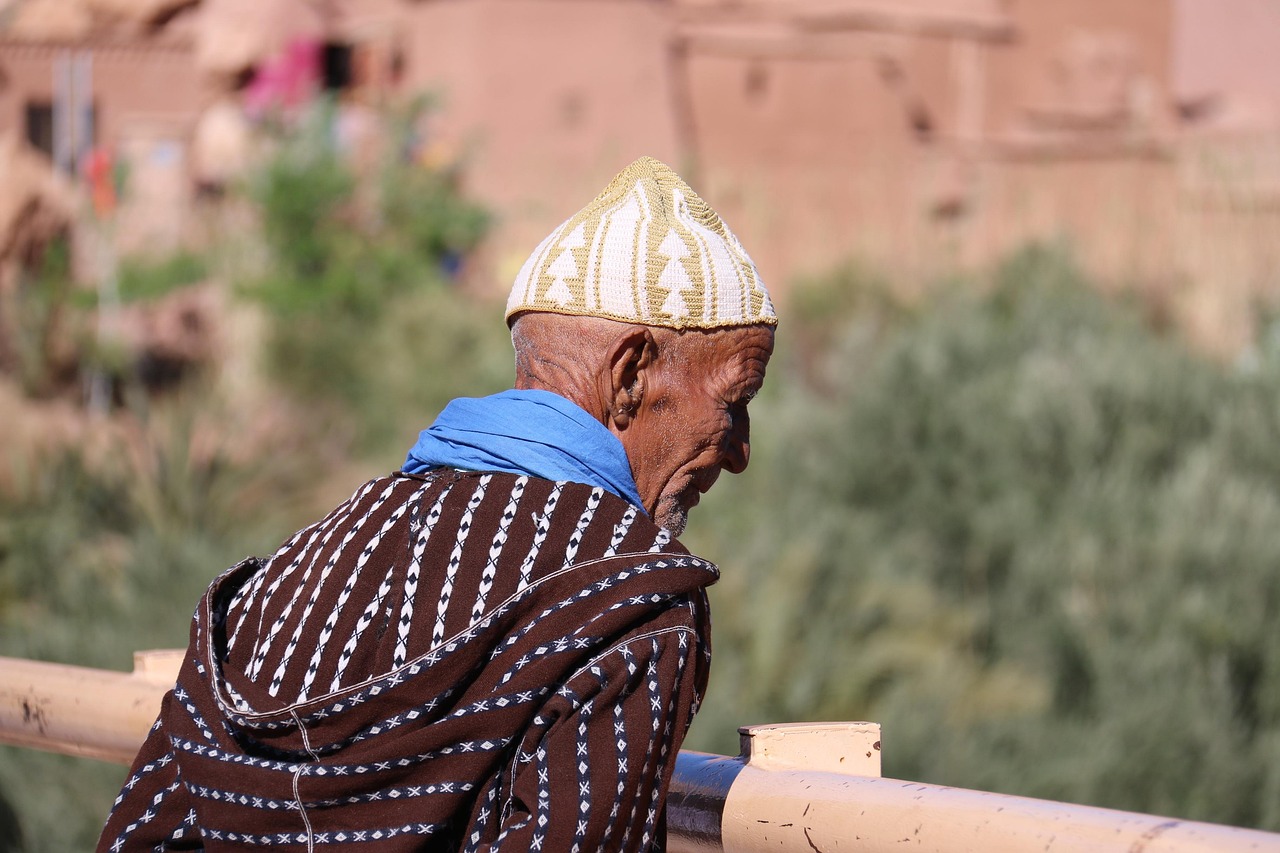
Amazigh clothing communicates identity at a glance. Women wear vividly patterned handwoven garments and heavy silver jewelry necklaces, fibulae, and headpieces that once signaled a woman’s tribe, marital status, and family wealth, and were traditionally part of her dowry. The silver itself was believed to ward off harm, a belief still referenced by artisans selling Berber jewelry in Marrakech souks today.
Henna and Berber Tattoos: Symbols of Protection
Older generations of Amazigh women in rural Morocco traditionally wore facial and hand tattoos in geometric patterns believed to offer protection, fertility, or tribal identification. While the practice has largely faded among younger generations, henna remains very much alive, used for weddings, Yennayer, and other celebrations, with designs that echo the same geometric language found in Berber rugs and pottery.
Berber Music, Dance, and Storytelling
Music sits at the center of Berber culture in Morocco. Ahwash and ahidous, the collective village dances of the High Atlas and Middle Atlas, bring entire communities together in circles of drumming, call-and-response singing, and rhythmic footwork, usually performed around the bendir frame drum and the rebab. Traveling musicians, or imdyazn, once carried news, poetry, and oral history from village to village a tradition of storytelling that predates written Tamazight and still shapes local festivals today.
Amazigh Festivals in Morocco: Yennayer and Beyond
Yennayer, the Amazigh New Year, is the most significant date on the Amazigh cultural calendar. Based on an agrarian calendar believed to date to 950 BCE, it falls on January 12th or 13th and marks the close of the farming year with family feasts, traditional dishes like tagoula (a barley or corn porridge), and communal celebration. In May 2023, King Mohammed VI declared Yennayer an official, paid national holiday in Morocco a landmark moment for Amazigh recognition after decades of advocacy. Beyond Yennayer, regional moussems (seasonal festivals) throughout the Atlas and Anti-Atlas combine music, dance, and traditional souks, and remain some of the best places to see Berber culture in Morocco in its most unfiltered form.
Amazigh Art, Architecture, and Craftsmanship
Amazigh visual art favors bold geometric patterns, diamond and zigzag motifs, and natural pigments a style you’ll recognize instantly in carpets, pottery, and metalwork across Morocco.
Kasbahs, Ksour, and Earthen Architecture
Berber architecture is best known for the kasbah (a fortified family residence) and the ksar (a fortified village), built from rammed earth, straw, and stone to stay cool in summer and retain heat in winter. Ait Benhaddou, a UNESCO World Heritage ksar near Ouarzazate, is the most famous surviving example and a highlight of our day trip to Ait Benhaddou from Marrakech.
Berber Carpets and Weaving Traditions
Berber rugs, hand-knotted by women using wool from local sheep, are among Morocco most recognized crafts internationally. Each region has its own signature style the diamond patterns of the Beni Ourain tribe, the vivid colorwork of the Azilal, the flatwoven kilims of the Middle Atlas and every motif traditionally carried meaning tied to fertility, protection, or a woman’s personal story.
Where to Experience Authentic Berber Culture in Morocco
The clearest way to understand Berber culture in Morocco is to visit the communities who live it. Our day trip to Imlil from Marrakech takes travelers into the High Atlas foothills below Mount Toubkal, where Amazigh villages still run on mule paths and mountain streams. The Ourika Valley day trip follows a river valley dotted with Berber hamlets and a Wednesday souk. Further south, our Morocco desert tours connect travelers with Amazigh and Sahrawi nomadic families who still herd camels across the dunes near Merzouga and Zagora. For travelers who want all of this woven into a single trip, our Morocco tour packages are built around private, small-group access to the villages and families we know personally.
Berber Cuisine: Flavors Rooted in Tradition
Much of what the world calls “Moroccan food” has Amazigh roots. The tagine, named for the conical clay pot it’s cooked in, and couscous, Morocco Friday staple, both originate in Berber culinary tradition, along with mint tea rituals, argan oil (pressed almost exclusively by Amazigh women’s cooperatives in the Souss region), and hearty mountain dishes like tagoula. Sharing a meal in a Berber family home something we arrange on several of our private tours remains one of the most direct ways to experience this culture firsthand.
The History and Modern Revival of Amazigh Identity
Amazigh history in Morocco spans more than four millennia, through Roman-era Mauretania, the rise and fall of Amazigh dynasties, waves of Arabization following the 7th-century conquests, and the French and Spanish protectorate period. Despite centuries of pressure toward cultural assimilation, Amazigh identity, language, and customs never disappeared they persisted in mountain and desert communities largely outside centralized control.
Official Recognition: From IRCAM to National Holiday Status
The past 25 years have marked a genuine turning point. IRCAM’s founding in 2001 began the standardization of Tamazight; the 2011 constitution made it an official language; and the 2023 recognition of Yennayer as a national holiday cemented Amazigh heritage as a formally protected part of Moroccan identity. Tifinagh script on public buildings, Amazigh-language news broadcasts, and school curricula are the visible results of this shift.
Experience Berber Culture with Best Morocco Travel
As a family-run operator based in Marrakech, we’ve spent years building relationships with Amazigh families across the Atlas and the desert south the same families who welcome our travelers for tea, home-cooked meals, and honest conversation about daily life in Morocco mountains. Whether you’re joining us for a single day trip from Marrakech or a longer private itinerary through the Sahara, our guides don’t just describe Berber culture in Morocco many of them grew up living it, and they’ll gladly answer any question you bring.
FAQ’s About Berber Culture in Morocco
Who are the Berbers (Amazigh) people in Morocco?
The Berbers, who prefer to be called Amazigh, are the indigenous inhabitants of Morocco and North Africa, with a documented history spanning more than 4,000 years. They maintain a distinct language, Tamazight, and cultural traditions that predate Arab influence in the region.
What language do Berbers speak in Morocco?
Berbers in Morocco speak Tamazight, which includes three main regional dialects: Tarifit in the north, Central Atlas Tamazight in the middle of the country, and Tashelhit in the south. Tamazight has been an official language of Morocco since 2011.
Are Berbers the same as Arabs in Morocco?
No. Amazigh and Arab are distinct ethnic and linguistic groups in Morocco, though centuries of intermarriage and shared history mean the two cultures have deeply influenced one another. Amazigh communities have their own language, customs, and pre-Islamic history separate from Arab identity.
What percentage of Morocco population is Amazigh?
Estimates vary, but roughly 40 percent of Moroccans identify as Amazigh, while government and Amazigh-association estimates for those with Amazigh ancestry or dialect connection run considerably higher.
Where can I experience authentic Berber culture in Morocco?
The Atlas Mountains, the Rif region, and villages near Imlil, the Ourika Valley, and the Sahara Desert preserve traditional Amazigh lifestyle, crafts, and hospitality. Visiting with a private, locally connected guide offers the most genuine access to family life and traditions.
What is the significance of celebrating the Amazigh New Year in Morocco?
Yennayer marks the start of the agricultural year on the Amazigh calendar and has been celebrated for millennia. In May 2023, it became an official, paid national holiday in Morocco, formally recognizing its importance to the country’s identity.
What are typical Berber crafts and art forms in Morocco?
Typical Amazigh crafts include hand-knotted carpets, pottery, silver jewelry, and geometric weaving patterns passed down through generations of women artisans. Each region and tribe has its own distinct visual style and symbolism.