Honeymoon in Morocco: a 10-day itinerary built for two

A honeymoon in Morocco works because the country changes completely every two or three days: the rooftop courtyards of a Marrakech riad, a night in a private tent among the Erg Chebbi dunes, the car-free medina of Fes, then sea air and grilled fish in Essaouira. All of it is within a single, easy flight of Europe, and a private driver-guide means you never touch a bus timetable. We have been organising honeymoons here for 25 years; this is the route we recommend most often, and the practical answers couples ask us before they book.
The 10-day honeymoon route we recommend
This itinerary starts and ends in Marrakech and is the backbone of our Morocco honeymoon packages. Every day is private: your own driver-guide, your own vehicle, and hotels chosen for the two of you rather than for a group.
Day 1 – Arrive in Marrakech. Airport pick-up and transfer to a riad inside the medina. Settle in with mint tea on the roof terrace; dinner is a short walk away.
Day 2 – Marrakech with a local guide. Bahia Palace, the Saadian Tombs, Jardin Majorelle and the souks with a licensed guide in the morning, then the afternoon free for a hammam for two. Jemaa el-Fna at dusk for the food stalls and storytellers.
Day 3 – Over the High Atlas to Ait Ben Haddou. Cross the Tizi n’Tichka pass (2,260 m), stop at the Ait Ben Haddou kasbah, and sleep in a kasbah hotel in Skoura or the Dades Valley.
Day 4 – Todra Gorge to the Sahara. Walk the Todra canyon, then drive to Merzouga. Late afternoon camel ride into the Erg Chebbi dunes and a night in a private desert camp: dinner by the fire, no other guests at your tent, and more stars than you have ever seen.
Day 5 – Sunrise over the dunes, then Fes. Climb a dune for sunrise, breakfast at camp, and a long but spectacular drive through the Ziz Valley and the cedar forests of the Middle Atlas to Fes.
Day 6 – Fes. A full day inside the world’s largest car-free medina with a guide: the Al-Qarawiyyin quarter, the tanneries, the Bou Inania madrasa and a late lunch in a converted palace.
Day 7 – Chefchaouen (or Meknes and Volubilis). The blue town is a four-hour drive and worth the night for its calm after Fes. If you would rather stay south, swap it for the Roman ruins of Volubilis and the imperial city of Meknes.
Day 8 – Rabat and the Atlantic coast. Drive down the coast via Rabat (Kasbah of the Udayas, Hassan Tower) to the fishing town of Essaouira.
Day 9 – Essaouira. A free day: ramparts, the port, the beach, a wind-sheltered terrace and the best grilled sardines in the country. This is the day most couples remember.
Day 10 – Back to Marrakech and departure. Three hours back to Marrakech for your flight, or stay an extra night at a hotel in the Palmeraie if your flight is early.
Prefer a shorter trip? A 4-day Marrakech to Merzouga’s desert tour plus three nights in Marrakech and Essaouira fits a week. Have longer? Our 10-day tour from Casablanca adds Casablanca and the Hassan II Mosque at the start.
Best time of year for a honeymoon in Morocco
March to May and late September to November are the months we recommend. Days are warm (22–30 °C in Marrakech), the desert is pleasant at night, and the Atlas passes are open. April is the sweet spot: wildflowers in the valleys and long evenings on the rooftops.
June to August is hot inland: Marrakech regularly passes 40 °C and the Sahara is best avoided in July and August. If summer is your only option, build the trip around Essaouira, the Atlas and the north, and keep the desert to one night.
December to February is quiet, bright and cool. Marrakech is 18–20 °C by day, but desert nights drop close to freezing, so pack a warm layer for the camp. New Year’s Eve in a desert camp is a popular choice; book early.
Check the dates of Ramadan before you fix your flights. Travel is perfectly possible during the month, but restaurants keep different hours and the mood in the cities is more subdued. See our month-by-month notes on the best time to visit Morocco.
Where to stay: riads, kasbahs and desert camps
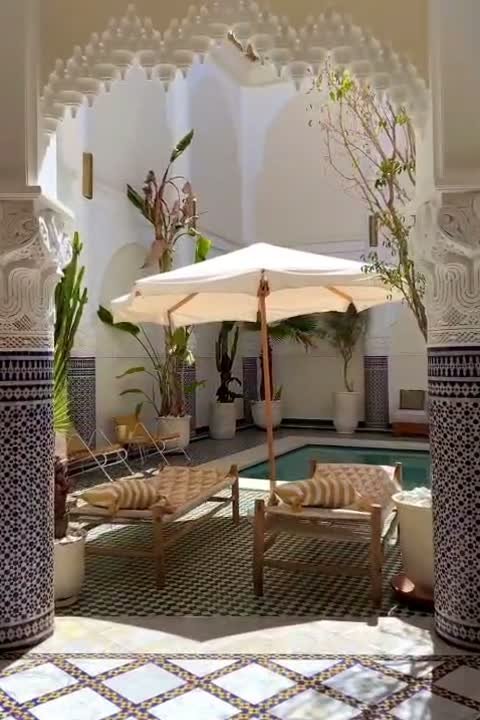
- Marrakech and Fes: a riad, always. These are traditional houses built around a courtyard, usually with 6–12 rooms, a plunge pool and a roof terrace. For a honeymoon we book rooms with a private terrace or a suite on the top floor.
- Atlas and valleys: a restored kasbah in Skoura or the Dades Valley, with a garden and a pool, breaks the drive to the Sahara.
- Sahara: a private luxury camp in the Erg Chebbi dunes with a proper bed, en-suite bathroom and a tent away from the main camp. Standard shared camps are fine for groups; for a honeymoon the private tent is worth the difference.
- Essaouira: a riad inside the ramparts or a small hotel on the beach road if you want to see the sea from your room.
If you are weighing a resort against a riad, our guide to riad or resort in Morocco explains the trade-offs.
How much does a honeymoon in Morocco cost?
Price depends on three things: the number of days, the level of hotels, and whether the desert night is in a private or a shared camp. A 10-day private honeymoon with a driver-guide, mid-range riads and a private desert camp is comparable to a good hotel-based holiday in southern Europe; a luxury version with five-star riads and a premium camp roughly doubles that. Flights, lunches, entry fees and tips are the usual extras. We quote per trip, not per person, so ask for a free itinerary and price and adjust the hotels until it fits.
What to pack and what to wear
Light layers, comfortable shoes for the medinas, a warm jacket for the desert night and a scarf for sun and dust. Morocco is relaxed about visitors’ clothing, but covering shoulders and knees in the medina and rural villages is appreciated and gets you a warmer welcome. Our month-by-month packing guides, such as what to wear in Morocco in April, go into detail.
Honeymoon experiences worth adding
- Hot-air balloon over the Marrakech plain at sunrise, with breakfast in a Berber tent afterwards.
- A private hammam and massage at your riad or a traditional spa.
- A cooking class in Marrakech or Fes, starting with a trip to the market.
- Sunset dinner on the dunes with musicians at your desert camp.
- A day in Essaouira by the sea if you are not continuing up the coast; see our Essaouira day trip from Marrakech.
- Shopping in the souks for a rug or ceramics to take home; our shopping in Morocco guide explains how to bargain politely.
Practical tips for couples
- Public affection: holding hands is fine everywhere; kissing in the street is not the custom. Hotels and riads are relaxed and used to honeymooners.
- Marriage certificate: Moroccan couples are asked for one in hotels, foreign couples are not. You will not be asked.
- Tipping: small tips are expected for guides, drivers and camp staff; our tipping in Morocco guide has the amounts.
- Driving: distances are long. The Marrakech to Merzouga leg alone is 560 km, which is why we split it over two days with a night in the valleys.
- Alcohol: wine and beer are served in hotels, riads and licensed restaurants; see our note on alcohol in Morocco.
Plan your honeymoon with us
Send us your dates, how many days you have and the kind of hotels you like. Within 24 hours you will have a day-by-day plan with named riads, driving times and one clear price. Everything is adjustable, and your driver-guide is the same person from airport to airport. Start from our Morocco honeymoon packages or browse our tours from Marrakech.