Traveling to Morocco in August
Traveling to Morocco in August means trading cooler days for long sunny hours, lively coastal towns, and some of the best cultural events of the year. August is one of the hottest months in the country, but it is also one of the busiest and most colorful, with beach resorts in full swing, mountain villages offering a cool escape, and the famous Asilah Arts Festival turning an entire medina into an open-air gallery. With the right destinations, timing, and packing list, a August trip to Morocco can be just as rewarding as a spring or fall visit.
This guide covers everything you need to plan your trip: what the weather is really like from city to city, where to go to stay comfortable, what to pack and wear, the festivals and events happening this month, and answers to the questions travelers ask us most. Whether you’re planning a private Sahara desert tour, a coastal getaway, or a Morocco honeymoon in August, here’s what to expect and how to make the most of your visit.
Is August a Good Time to Visit Morocco?
August can be a great time to visit Morocco if you plan your route around the heat rather than against it. Temperatures climb across the interior, but the Atlantic coast, the Rif Mountains, and the High Atlas all stay noticeably cooler, and Morocco’s tourism numbers in recent years show that August remains one of the country’s busiest travel months despite the heat.
The trick is choosing the right mix of destinations. Inland cities like Marrakech and Fes are at their hottest, so early mornings, shaded souks, and air-conditioned transport make the biggest difference. Coastal cities such as Essaouira, Agadir, Casablanca, and Tangier stay mild thanks to steady sea breezes, and mountain towns like Chefchaouen and Ifrane offer a genuine break from the heat. With a private itinerary built around these cooler pockets, traveling to Morocco in August can still feel relaxed and comfortable.
Morocco Weather in August: What to Expect
Morocco in August weather varies sharply by region, so where you spend your time matters more than the calendar date. Here’s a general breakdown:
- Marrakech, Fes, and inland cities: Daytime highs typically run between 95°F and 106°F (35°C to 41°C), occasionally pushing past 110°F (43°C) during a heatwave. Evenings cool down enough to enjoy rooftop dinners and evening souk visits.
- Sahara Desert (Merzouga and Erg Chebbi): This is the hottest region in the country, with daytime highs regularly above 104°F (40°C). Nights are more comfortable, which is why most desert programs shift toward early evening camel treks, dinner under the stars, and a cooler morning return.
- Coastal cities: Casablanca, Agadir, Essaouira, and Tangier stay in a pleasant 77°F to 86°F (25°C to 30°C) range, cooled by steady Atlantic breezes.
- Mountain towns: Chefchaouen, Ifrane, and villages in the High Atlas and Rif Mountains often stay 10 to 15 degrees cooler than the plains below, making them popular summer retreats for Moroccans and visitors alike.
Rainfall is essentially nonexistent in August, and most regions see close to ten hours of sunshine a day, so plan sightseeing for the early morning or late afternoon and keep midday hours for museums, riads, or a pool.
What to Wear in Morocco in August
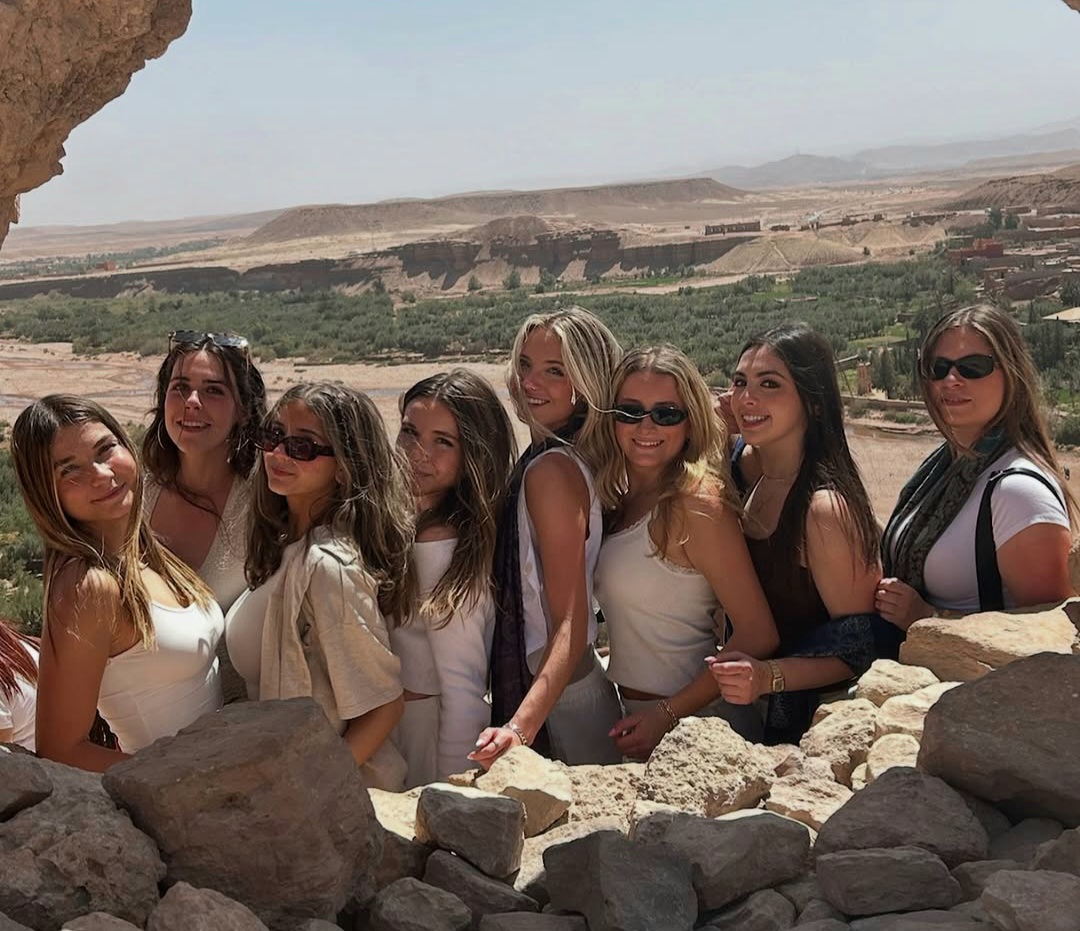
What to wear in Morocco in August comes down to balancing comfort with cultural respect. Lightweight, breathable fabrics are essential, but modesty still matters, especially away from beach resorts, in souks, and around religious sites. Loose, airy clothing that covers the shoulders and knees keeps you cooler than tight or synthetic fabrics and is more appropriate in traditional neighborhoods.
For women, the most practical choices are loose maxi dresses, wide-leg trousers, and airy cotton or linen blouses. A lightweight scarf is useful for covering shoulders in more conservative areas or mosque courtyards, and a wide-brimmed hat helps with sun protection during day trips. For men, linen shirts, breathable cotton trousers, and short-sleeve shirts work well for daytime; shorts are generally fine in touristy areas and beach towns, but longer trousers are a better choice for mosques, rural villages, and more traditional towns like Fes and Chefchaouen.
What to Pack for Morocco in August
A smart packing list makes a summer trip to Morocco far more comfortable. Here’s what we recommend bringing:
- Lightweight, breathable clothing in natural fabrics like cotton or linen
- A wide-brimmed hat and a lightweight scarf for sun and modesty
- High-SPF sunscreen and UV-protective sunglasses
- A reusable water bottle to stay hydrated throughout the day
- Travel-size toiletries, hand sanitizer, and wet wipes
- A swimsuit for coastal stops, riad pools, or desert camp pools
- A universal power adapter (Morocco uses type C and E plugs)
- Comfortable walking sandals plus one pair of closed shoes for medinas and hikes
- A light jacket or layer for cooler desert nights and mountain evenings
Best Places to Visit in Morocco in August
Marrakech in August
Marrakech remains one of the best places to visit in Morocco in August if you plan around the midday heat. Early morning visits to Jardin Majorelle and the Bahia Palace, an evening stroll through Jemaa el-Fnaa once the sun softens, and a relaxing stop at a traditional hammam all make the heat easier to manage. Marrakech rich culture, souks, and riads keep it a top destination even in the hottest month of the year.
Fes in August
Fes, home to the world’s oldest continuously used medina, is best explored in the cooler early morning hours. Its ancient tanneries, madrasas, and winding alleyways offer a deep cultural experience, and shaded courtyards throughout the old city provide welcome relief from the afternoon sun.
Chefchaouen in August
Chefchaouen, Morocco famous blue city, offers one of the best cool-weather escapes in the country. Tucked into the Rif Mountains, it stays noticeably milder than the plains, making it a favorite August stop. Wandering its blue-washed alleys, browsing local artisan shops, and watching the sunset from the Spanish Mosque are some of the most popular things to do here. You’ll find more inland escapes like this one in our guide to the best places to visit in Morocco.
Casablanca in August
Casablanca coastal location keeps summer temperatures comfortable, with steady Atlantic breezes cooling the city throughout the day. It’s an easy base for visiting the Hassan II Mosque, strolling the Corniche, and enjoying the city’s mix of modern and traditional Moroccan life.
Essaouira in August
Essaouira is one of the most pleasant destinations in the country during August, thanks to its cooling coastal winds. The fortified medina, fresh seafood, and popular windsurfing and kitesurfing conditions make it a favorite for travelers looking to escape inland heat without giving up culture and history. It also makes an easy addition to a Marrakech itinerary as an Essaouira day trip from Marrakech.
Sahara Desert in August
The Sahara Desert in August is hot, with some of the highest temperatures in the country during daylight hours. Even so, it remains a bucket-list experience for travelers willing to adjust their timing. Most private desert programs schedule camel treks for the early evening, dinner and stargazing after sunset, and a sunrise departure before the heat builds again. Choosing an experienced private tour operator with air-conditioned vehicles and well-run desert camps makes a real difference in comfort during this stretch of the year. You can see typical pricing and what’s included in our guide to Morocco desert tour costs.
Agadir in August
Agadir is one of the top beach destinations in Morocco in August. Its long sandy beaches, resort-style hotels, and steady surf make it a natural choice for travelers who want sunbathing, water sports, and a relaxed pace without extreme heat.
Atlas Mountains in August
For travelers looking to escape the summer heat entirely, the High Atlas Mountains are one of the best options in the country. Cooler temperatures, scenic trekking routes, and traditional Berber villages make this region a favorite summer retreat, and an Imlil day trip from Marrakech into the Atlas foothills pairs well with time in the city.
Tangier in August
Tangier blends Mediterranean and Moroccan influences and stays comfortably mild throughout August thanks to its position where the Atlantic meets the Mediterranean. Art galleries, lively markets, and the historic Kasbah make it a rewarding stop, and it also serves as the gateway to nearby Chefchaouen and the coastal town of Asilah.
Things to Do in Morocco in August: Festivals, Events, and Everyday Highlights
August is one of Morocco most culturally active months, with festivals, national holidays, and coastal life all happening at once.
The Asilah Cultural Moussem is the standout event of the month. Running since 1978, this monthlong festival transforms the coastal town of Asilah, about 45 minutes south of Tangier, into an open-air art gallery. International artists repaint the whitewashed medina walls with new murals each year, and the town hosts concerts, poetry readings, and exhibitions along the way. It’s free to attend and one of the best cultural experiences to combine with a trip through northern Morocco.
Revolution Day (August 20) and Youth Day (August 21) are national public holidays. Government offices and banks may have reduced hours around this weekend, but restaurants, tours, hotels, and attractions run as normal, and the extra energy in the streets is part of the experience.
Beyond festivals, a typical August itinerary in Morocco mixes souk visits and hammams in Marrakech, an evening camel trek and desert camp stay in the Sahara, seafood and beach time in Essaouira, hiking and Berber villages in the Atlas Mountains, and history and mosque visits in Fes and Casablanca. A private, air-conditioned vehicle with a flexible schedule is the easiest way to fit all of this in without overheating.
Tips for Visiting Morocco in August
- Stay hydrated: Carry water with you at all times, especially in the desert and interior cities.
- Avoid peak heat: Schedule outdoor sightseeing for early morning or after 5 p.m.
- Respect local customs: Dress modestly outside resorts and beaches, and a few basic Arabic, English or French greetings go a long way.
- Use sun protection: High-SPF sunscreen and a hat are essential even on cloudy coastal days.
- Plan around midday: Use the hottest hours for museums, riads, lunch breaks, or pool time.
- Book ahead: August is peak season on the coast and during the Asilah festival, so accommodations and private tours fill up early.
Affordable Private Morocco Tours in August
Traveling to Morocco in August doesn’t have to be expensive. Because it falls in the low season for inland travel, many private Morocco tours offer better rates and availability than in spring or fall, even though coastal towns stay busy. A private tour also gives you the flexibility to build your day around the cooler hours, something a fixed-schedule group tour can’t easily do.
Popular budget-friendly combinations include a multi-day loop through Marrakech, the Atlas Mountains, and the Sahara Desert, or a coastal route linking Casablanca, Essaouira, and Agadir. For a full breakdown of what’s included and typical pricing, see our guide to Sahara desert tour costs from Marrakech, or contact our team for a private quote tailored to your dates and group size.
Morocco Honeymoon in August
Morocco makes a memorable honeymoon destination even in the hottest month of the year, especially for couples who want a mix of romance, culture, and adventure. A Morocco honeymoon in August can combine a few nights in a Marrakech riad, a private evening camel trek and overnight desert camp under the stars, and a relaxed finish in a coastal town like Essaouira. Traveling privately, rather than in a group, keeps the pace comfortable and lets you avoid the midday heat entirely. Explore our Morocco honeymoon packages or contact us to build a custom summer honeymoon itinerary.
FAQ’s About Traveling to Morocco in August
Is it too hot to travel to Morocco in August?
Inland cities and the Sahara Desert are hot, but coastal towns like Essaouira, Agadir, and Casablanca, along with mountain destinations like Chefchaouen and the High Atlas, stay comfortable. Most travelers combine both types of destinations and plan indoor or shaded activities during the hottest midday hours.
What is the best way to visit the Sahara Desert in August?
Private desert tours in August typically schedule camel treks and dune activities in the early evening or early morning, with the hottest hours spent traveling in an air-conditioned vehicle or resting at a desert camp. This keeps the experience enjoyable despite the daytime heat.
Is Morocco safe to visit in August?
Morocco is generally a safe country to visit, and safety considerations in August are the same as any other month: use common travel sense in crowded areas, stay hydrated, and dress modestly outside resort areas. For city-specific guidance, see our guide on whether Marrakech is safe at night.
What festivals happen in Morocco in August?
The biggest event is the Asilah Cultural Moussem, a monthlong open-air arts festival in the coastal town of Asilah, near Tangier. Morocco also observes Revolution Day and Youth Day on August 20 and 21, which bring extra energy to cities nationwide.
Do I need a visa to travel to Morocco in August?
Travelers from the United States, Canada, the United Kingdom, the European Union, and many other countries can enter Morocco visa-free for stays of up to 90 days. Always confirm current entry requirements with official sources before booking, since policies can change.
Is August a good time for a Morocco desert tour?
Yes, with the right planning. The Sahara is at its hottest during the day, but nights are pleasant, and private tours built around early evening and early morning activities let you experience camel treks, desert camps, and sunrise over the dunes comfortably.
Conclusion: Planning Your Trip to Morocco in August
Traveling to Morocco in August is hot, but it’s also full of color, culture, and coastal energy, from the Asilah Arts Festival to breezy afternoons in Essaouira and cool evenings in the Atlas Mountains. With the right route, the right packing list, and a private itinerary built around the cooler hours of the day, August can be one of the most memorable times to experience the country.
Whether you’re planning a short coastal escape, a multi-day Sahara desert adventure, or a longer Morocco tour package that covers the imperial cities, our private, English-guided tours are built around your pace, your interests, and the season you’re traveling in. Contact our travel team to start planning your custom trip to Morocco in August.